
Computer Vision Development
Hygge builds computer vision systems trained on your images or video feeds, tied to your cameras, sensors, or production line, and scoped against a detection target agreed before training starts. Computer vision development services that ship with monitoring, so accuracy drift gets caught before it reaches your quality numbers.
What Computer Vision Software Development Covers
What each piece of a production computer vision system does on its own, and how Hygge decides which combination your project needs after reviewing your footage and hardware.
Detection & Classification
The model that spots the object, defect, or anomaly your project is built around, trained specifically on your own images or video.
Real-Time Video Processing
The pipeline that keeps up with a live camera or production-line feed, so detection happens the moment the frame arrives.
Edge & On-Device Deployment
The model runs directly on hardware in the field, cameras, sensors, on-site devices, for environments that can't depend on a live network connection.
Model Training on Your Imagery
The model is trained and validated on your own images or video feeds, so it recognizes what your specific cameras see.
Data & Systems Integration
We connect the system through the APIs your monitoring, alerting, or production tools already expose, so a detection shows up where your team already looks.
Deployment & Monitoring
The system goes live with monitoring in place, so a drop in detection accuracy gets flagged before a defect makes it past the line.
What Gets Decided Before a Computer Vision System Goes Into Development
The concrete choices behind the system, settled with you during the audit, before computer vision development services get a scope or a price.
Settled During the Audit:
- Success metric agreed with you, the detection or accuracy target the project is judged on
- On-device or cloud processing, decided by your network reliability and latency needs
- A labeled dataset you can grow, the model improves as you feed it more of your own footage
- Integration through your existing systems, nothing in your monitoring or production tools gets rebuilt to fit the model
- Cost and scope agreed, a fixed number for the build, set after the audit checks your camera setup and footage
What Pushes a Team to Build Computer Vision In-House
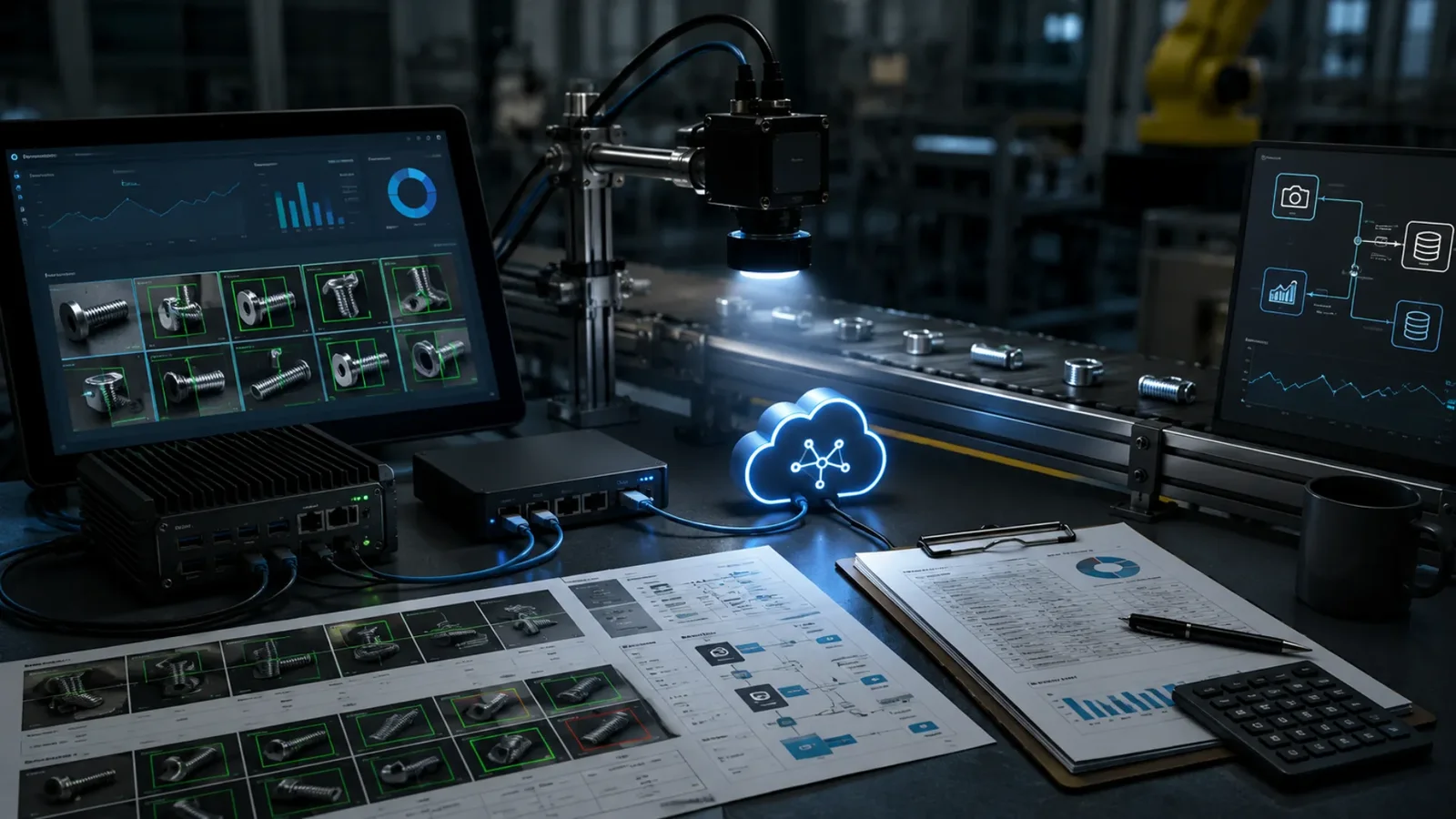
A quality team that cannot visually check every unit at current volume, a defect that only gets caught after it has shipped, or a manual review step that slows the line. The gaps computer vision solutions get called in to close.
Manual visual inspection sets the pace, generic models miss what matters, and pilots stay pilots. Computer vision development trains on footage from the environment it will run in, and puts inference where the connection cannot be trusted. The audit checks cameras and compute already on site.
Manual Visual Inspection Doesn't Scale
A person checking frames, footage, or parts by eye catches less as volume grows, and the miss rate goes up exactly when the stakes go up.
Generic Models Miss What Matters to You
A pretrained, off-the-shelf vision model wasn't trained on your cameras, your lighting, or your specific defect, so accuracy drops on the cases you care about.
Pilots That Never Reach the Production Line
A model scores 96% on a curated set of clean, well-lit test images. Then it meets a camera with glare at 4pm, a part that's partially blocked, or a network hiccup that delays a frame by two seconds, and the gap between a benchmark score and a system a production line can depend on is exactly what a proof of concept doesn't test.
Unclear Return on Investment
The budget for a computer vision project gets approved without a number attached to the inspection hours or missed defects it should reduce, and the ROI conversation never happens because nobody sets the baseline.
How We Build a Computer Vision System
From your footage to a system running in production, the same path every project follows, with a working demo you can see at the end of each step.
Audit
We review your footage, your hardware, and where computer vision pays off first. That review confirms the camera placement, lighting, and frame rate the build needs before any model gets trained.
Architecture
We lock in the detection approach and the on-device or cloud processing choice made during the audit, and map how the system connects into your existing tools.
Build
The detection model gets trained and tested against your actual footage and lighting conditions from week one, so every weekly demo runs on your real camera feeds.
Deploy
The system goes live on your cameras or infrastructure, rolled out in stages so accuracy holds up before it covers every feed.
Support
We stay on after launch to monitor accuracy and retrain on new footage as lighting or camera setups change, with an alert triggered the moment detection accuracy drifts past the agreed threshold.
What Computer Vision Changes in Your Operations
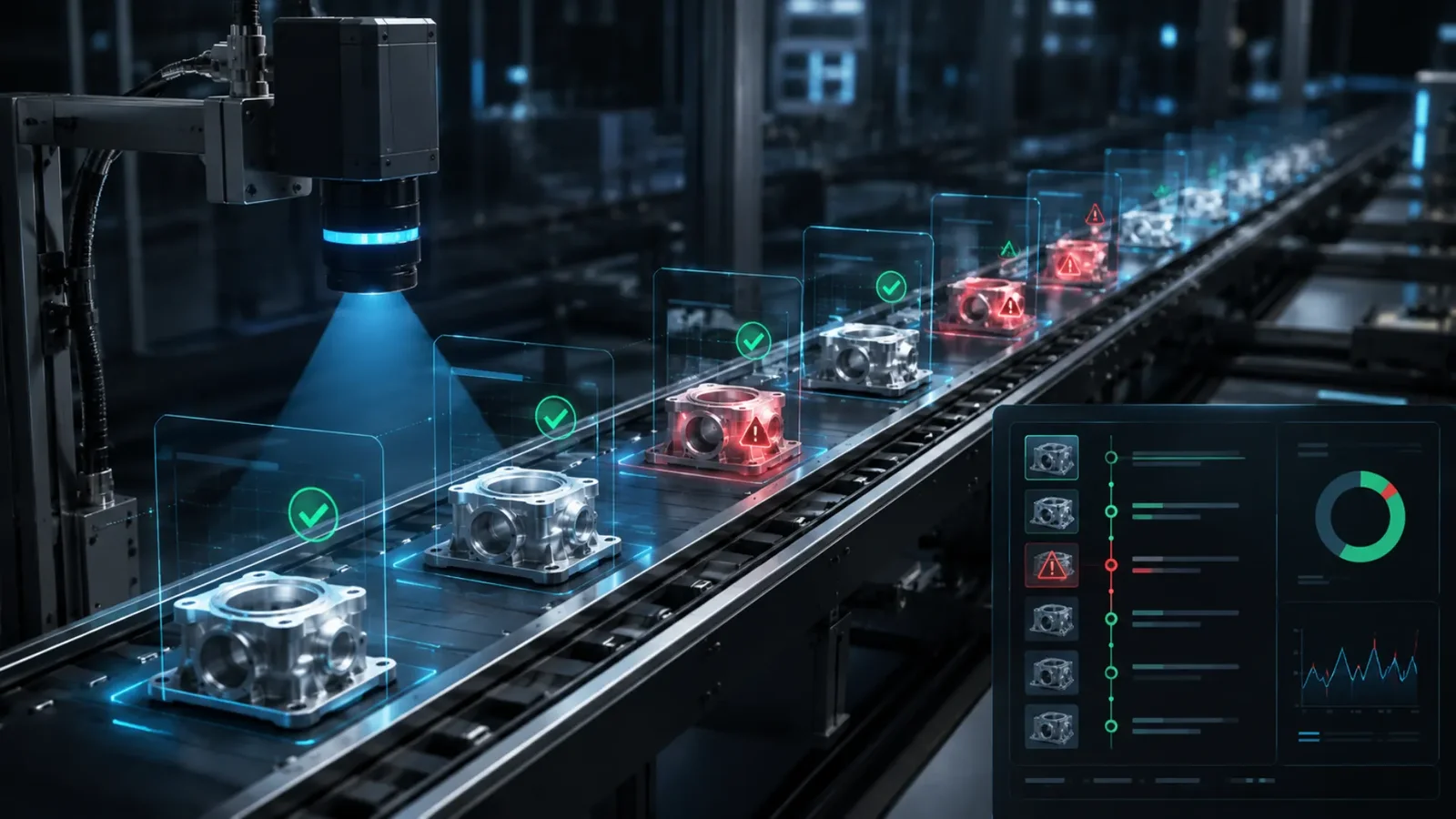
The check happens at the speed of the line, with a record of every decision the model made. Recognition keeps working when the network drops, because the model runs on the hardware at the point of capture. Choosing a computer vision company usually comes down to one question: can the model run where the camera is. Computer vision consulting settles that early, along with the accuracy bar and what the lighting and the hardware will allow. Custom computer vision development then builds against those limits, which is what keeps a pilot from stalling at deployment.
What Custom Computer Vision Development Gives Back
These are the targets the work is built to hit, measured on your own numbers.
Where We've Already Built This
Industries where Hygge's computer vision solutions are already running in production, with monitoring and retraining kept in place after launch.
Public Safety & Security
Detection and recognition on constrained hardware in the field, built to keep working when the uplink drops and to survive the review afterwards.
Logistics & Warehouse Automation
Counting, damage checks and label reading on the line, feeding the WMS so stock figures stop depending on manual counts.

Retail & E-Commerce
Shelf, queue and loss-prevention vision in stores, measured on your own camera angles before rollout.
Real Estate & PropTech
Site and building imagery turned into structured condition data a property platform can act on.
Hygge's Computer Vision Systems Already in Production
A sample of custom computer vision solutions already carrying real production volume, the stage most CV pilots never reach.
What You Get From Computer Vision Consulting
We review your footage and hardware, flag where computer vision development services pay off first, and hand you a clear next step, what to build, how long it takes, and what it costs.
The Stack Behind a Computer Vision Build
The languages, models, and infrastructure behind every build Hygge runs.
Perception models for image, video and audio, selected against the conditions your own footage is captured in: lighting, angle, resolution and noise.
 Python
 NVIDIA DeepStream
 TensorRT
 PyTorch
 OpenCV
 YOLO (You Only Look Once)
Frequently Asked Questions
Common questions about scope, accuracy, and cost before committing to computer vision development services.
 What is object detection?
How does object detection work?
What is mAP in object detection?
How to train an object detection model?
Is object detection machine learning?
What is computer vision?
Is computer vision part of AI?
What are the applications of computer vision?
Do you train a custom model or use a pretrained one?
Can this run without a reliable network connection?
Can this work alongside my existing monitoring or quality team?
What happens after the system goes live?
How much does computer vision development cost?
What if my existing footage is not labeled?
How accurate can a computer vision system be on my production line?
What does a computer vision development company do?
From Your Footage to a Scoped Plan
Tell us what your cameras or sensors need to catch. Hygge scopes the computer vision solutions around a detection target.
Tell Us What Needs Detecting
Share the footage, the hardware, and the detection target it needs to hit, whatever's costing your team time or missed issues right now.
Get a First Consultation
We check your camera setup and footage for anything that would change scope, cost, or timeline before we quote a number.
Receive a Detailed Proposal
A scoped plan with the approach, timeline, and cost, built around your actual footage and hardware.