


Data Engineering Services
Every AI project that stalls, stalls on data. Hygge builds the pipelines, the warehouse, and the quality checks underneath, so a model has something reliable to learn from and your dashboards agree with each other. Data engineering services scoped after an audit of what you already collect.
What Big Data Engineering Services Cover
The layers that decide whether your data can carry reporting, analytics, and AI. Hygge picks which ones your case needs after reviewing what you collect today.
Pipelines and Ingestion
Moving data out of the systems that generate it and into one place on a schedule, batch or streaming. Every source your business runs on, arriving reliably enough that a missing day shows up as an alert.
Warehouse and Model Design
The schema your analysts and your models both query. Data warehouse development starts with how the data will be asked questions, because a warehouse designed around how data arrives is a warehouse nobody can query.
Transformation and Business Logic
The rules that turn raw records into the numbers your company agrees on, encoded once, versioned, and tested. This is where two departments stop reporting different revenue.
Data Quality and Validation
Checks that catch a null where there should be a value, a duplicate, or a source that silently stopped sending. A pipeline without these fails quietly, which is worse than failing loudly.
System Integration
Data integration services connecting your CRM, ERP, product database, and third-party tools, so the warehouse holds one version of a customer.
AI-Ready Datasets
AI data preparation: labeling workflows, feature tables, and the reproducible splits a model needs for training and validation. This is the layer that decides whether an AI project can start at all.
What Gets Decided Before Data Engineering Starts
Hygge opens with an audit of what you collect today. Data engineering consulting that skips this step ends up building pipelines for data nobody uses.
The audit settles each of these:
- Sources in scope, which systems feed the warehouse and which stay where they are.
- Freshness requirement, how current the data has to be for the decisions it supports, since real-time costs more than nightly.
- Warehouse or lake, chosen against your query patterns and the volume you expect in two years.
- Ownership, who maintains the pipelines after handover and what they need to be able to do it.
- Fixed scope and price for phase one, agreed after the audit.

What Sends a Team Looking for Data Engineering
The situations behind most enquiries Hygge scopes, taken from real audits.
Every one of these traces back to the same checks, and the audit runs them before a single pipeline is written: whether a system can reach the data programmatically or someone exports it by hand, whether the same record means the same thing in every source that holds it, and whether the history reaches far enough back to answer the question being asked. The audit reports which of those fail on your systems, and the scope and price are set against what it found. Sources then land one at a time, each ending in something queryable, so the first answer arrives while the rest is still being connected.
The AI Project Stopped at the Data
A model was scoped and funded, then three weeks in the team found the training data scattered across two systems that disagree. This is the most common way an AI budget disappears without a result.
The Same Metric, Two Answers
Finance and operations pull the same metric from different sources and get different answers, so every monthly meeting starts by arguing about whose figure is right.
Reports Built by Hand Every Month
Someone exports four spreadsheets, joins them manually, and rebuilds the same report. The work is invisible in every process diagram and stops entirely when that person is away.
Pipelines That Fail Silently
A source stopped sending two weeks ago and nobody noticed, because the dashboard still renders. Decisions get made on stale data that looks current.
Queries That Time Out
The analytics that ran in seconds last year take minutes now, so people stop asking questions of the data. Volume grew and the model underneath never got revisited.
How Data Pipeline Development Runs
From an audit to pipelines running on a schedule. Data engineering solutions at Hygge land source by source, with something queryable at the end of each one.
Audit and Source Inventory
Two weeks mapping what you collect, where it lives, how clean it is, and which questions the business needs answered. Ends in a fixed scope and price.
Model and Architecture
Warehouse schema, transformation layer, and orchestration, settled before pipeline work starts, because reversing the data model later means rebuilding everything on top of it.
Build, Source by Source
Pipelines land one system at a time, each with its quality checks, so you get a working warehouse growing every week, with no big-bang launch date to miss.
Validation Against Reality
Numbers in the warehouse get reconciled against the source systems and against what your team knows to be true, before anyone builds a report on them.
Handover and Monitoring
Alerting on freshness and quality, documentation, and working sessions with your analysts, so your own team runs this afterwards.
What Changes Once the Data Layer Works
Month end stops being a project. The report that took four spreadsheets and a morning of manual joining now builds itself overnight. The person who knew how to assemble it goes back to their own job. Every department reads the same number, so a meeting starts at the decision. A source that stops sending raises an alert the same morning, before anyone acts on a figure that went stale two weeks ago. Data pipeline development is where most of this work sits: getting records out of the systems that hold them and keeping them correct as volume grows. Big data engineering services extend that to the scale where storage, partitioning and query cost start deciding the design.

What Data Engineering Is Measured On
Every number here is agreed with you and measured against how things run today.
Where the Data Layer Decides Everything
Sectors where Hygge's data engineering solutions carry reporting, compliance, and AI.

Retail & E-Commerce
Order, catalogue and behaviour data joined into one model an analyst can query, so a promotion result stops depending on who exported which sheet.

Sales & Marketing Technology
CRM, ad platform and product events unified, so attribution rests on one number the whole team reads the same way.
Logistics & Warehouse Automation
Telemetry from the floor and the fleet landed at full rate and kept long enough to explain a stoppage weeks later.

Healthcare & Staffing
Clinical and operational data pipelines built inside your perimeter, with lineage on every table a regulator may ask about.
Data Platforms Hygge Has Built
Systems where the data layer had to work before anything else could, built by a data engineering company that stays through the handover.
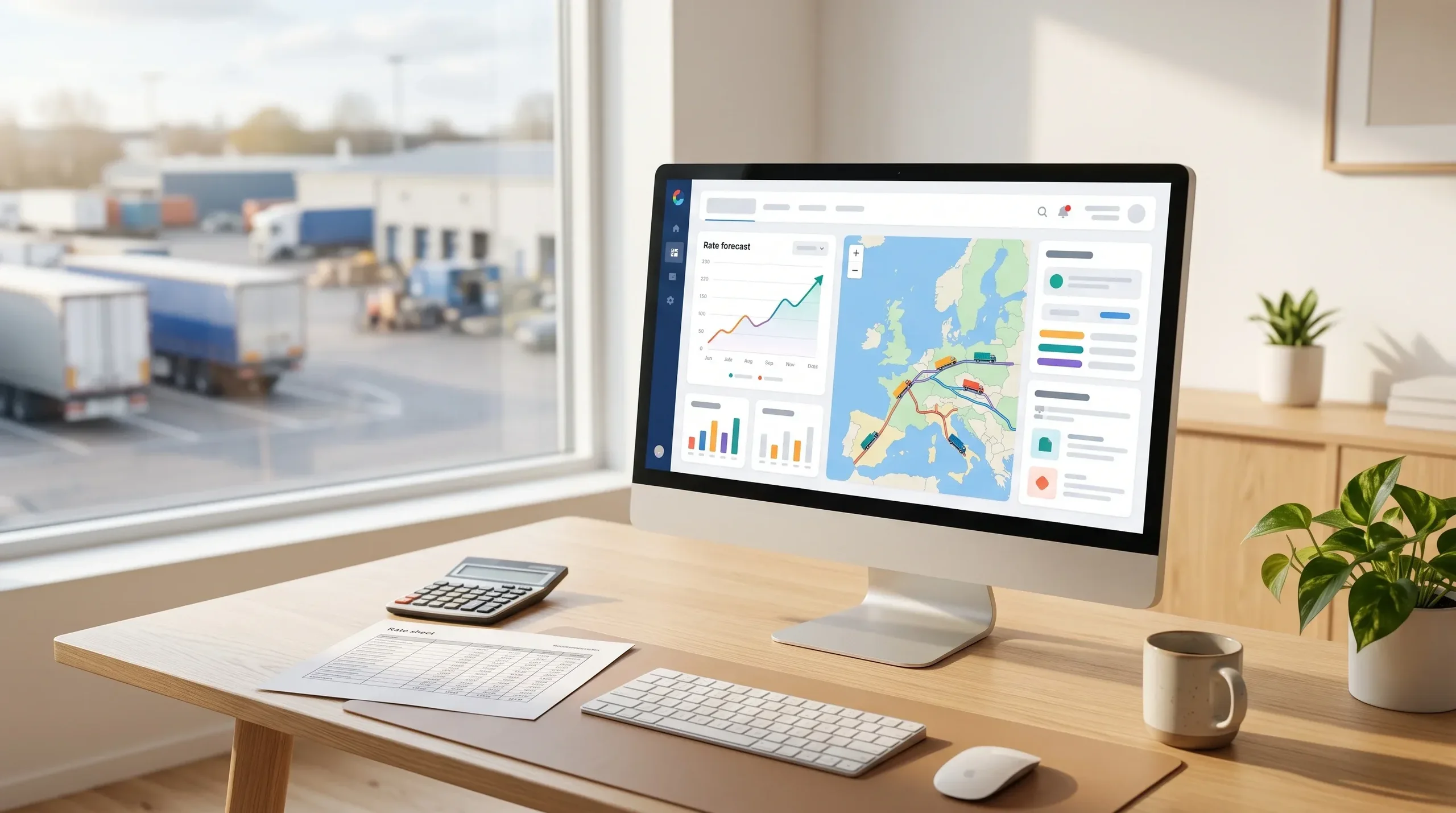
Freight Rate Forecasting for a Forwarder
Freight rate forecasting for a forwarder in Lithuania. It flags truck shortages and rate jumps by lane before the trip is quoted.
- By laneSpot Rate and Shortage Forecast
- 1 storeFor ERP, Exchange and Public Data
- TestedOn the Forwarder's Own Trips
- 1 tapFor the Driver's Route
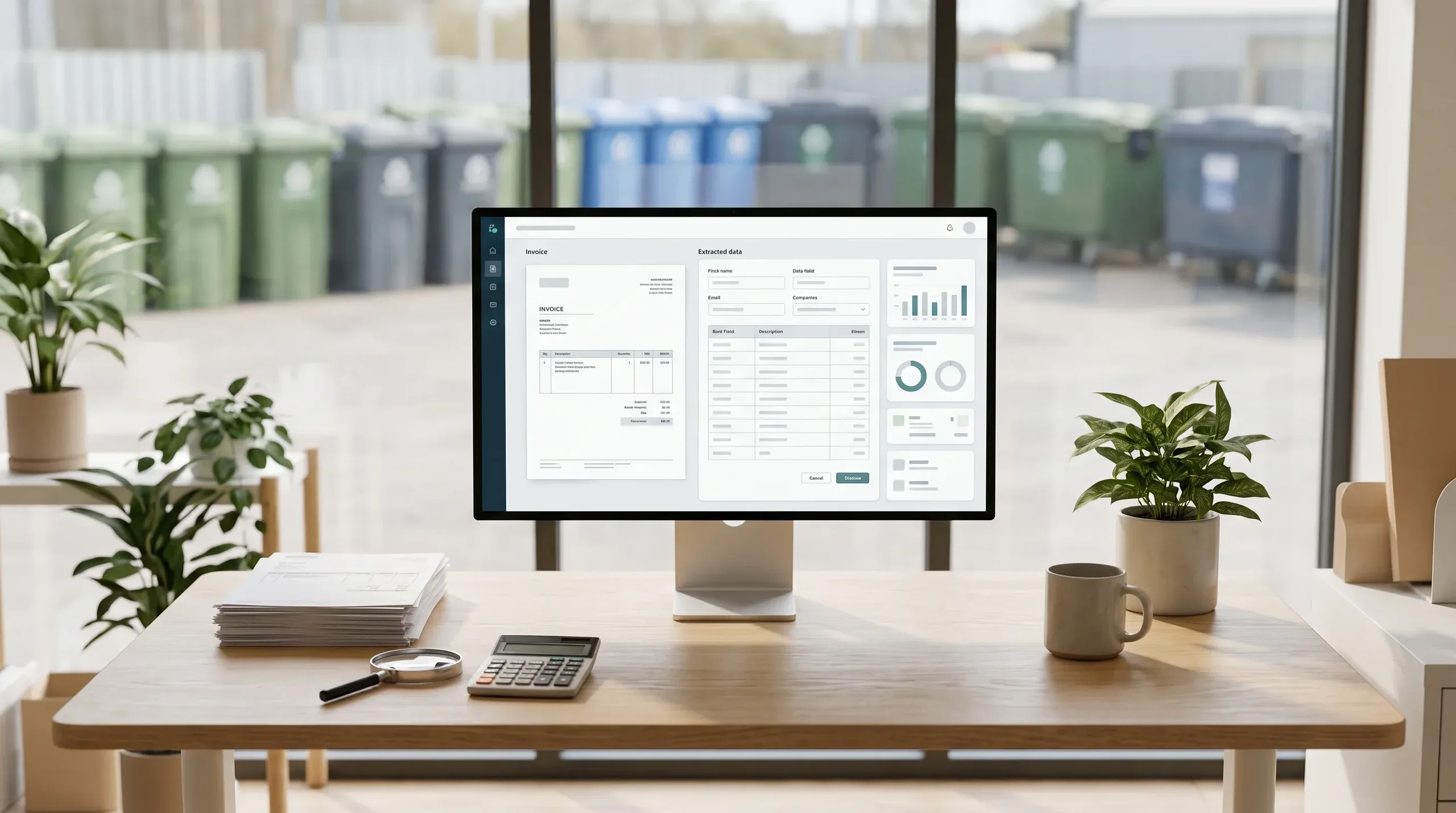
Invoice Data Extraction
Invoice data extraction for a US waste broker: hauler prices from 500 PDF invoices a month feed a price history, quick quotes and a marketplace for regular services.
- On the callWhen Sales Can Name a Price
- ExceptionsWhat People Still Review
- 12 monthsOf Invoices Read in One Run
- To the centOn the Client's Sample Invoices

Revvy
CRM analytics by voice: a salesperson speaks a question into a mobile app and gets back the chart that answers it.
- 1 phraseFrom Question to Chart
- 3 stepsSpeech, Query, Chart
- Any managerCan Ask the CRM
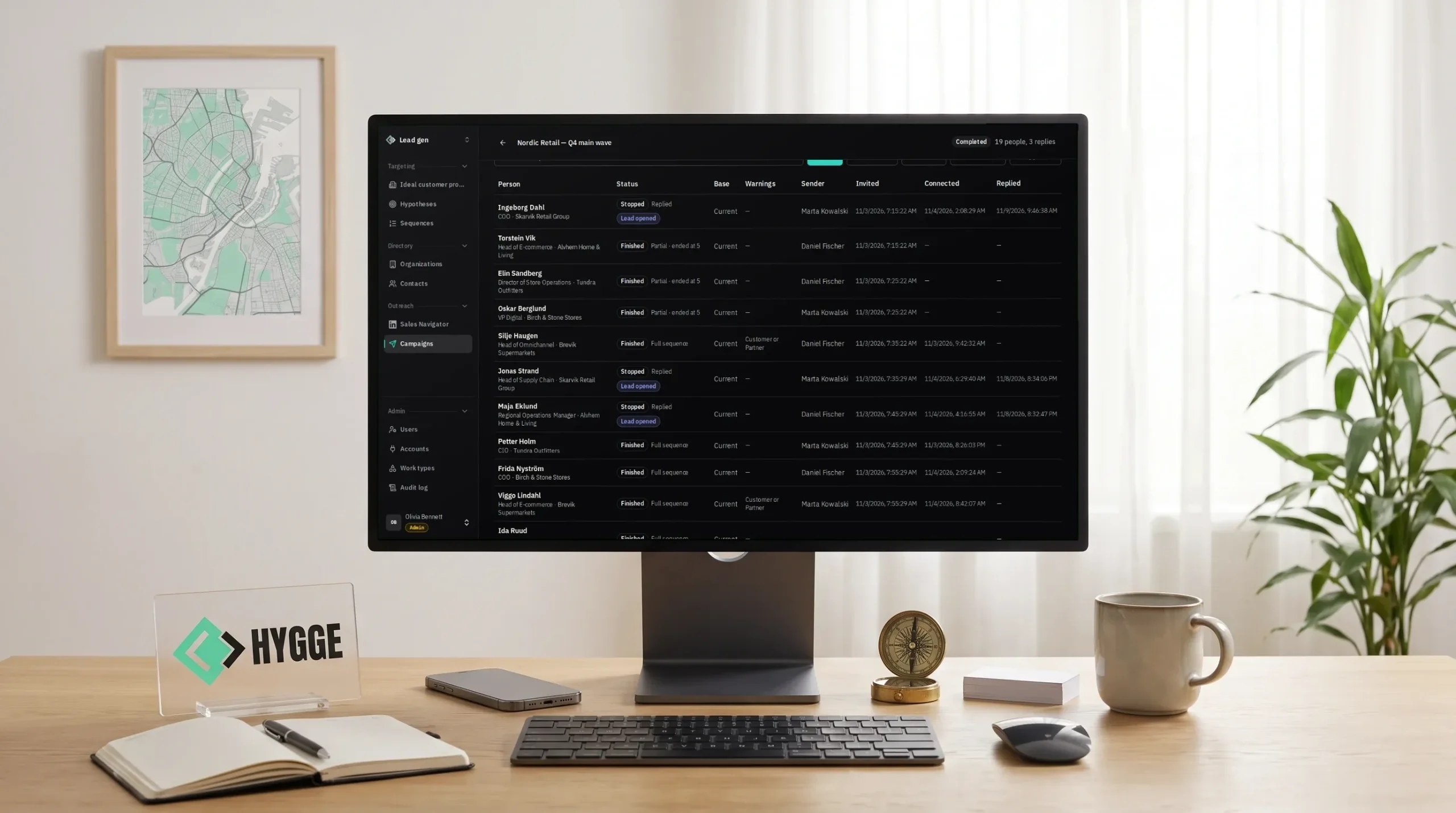
Hygge Lead Generation
Hygge's own outbound platform, where only approved hypotheses run campaigns. Every reply traces back to the targeting behind it.
- 5 toolsReplaced by one platform
- 0Scripted messages sent after a reply
- Every leadTraced to its hypothesis
- Per accountDaily and weekly sending limits
What You Get From the Data Audit
A source inventory with a quality rating on each, a warehouse or lake recommendation with the reasoning, a straight answer on whether your data can support the AI use case you have in mind, and a fixed scope and price. Data engineering consulting that ends in a document you can act on.
The Stack Behind Data Warehouse Development
The tools behind Hygge's data engineering solutions, chosen per project against your volume, your freshness requirement, and what your own team can operate after handover.
Scheduled and event-driven jobs with dependencies, retries and alerting, so a failure surfaces before someone reads a stale dashboard.
 Airflow
 Dagster
 dbt
dbt Kafka
Kafka Airbyte

Data Integration Services: Frequently Asked Questions
What data integration services have to get right before anything is reported off a platform.
 What is a data pipeline?
What do data engineers do?
How to create a data pipeline?
What are data pipelines used for?
What is data engineering?
How much do data engineering services cost?
Do I need data engineering before AI?
What is the difference between a data engineer and a data scientist?
How do I know if my data is ready for AI?
Should I build a data warehouse or a data lake?
Who maintains the pipelines after handover?
From Scattered Sources to One Reliable Layer
Tell us what systems you run and what question you cannot answer today. You get a source inventory, a scope, and a price.
Tell Us Where the Numbers Disagree
Share the reports, the sources behind them, and where two teams get different answers from the same question.
Get a First Consultation
We map your sources, pipelines, and reporting layer for anything that would change scope, cost, or timeline.
Receive a Detailed Proposal
A scoped plan with the approach, timeline, and cost, built around your actual data sources.