


Fintech Software Development Where the Money Reconciles Itself
A payment that succeeds is the easy path. What decides whether a money product holds is the rest: a retry that does not double-charge, a payout that survives a failed transfer without losing the record, and a settlement run that reconciles against the events behind it before anyone opens a spreadsheet.
What Payment Platform Development Solves
Where a product that moves money starts costing trust. A balance takes a second too long to update, a refund lands without a matching record, and support cannot tell a customer where their money is. Trust is expensive to earn back once a ledger has been wrong in public.

Payouts Are Assembled by Hand
Partner or seller payments are calculated from counts somebody compiles, and every dispute becomes a reconstruction.
- Settlement runs calculated from the same records both sides can inspect
- Schedules partners can plan around, with the next payment visible to them
- A failed transfer that keeps the record and retries
Retries Charge Twice
A timeout leaves the app unsure whether the charge landed, and the safe-looking retry creates a second one.
- Idempotency keys so a retry reads the first result
- Reconciliation between the gateway and your own ledger on a schedule
- An audit trail from any balance back to the events that produced it

Money Moves While the Device Is Offline
A transaction happens where there is no connection, and the system has to decide what it owes when the device reconnects.
- Local capture with an idempotent id and a durable queue
- Conflict rules agreed per field before the code is written
- Balances recomputed from events so a late arrival lands correctly
Balances Disagree at Month End
Finance closes on figures the product does not recognise, and the difference gets argued.
- One definition per balance, enforced where the transaction is written
- Automatic comparison between ledger, gateway and product, reported as a difference
- Discrepancies raised as alerts before a close
What Makes a Money Product Different
Correctness is the feature. Every other product can ship a bug and patch it, while a money product that gets a balance wrong loses the customer and sometimes the licence. Hygge models the ledger as events, defines the failure behaviour before the happy path, and builds reconciliation as part of the first release.

Industries This Applies In
Sectors where money moves and the record has to survive an audit, and where Hygge has shipped it. What changes between them is what is being moved: a payout, a deposit, a settlement, a card transaction. A fintech app development company builds the same ledger for all of them, and the compliance steps move with the product.
Fitness & Wellness
Multi-venue memberships settling weekly partner payouts from check-ins recorded offline.

Retail & E-Commerce
Retail and e-commerce reconciling vendor billing, campaign spend and orders against one ledger.

Media & Entertainment
Media marketplaces taking payment from buyers who never touch a wallet.

Real Estate & PropTech
Property transactions where funds verification gates entry and completion carries a record.

Sales & Marketing Technology
Sales technology where subscription and usage billing follow the contract model.
The Stack Behind Fintech Software Development
Money moves under rules a product team does not get to choose, so this stack is built around a ledger nobody can edit, a full trail per transaction, and the controls an audit asks for. Every balance is derived from recorded events.
Event-sourced balances that can be recomputed and traced.
 PostgreSQL
 Redis
Redis Kafka
Kafka TimescaleDB
Fintech App Development Company Track Record
Company numbers across every project, from the first audit through the years a system stays in service. Fintech app development is judged on the reconciliation: every movement accounted for, at any point in time. The audit at the start is what makes the delivery date and the price hold.
How a Money Product Gets Built
Ledger design first, then the movement, then the interface around it. Digital wallet development follows once the ledger can prove every balance. Each stage ends with something you can open and try.
Money model audit
2 weeksHygge maps every event that changes a balance, defines the behaviour on duplicate, timeout and partial write, and names who may approve what. The output is a ledger design, a scope and an exact price.
Ledger and reconciliation
4-5 weeksEvent-sourced balances with a scheduled comparison against the gateway and the product, reporting differences from the first week it runs.
Settlement and payouts
4-6 weeksPayout schedules calculated from shared records, surviving a failed transfer, with the next payment visible to whoever is being paid.
Product surface
4-6 weeksThe application people use, including the offline path where money moves away from a connection.
Related Digital Wallet Development Work
Projects where the money movement and the record behind it decided the build. Each started with balances that had to be provable to a regulator or a partner. What you see is payment platform development that held up and the numbers that moved.

Crowdflix
A blockchain marketplace for movie moments, built so a fan who has never touched crypto can buy one without meeting the chain.
- Plain wordsOn every wallet prompt a fan meets
- ~4.5 monthsFrom kickoff to contracts on mainnet
- Pre-launchAn IP risk caught before anything went public
NOODLZ
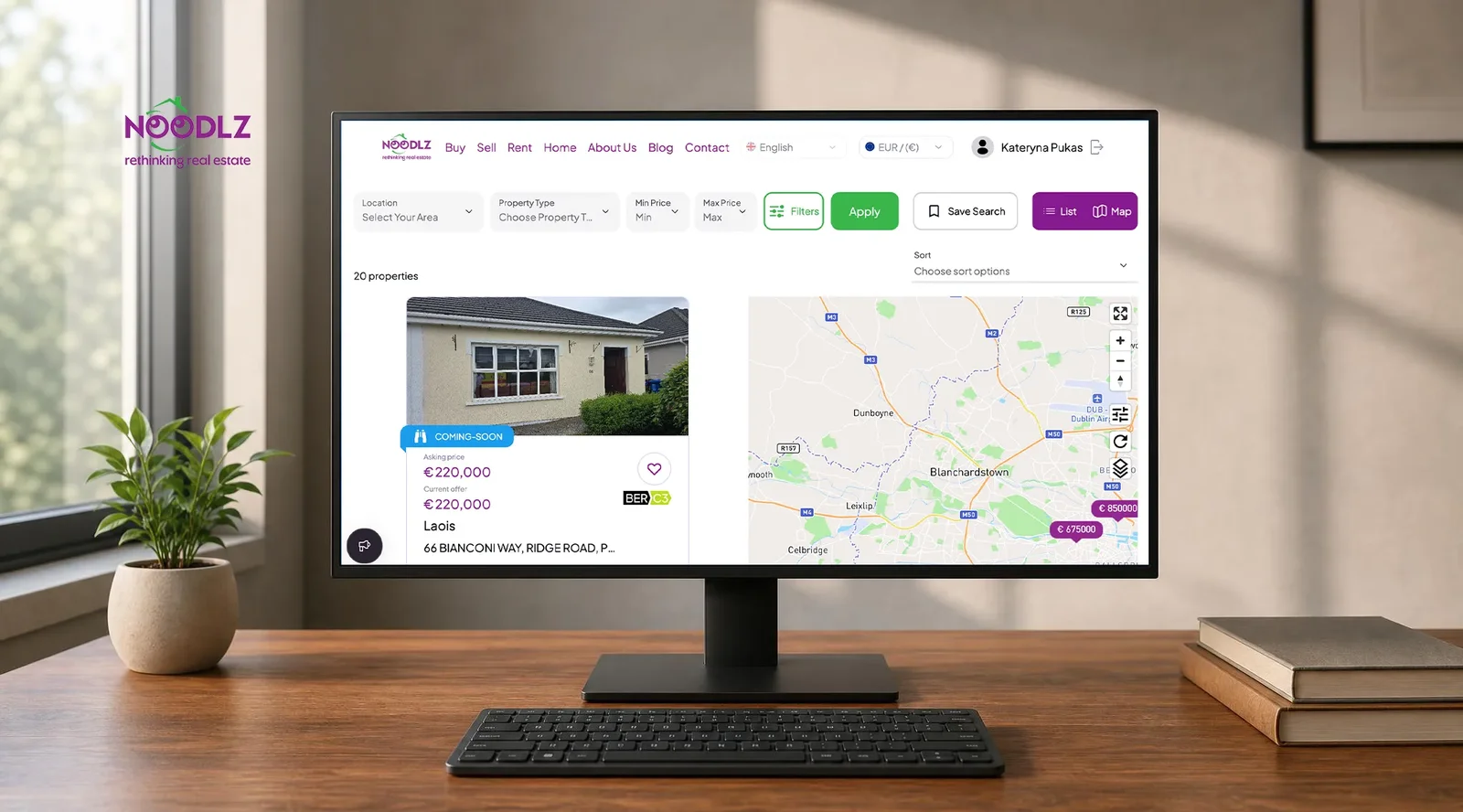
Live auction software for an Irish agency network. Auctions moved off phone calls into one platform with verified bidders and a document vault.
- 1 platformReplaces auctions run outside any system
- 1 vaultReplaces contracts moving between inboxes
- 2+ yearsOf continuous delivery since 2024
Fintech Development: Frequently Asked Questions
Software development for fintech gets judged on the edge cases. These are the ones that come up first.
 What is embedded finance?
How does embedded finance work?
Is embedded finance the same as open banking?
What is an example of embedded finance?
What is the business case for embedded finance?
How do you stop a retry from charging a customer twice?
What happens when a payout transfer fails?
How do you handle money that moves while a device is offline?
Do we need a licence to build this?
Why event-sourced balances?
How much does fintech software development cost?
Can you work with the payment provider we already use?
Start With Every Event That Changes a Balance
Tell us how money moves through your product today and where the totals are checked by hand. You get an audit, a ledger design, a scope and an exact price.

Tell Us How Money Moves Today
Share who pays whom, on what schedule, and which totals somebody reconciles manually.

Get a Money Model Audit
Hygge maps every event that changes a balance and defines the behaviour on duplicate, timeout and partial write.

Receive a Ledger Design and an Exact Price
A written scope with the ledger model, the settlement runs, the reconciliation, the timeline and the cost.