
AI Workflow Automation Services
Multi-step business processes running end to end across the systems you already own, with a model handling the judgment calls a rule cannot express. Hygge builds ai workflow automation around a documented process, an approval gate, and a defined answer for every exception.
What Workflow Automation Services Cover
The parts that decide whether an automated process survives contact with a real week. Hygge delivers ai automation services and scopes which of them your case needs after mapping the process as it runs today.
Process Mapping
The workflow written down as it happens, including the steps nobody documented and the exceptions people handle by memory. Automating an undocumented process automates a version of it nobody runs.
Orchestration and Sequencing
The engine that moves a case from step to step across your systems, retries a failed call, and holds state when a step waits on a person. Workflow automation services live or die on this layer.
Model-Assisted Decisions
The steps where an outcome depends on reading a document, classifying a request, or weighing several signals. A model handles those, with the reasoning logged so an auditor can follow it.
Approval Gates and Accountability
Which actions a workflow takes on its own, which ones wait for a named person, and what the thresholds are. Every automated action carries the identity it ran under.
Exception Handling
The path a case takes when the data is missing, the third party is down, or the outcome falls below confidence. Exceptions are where most of the real work sits, so they get designed first.
Measurement and Monitoring
Cases processed, hours returned, exception rate, and cost per run, on a dashboard your operations lead reads without asking engineering.
What a Process Audit Settles First
Hygge opens with an audit on one real process, watching how it runs for a week before anyone reads a policy document. Workflow automation services quoted before that step are quoted on a guess.
The audit produces each of these:
- The process as it happens on a normal week, including the exception paths and the informal steps.
- Which steps a rule can handle, which need a model, and which stay with a person.
- Volume, handling time, and error rate today, so the saving has a baseline to be measured against.
- The integration points, and what happens where a system has no API.
- Fixed scope and price for the build, plus a cost per run at your projected volume.
What Pushes a Team to Automate a Process
The situations behind most enquiries that reach an AI automation agency.
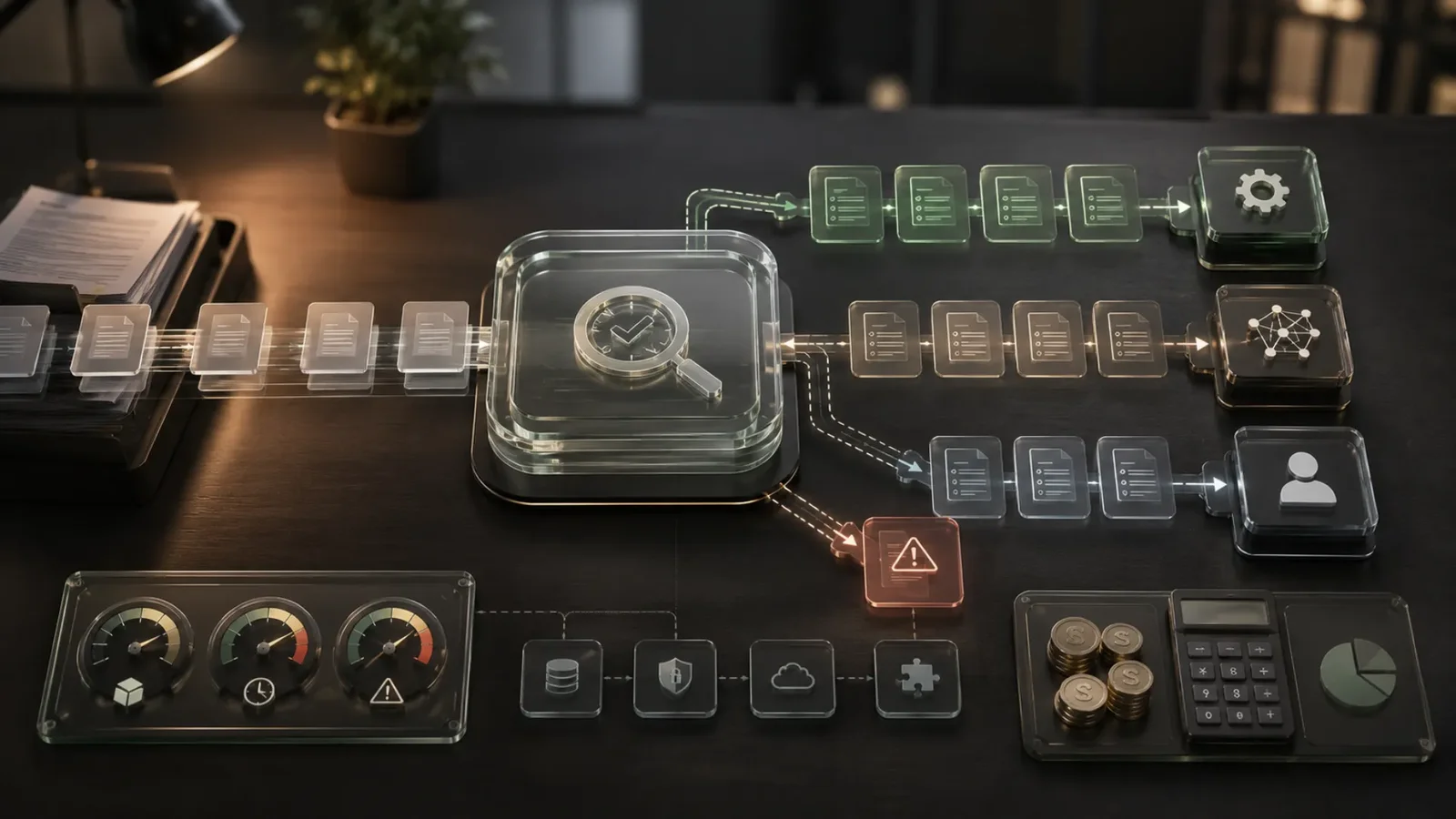
These start when volume grows and headcount grows with it. Workflow automation moves the repeatable part into software and leaves the exceptions with people. The audit measures hours, error rate and backlog age first, so the saving can be checked afterwards.
Headcount Rises With Volume
Every increase in cases means another coordinator moving items between systems. The cost curve tracks volume, and hiring has been the only lever available.
The Rules Engine Cannot Express the Rule
Someone built a rules-based flow that covers the clean cases. The decisions that need reading a document or weighing several signals fall back to a person, which is most of the volume.
Work Sits in Queues Between Systems
A case waits in one tool until somebody remembers to move it to the next. The elapsed time your customer sees is mostly waiting, and nobody can point to where.
Nobody Can Say What a Process Costs
Handling time and error rates live in people's heads. Any business case for automation starts from an argument about numbers nobody has measured.
The Last Automation Broke Quietly
A script or a bot ran for months until a screen changed, and the failures went unnoticed until a customer called. Nothing was monitoring whether it still worked.
How We Automate a Business Process
From watching one process run to a workflow carrying live cases, with a measured baseline behind every claim of a saving. This is how ai automation services get delivered at Hygge.
Process Audit
Two to three weeks observing one process end to end, ending in a documented flow, a measured baseline, and an exact price.
Design the Exception Paths
The unhappy paths get designed before the happy one, because they carry the volume that decides whether the automation holds.
Build Behind a Human Gate
The workflow runs with a person approving each action for the first weeks, which produces the evidence for widening the gate later.
Widen and Watch
Approval thresholds open in stages while exception rate, cost per run, and elapsed time get watched at each level, with a rollback that takes one toggle.
Handover
Dashboards, runbooks, and a session with your operations team, so the people running the process own the automation that runs it.
What Changes Once the Process Runs Itself
The same baseline gets re-measured after cutover, so the saving is a number you can put in a report. Exceptions route to a person with the context attached, and an approval gate sits wherever money moves. Process automation consulting comes first, because a process automated as it stands today usually automates the workaround with it. Workflow automation services then cover the build, the exception paths and the handover. Intelligent automation services extend it where a rule alone cannot decide: reading a document, classifying a request, ranking what a person should handle first.
What Workflow Automation Is Measured On
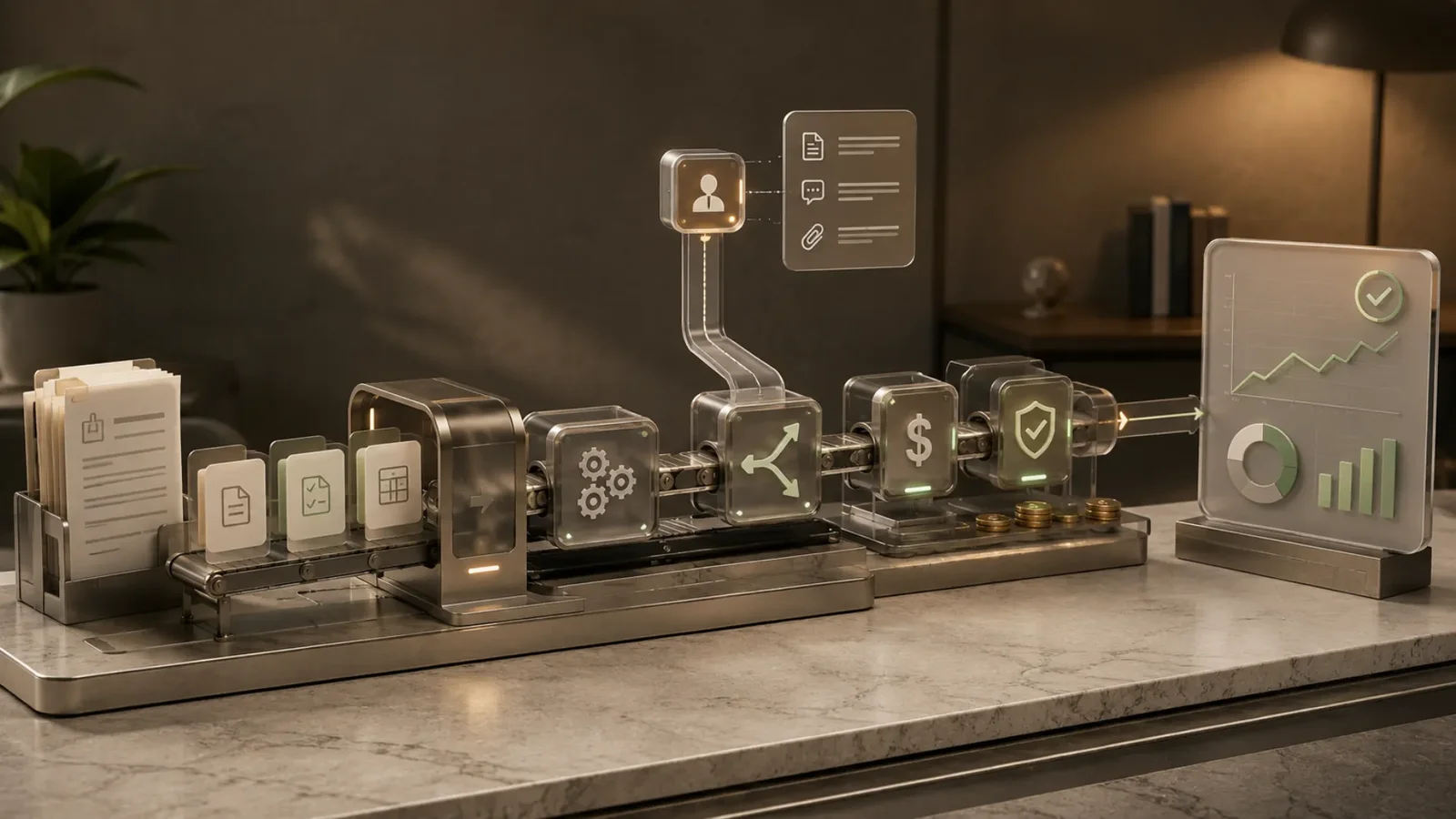
Every number here is agreed with you and measured against how things run today.
Where Automated Workflows Carry the Volume
Sectors where the number of cases decides how many people a process needs.

Sales & Marketing Technology
Lead routing, enrichment and handoffs between the CRM and the tools around it, automated so a rep stops re-keying the same record twice.
HR & Recruitment
Candidate intake, scheduling and offer paperwork moved off inboxes, with an approval step wherever a person has to sign.
Logistics & Warehouse Automation
Order, dispatch and exception handling wired between the WMS and the systems around it, so a stuck shipment raises itself.

Healthcare & Staffing
Intake, credentialing and billing steps automated inside your own perimeter, with an audit trail on every automated decision.
Automated Workflows Running on Live Volume
Workflow automation services Hygge has shipped into working operations.
Hygge Lead Generation
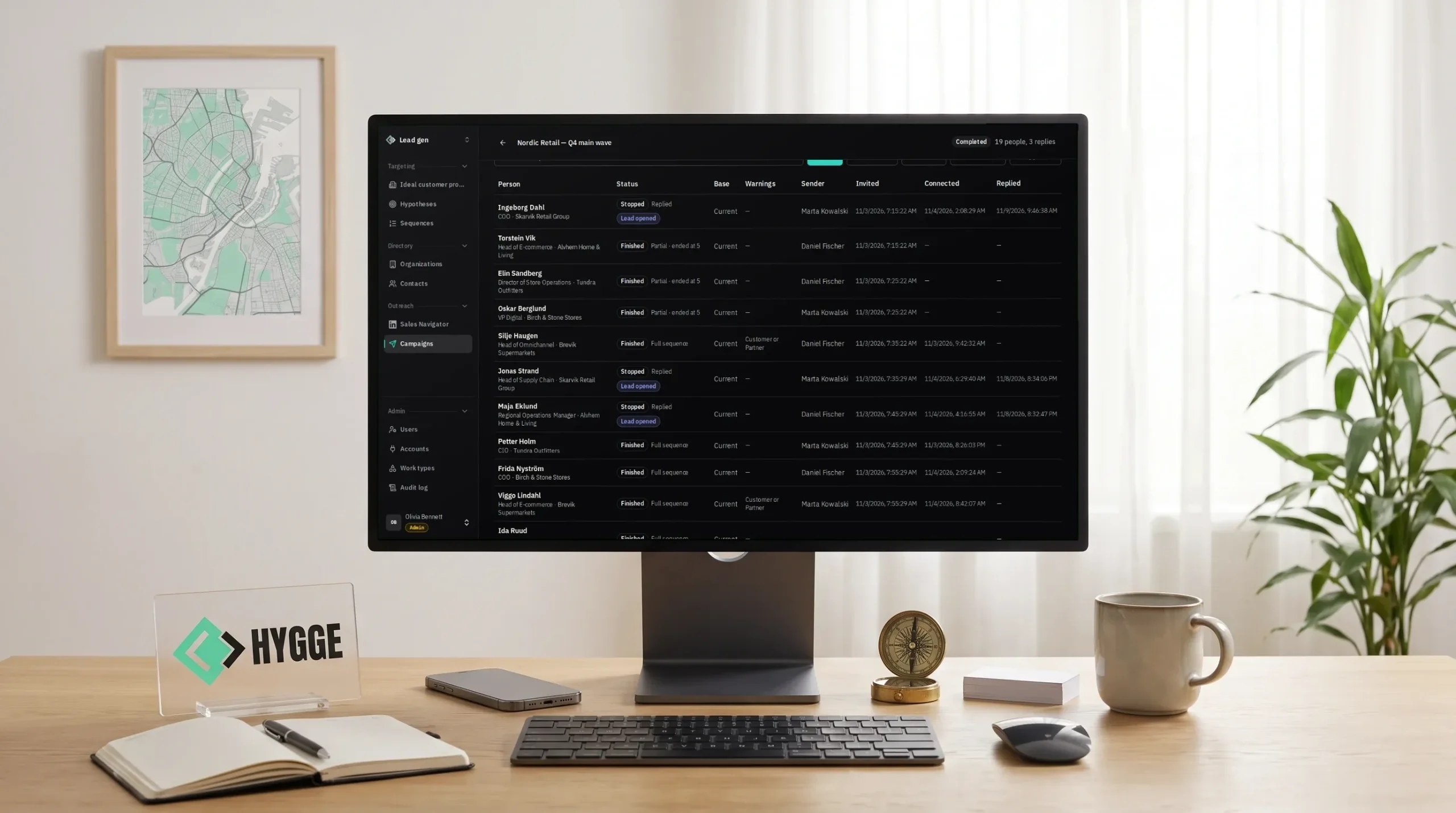
Hygge's own outbound platform, where only approved hypotheses run campaigns. Every reply traces back to the targeting behind it.
- 5 toolsReplaced by one platform
- 0Scripted messages sent after a reply
- Every leadTraced to its hypothesis
- Per accountDaily and weekly sending limits
Hygge Presale
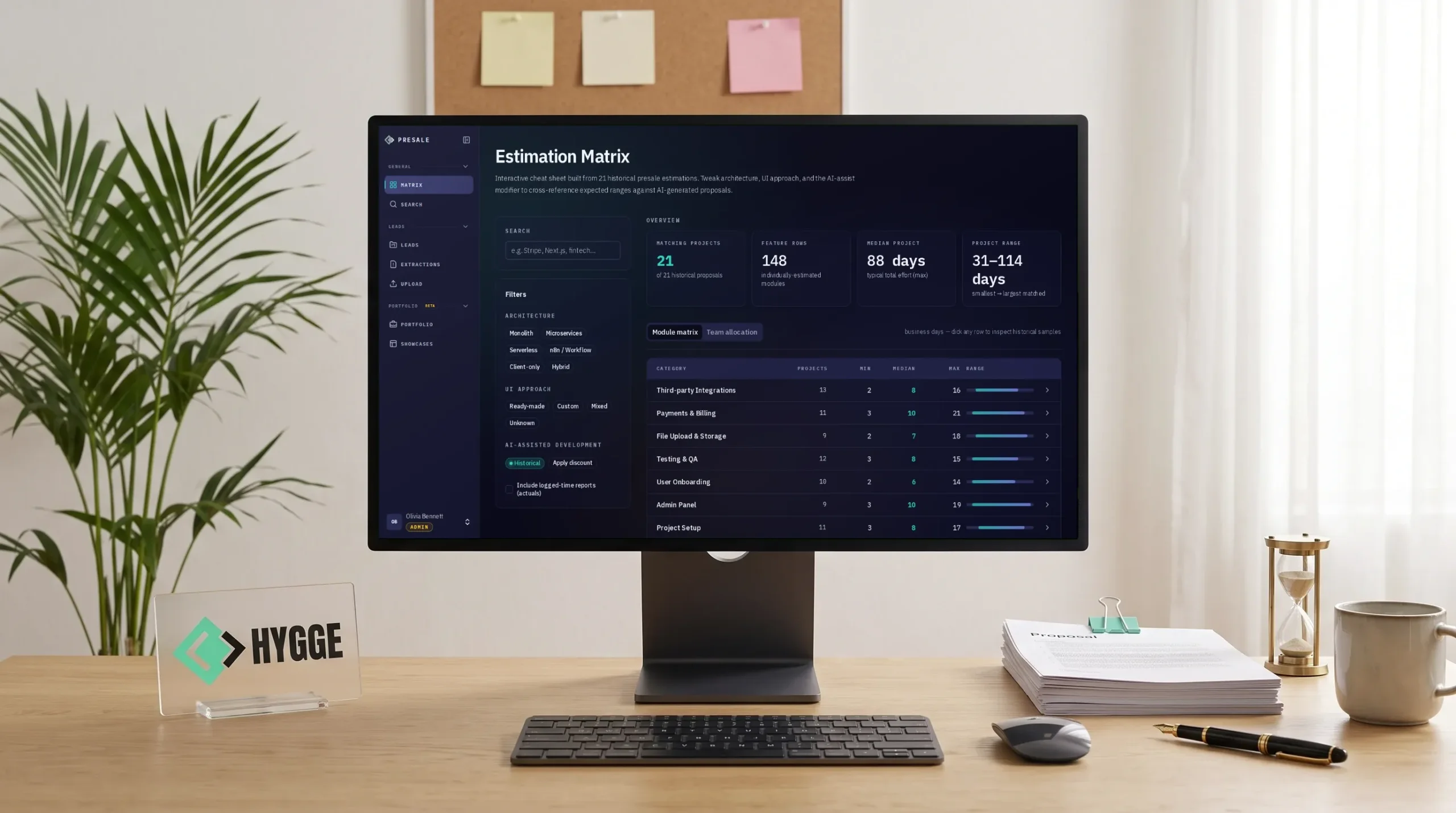
Hygge's own presale workspace, where an AI agent drafts estimates from past deals. People approve them, and every proposal feeds the next.
- 6 sub-statusesDrive each pipeline stage
- Every moduleAnchored to evidence
- 5 formatsFrom one approved deck version
- 3 modesOf case disclosure, enforced
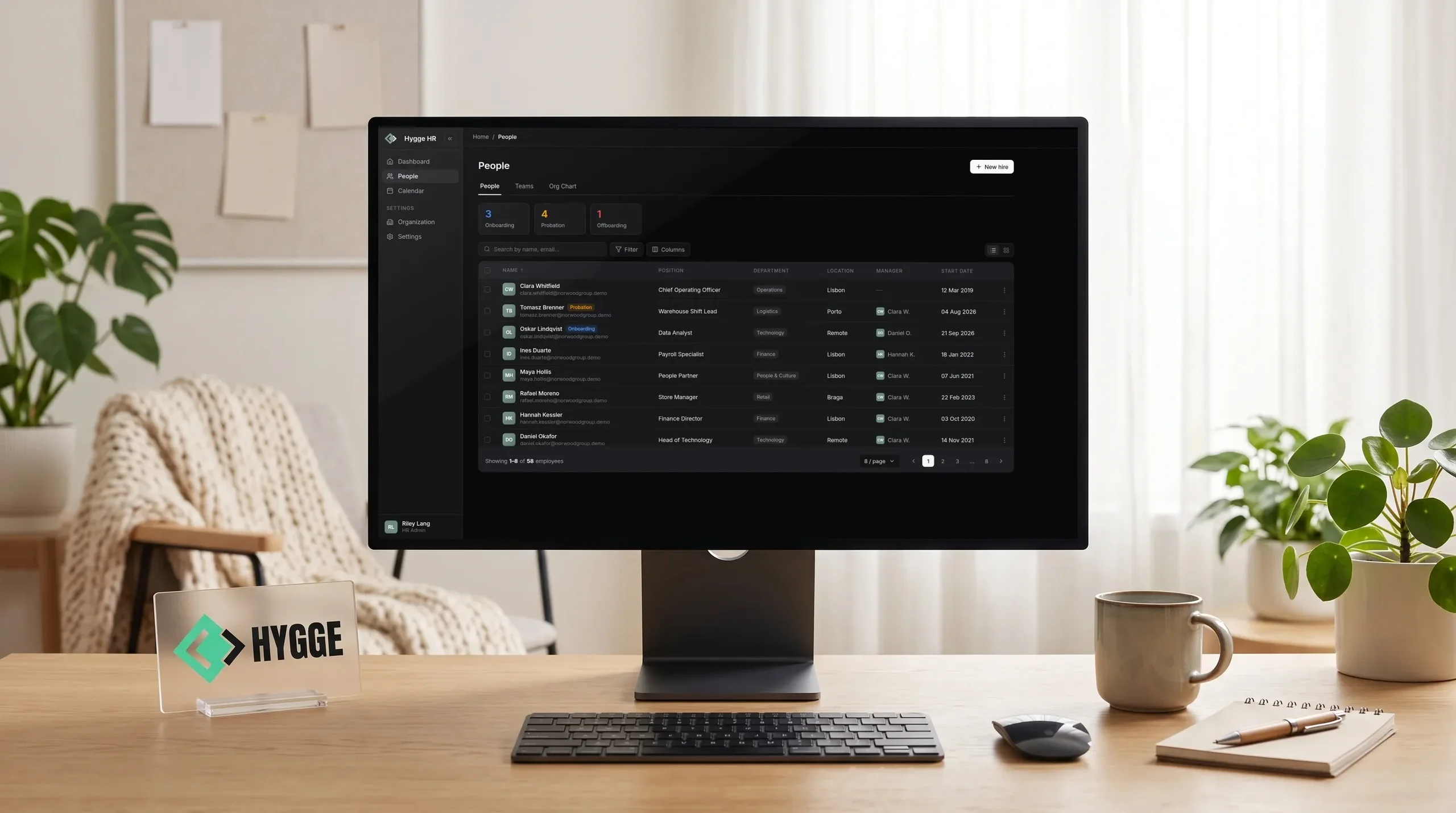
Hygge HR
Hygge's own HR platform: people, time off, hiring and projects in one system. Balances, reminders and pay history update every night.
- 0Manual balance recalculations
- 3+ yearsTenure days added on their own
- 1 platformFor people, time off, hiring and projects
- Any dateRole and pay history on record
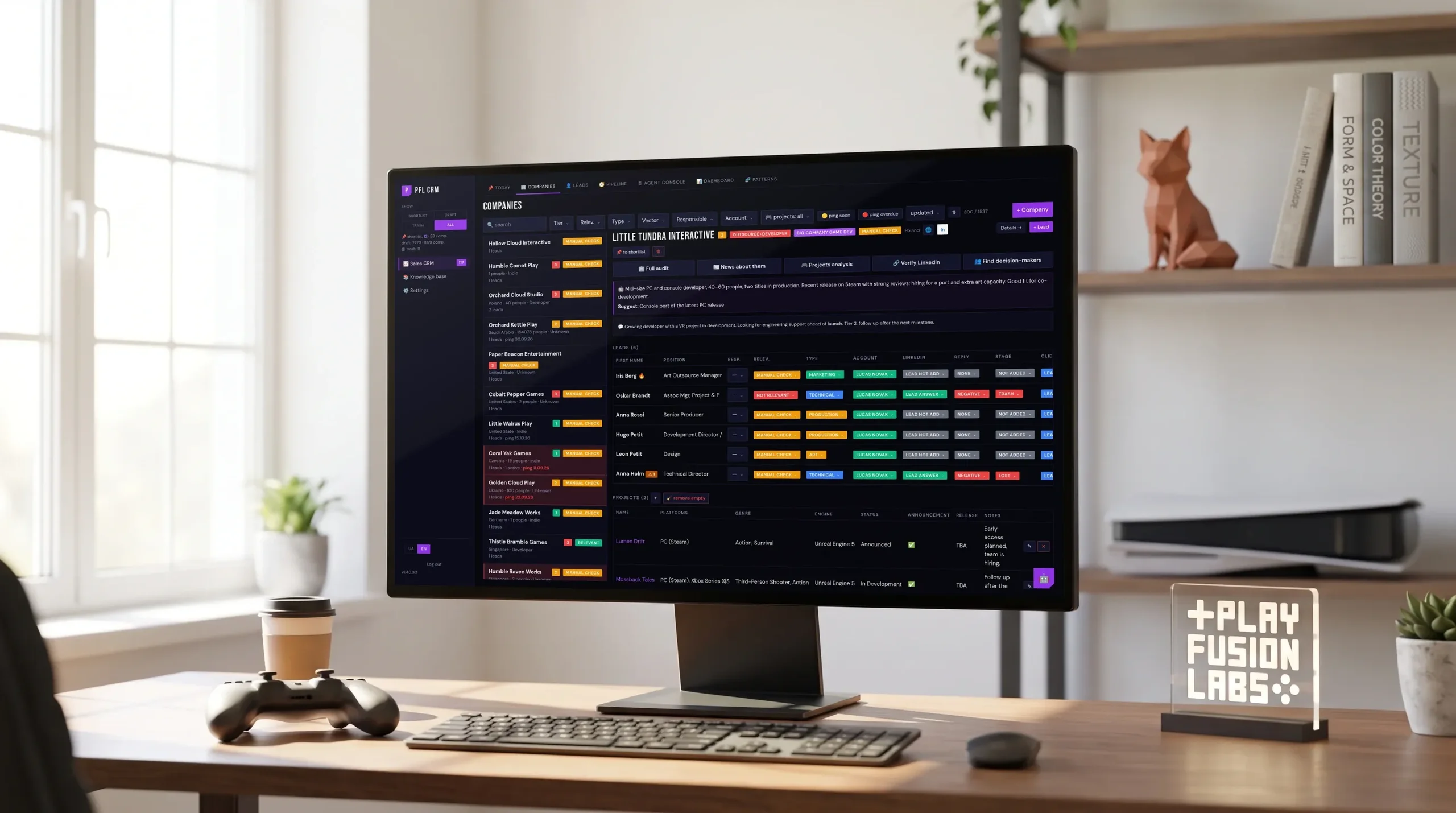
PlayFusionLabs CRM
Custom CRM development for a game studio. An agent researches companies, Today lists who to ping, and finance sits in one database.
- ~2 monthsFrom first call to daily use
- 150+Releases since launch
- 1 databaseFor sales, projects and finance
- $0In per-seat licences
What You Get From the Process Audit
A documented process with its exception paths, a measured baseline for volume and handling time, the integration points named, a cost per run, and a fixed scope and price. An ai workflow automation proposal that arrives with your own numbers behind it.
The Stack an AI Automation Agency Builds On
Chosen against your systems, your volume, and what your own team will operate after handover. Every ai automation services project ends with that handover.
The engine that holds a long-running process together across systems, with retries, timers and a state you can inspect when a run stops halfway.
 Temporal
 Airflow
 Camunda
 n8n
n8n Make
Make

Workflow Automation Software: Frequently Asked Questions
What operations leads ask about workflow automation software.
 What is workflow automation?
How does workflow automation work?
How to automate a workflow?
What are AI workflow automation tools?
What are the most common problems with workflow automation tools?
What is AI workflow automation?
How is this different from RPA?
Which processes are worth automating first?
What happens when the automation hits an exception?
How long does an automation take to build?
Can it work with our existing tools?
How do you measure the saving?
From a Manual Process to a Workflow That Runs It
Tell us which process eats the most coordinator hours. You get a documented flow, a measured baseline, and a price, the same starting point behind every workflow automation services build Hygge ships.
Tell Us Which Process Eats the Most Hours
Share the steps, the systems involved, and how many times a week someone repeats them.
Get a First Consultation
We review your process, systems, and exception cases for anything that would change scope, cost, or timeline.
Receive a Detailed Proposal
A scoped plan with the approach, timeline, and cost, built around your actual workflow.