
Custom ERP Development Around the Process You Already Run
Packaged ERP asks the business to change shape first. A custom ERP starts from how orders, stock and money move through your company today, keeps the parts that work, and puts the rest in one system with one version of every number.
What Custom ERP Software Development Solves
Where an operations stack stops holding together. Orders live in one system, stock in another, and finance rebuilds the truth by hand at month end. Custom ERP software development starts by naming which of those breaks costs you the most.

Every Answer Requires an Export
Order status sits in one tool, stock in another, invoices in a third. Answering a customer means opening all three and reconciling by hand.
- One operational record from purchase order through fulfillment to invoice
- Stock levels written by the same transactions that move goods
- Status visible to sales, operations and finance from the same view

The Numbers Disagree at Month End
Finance closes on figures operations does not recognise, and the difference gets argued.
- One definition per figure, enforced where the transaction is written
- A ledger that reconciles against operational events automatically
- An audit trail from any number back to the transaction behind it
Packaged ERP Forces a Rewrite of the Business
The implementation quote assumes your process changes to match the product, and the change management costs more than the license.
- Modules scoped to the processes you run, delivered one at a time
- Custom ERP software shaped around your existing terminology and approvals
- A migration path that keeps the current system running until each module is proven
Integrations Break at the Worst Moment
The connector to accounting or the warehouse system fails quietly, and the gap is found during a close.
- Queues and retries so a failed sync recovers on its own
- Alerts on drift between systems before finance finds it
- ERP development services covering the integration surface, not the core alone
What Makes ERP Software Development Hard
An ERP is the place a business keeps its truth, so correctness matters more than features. Transactions have to be atomic across modules, historic records have to stay readable years later, and every number has to trace back to the event that created it. Hygge settles the transaction model and the migration path in the audit, before any module gets built.
Industries This Applies In
Sectors where the operational record is the product of the business, and where Hygge has built it. What changes between them is the unit being tracked: a pallet, a case file, a shipment, a booking. The modules and the reporting move with it, and the underlying record stays one.
Logistics & Warehouse Automation
Logistics operations where stock movements, carrier events and invoices have to reconcile against one order.

Retail & E-Commerce
Retail and e-commerce where purchasing, campaign spend and vendor billing meet in the same ledger.

Media & Entertainment
Media businesses tracking rights, deliverables and payouts across contracts.

Aviation
Aviation operations where every parts movement carries a revision and a signature.
The Stack Behind ERP Software Development
ERP records have to be correct across modules at the same instant, so this stack is built on transactional guarantees first. Month end runs on a separate query path, so closing the books leaves daily operations at full speed.
Storage and workflow for records that have to be correct across modules at the same instant.
 PostgreSQL
 Java
Java Spring Boot
.webp?v=2026-09-29T09%3A19%3A03.736Z) .NET (C#)
.NET (C#) Temporal
Custom ERP Development Track Record
Company numbers across every project, from the first audit through the years a system stays in service. ERP implementation services are judged on what happens after go-live, so these cover the running years as well as the build. The audit at the start is what makes the delivery date and the price hold.
How ERP Implementation Services Deliver a Custom ERP
One module at a time, each proven against the system it replaces before the next starts. Your team keeps running on the old system until the new module matches it on real data. Nothing gets switched off on a promise.
Process and transaction audit
2-3 weeksHygge maps how an order moves today, which system owns each figure, and where the current numbers disagree. The output is a module plan, a scope and an exact price.
First module in production
6-8 weeksThe module with the clearest pain goes live beside the existing system, writing to the new transaction model while the old one stays available.
Reconciliation cycle
2-4 weeksBoth systems run a full period in parallel. The module goes sole-source once the figures match without manual correction.
Remaining modules and integrations
ongoingEach further module repeats the same pattern, with accounting, warehouse and carrier integrations built as the modules that need them arrive.
Related ERP Development Services Work
Projects where the operational record and the money attached to it decided the build. Each one started with a process the client was running by hand or across three separate tools. What you see is the system that replaced it and the numbers that moved.
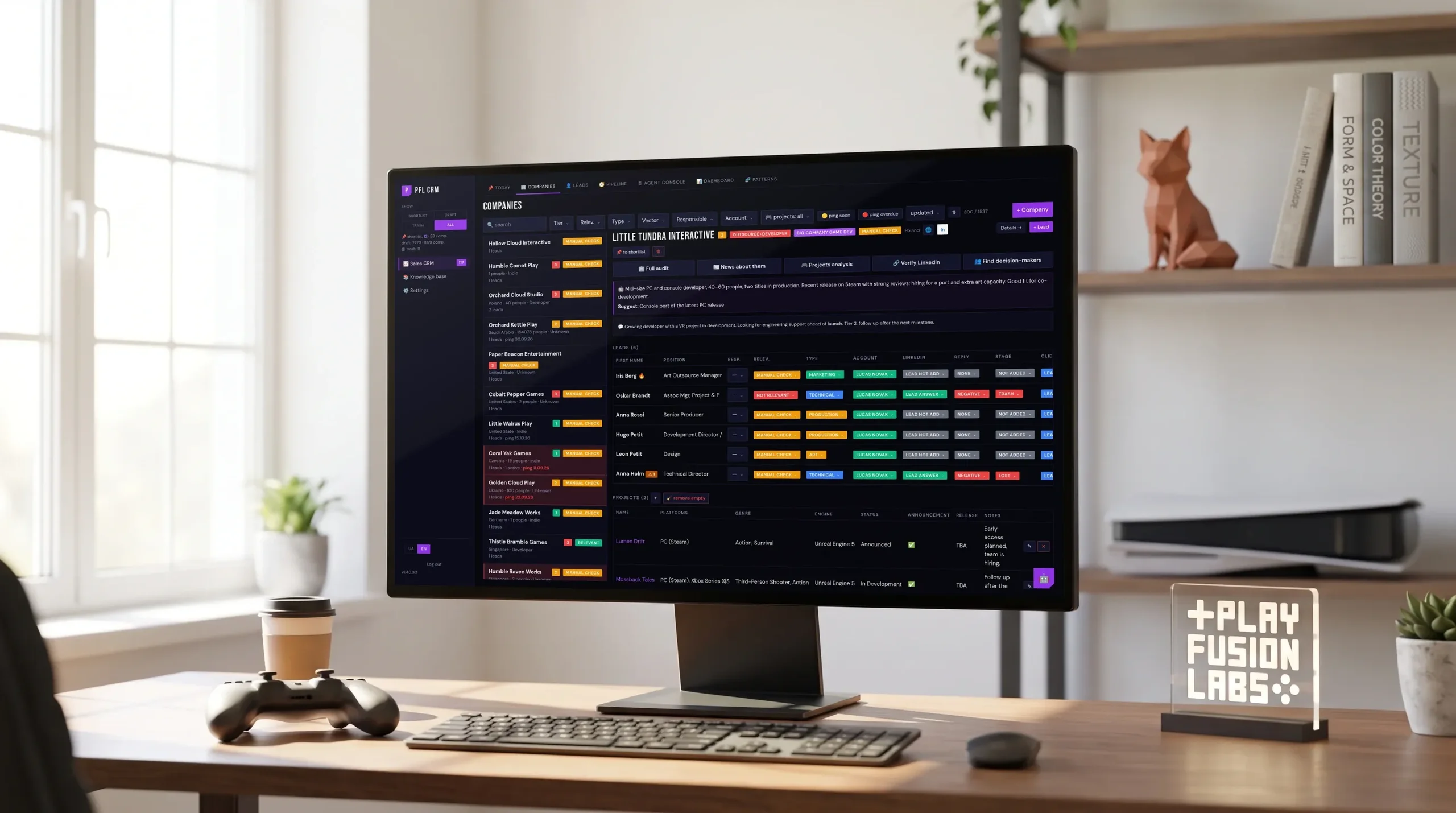
PlayFusionLabs CRM
Custom CRM development for a game studio. An agent researches companies, Today lists who to ping, and finance sits in one database.
- ~2 monthsFrom first call to daily use
- 150+Releases since launch
- 1 databaseFor sales, projects and finance
- $0In per-seat licences
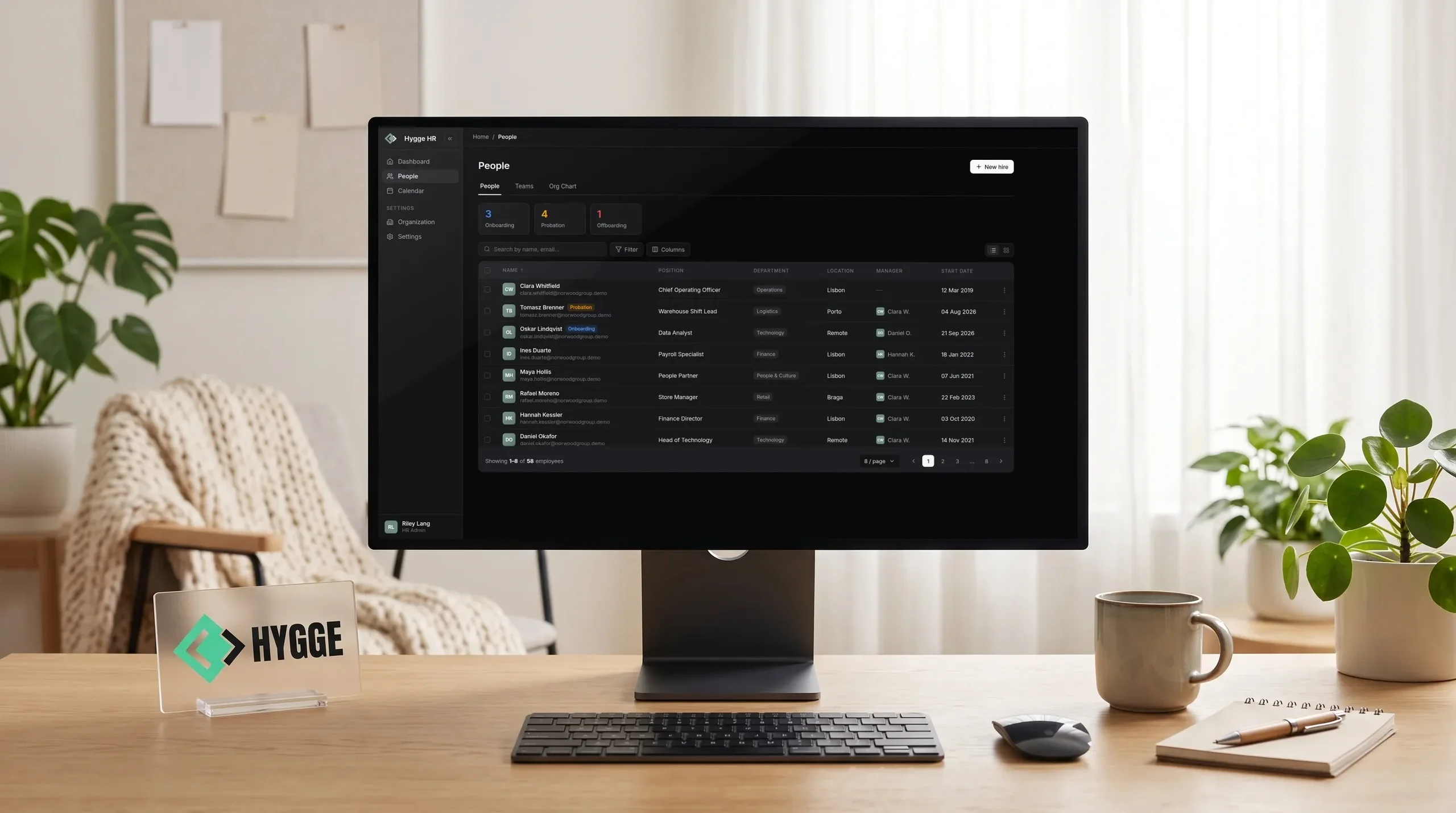
Hygge HR
Hygge's own HR platform: people, time off, hiring and projects in one system. Balances, reminders and pay history update every night.
- 0Manual balance recalculations
- 3+ yearsTenure days added on their own
- 1 platformFor people, time off, hiring and projects
- Any dateRole and pay history on record
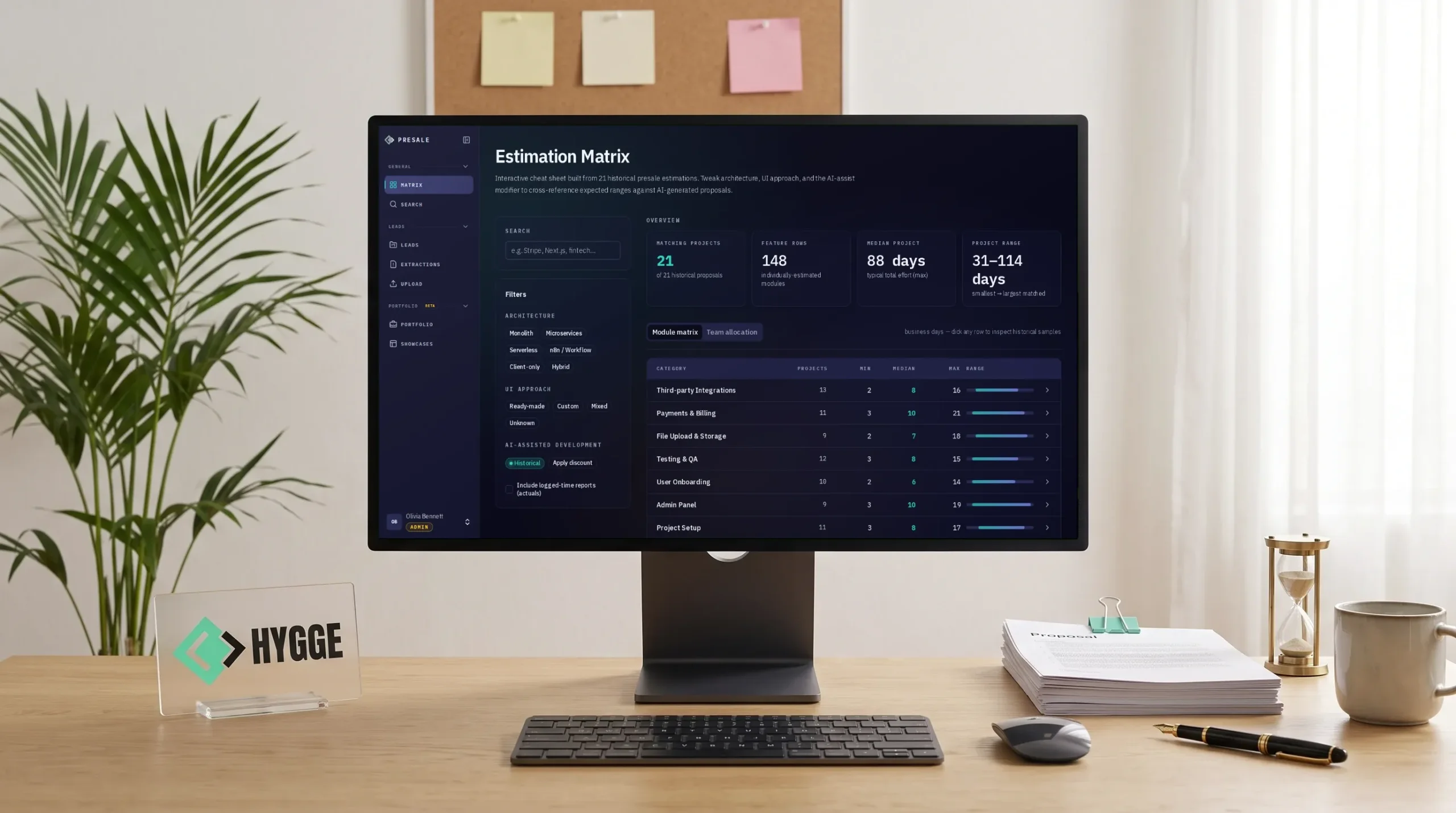
Hygge Presale
Hygge's own presale workspace, where an AI agent drafts estimates from past deals. People approve them, and every proposal feeds the next.
- 6 sub-statusesDrive each pipeline stage
- Every moduleAnchored to evidence
- 5 formatsFrom one approved deck version
- 3 modesOf case disclosure, enforced
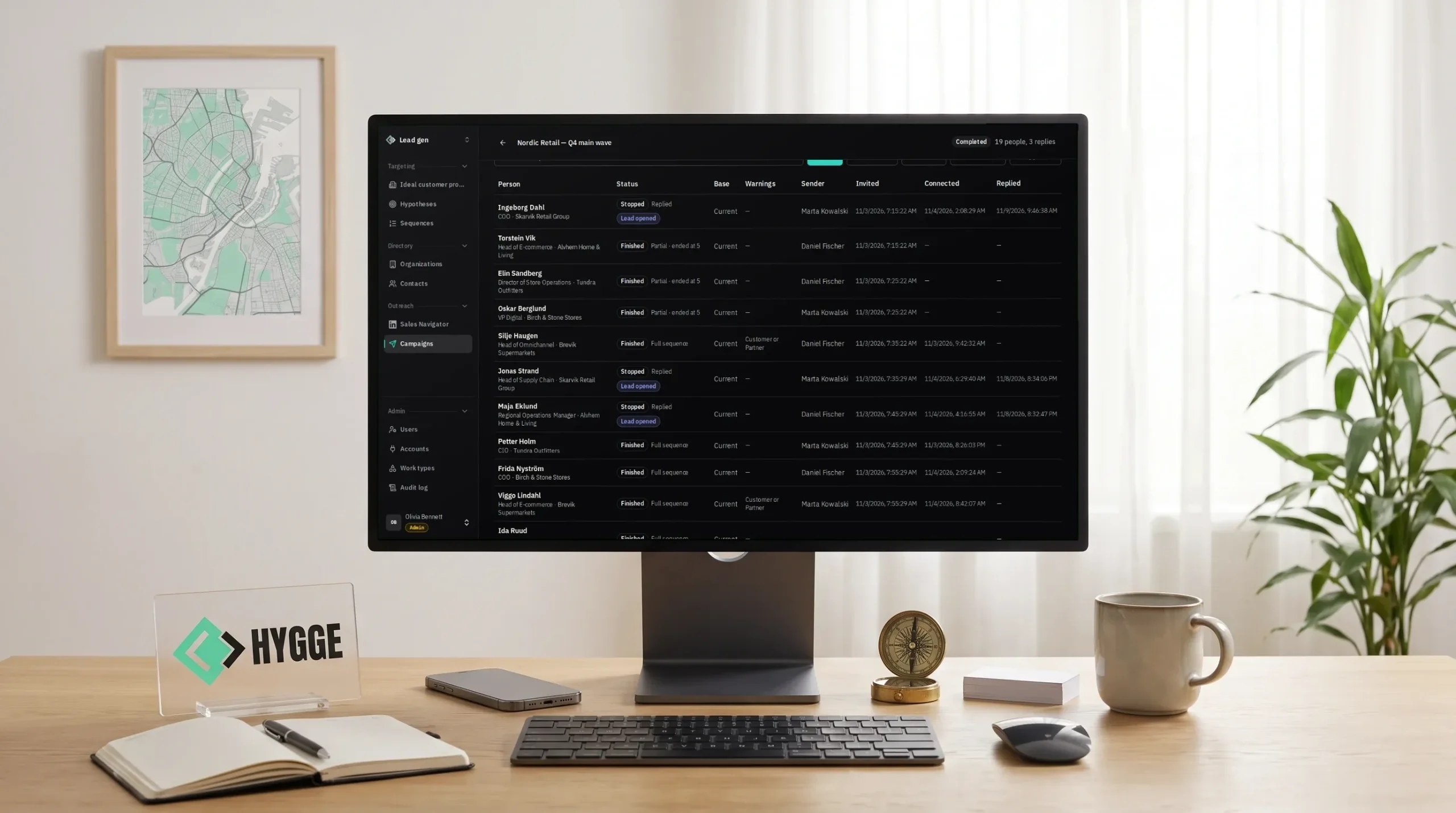
Hygge Lead Generation
Hygge's own outbound platform, where only approved hypotheses run campaigns. Every reply traces back to the targeting behind it.
- 5 toolsReplaced by one platform
- 0Scripted messages sent after a reply
- Every leadTraced to its hypothesis
- Per accountDaily and weekly sending limits
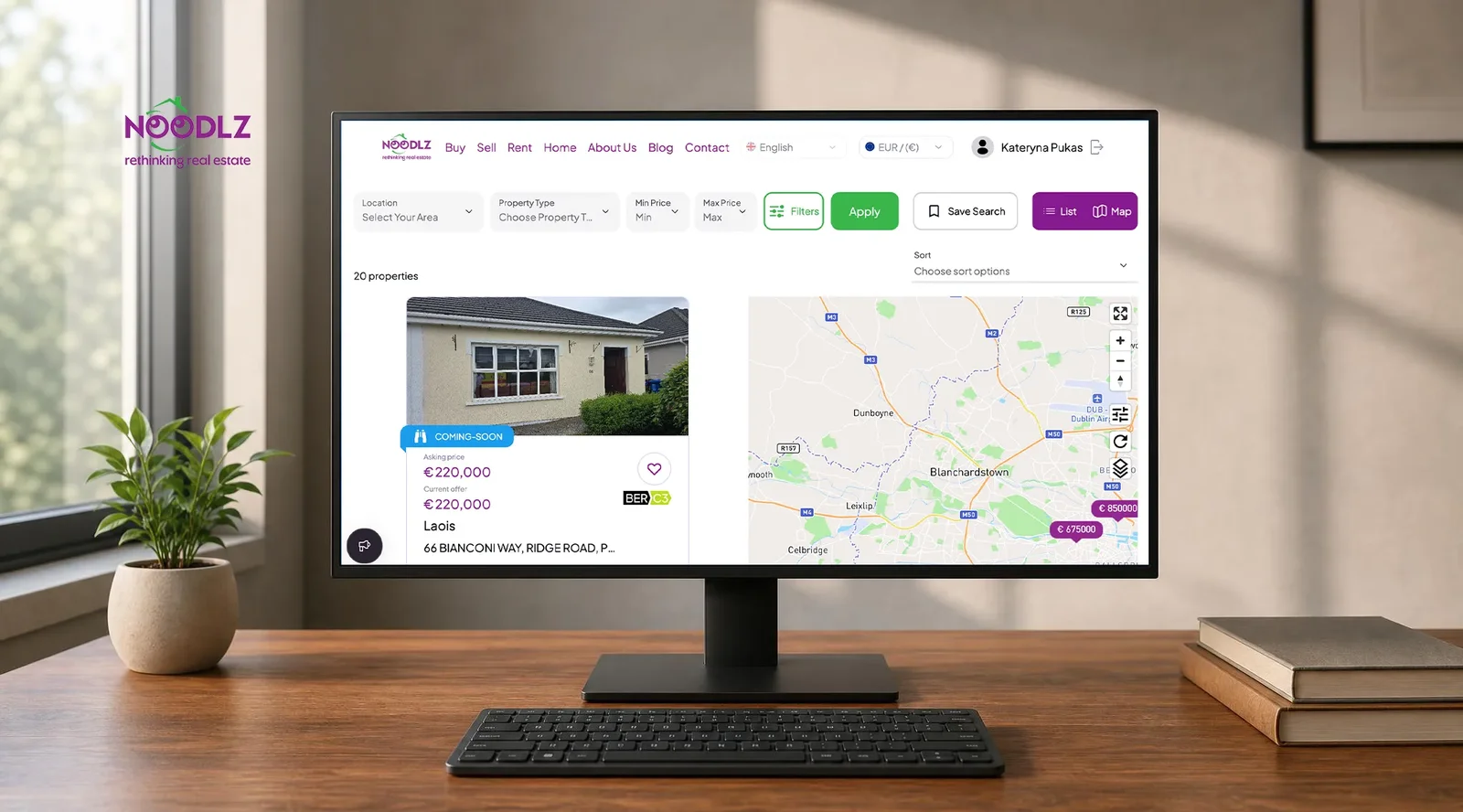
NOODLZ
Live auction software for an Irish agency network. Auctions moved off phone calls into one platform with verified bidders and a document vault.
- 1 platformReplaces auctions run outside any system
- 1 vaultReplaces contracts moving between inboxes
- 2+ yearsOf continuous delivery since 2024
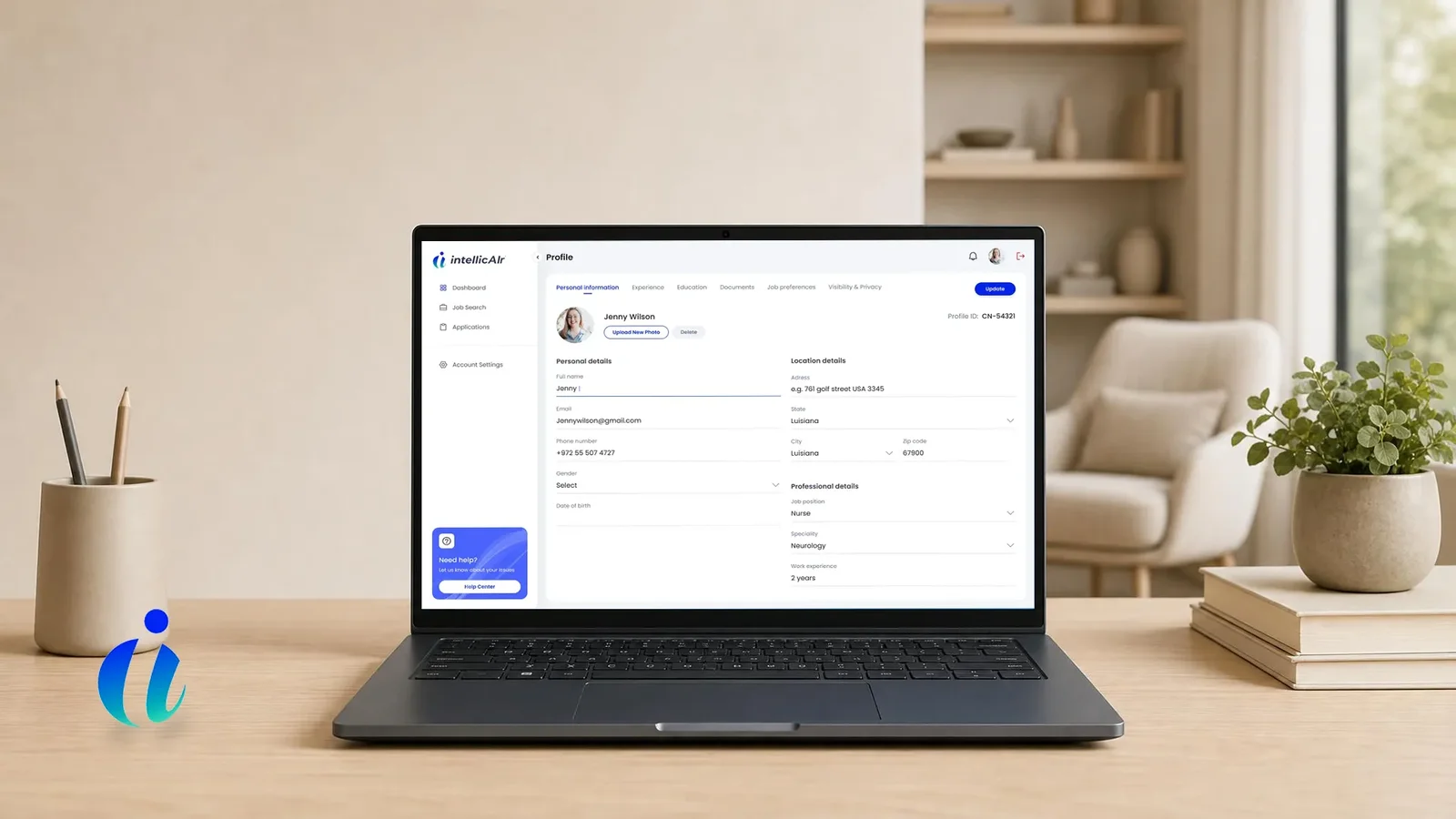
IntellicAIr
A nurse staffing marketplace built around a sealed bidding engine written from scratch. Bids stay hidden until the round closes.
- 1 roundFor a post that waits 78 days to fill
- No nameOn a bid that used to hide a 40 % cut
- 1 inviteBrings a facility's own agencies onboard
Before You Commit to Custom ERP Development
What decides whether an operations rebuild holds: which processes deserve automation first, where an approval gate belongs, and why the same metric gives two answers. These are the questions that set the scope before anyone writes code. Reading them early is cheaper than finding them in month four.

ERP Development: Frequently Asked Questions
Whether an ERP should be built or configured, and how to tell which one you need. The answers below cover cost, timeline, erp integration services, migration off your current system, and what happens to the data you already have.
 What does an ERP do?
What is an ERP system?
What are ERP systems used for?
What is ERP software?
When does custom ERP development beat a packaged system?
How do you replace an ERP without stopping the business?
How much does custom ERP software cost?
What happens to our historic records?
Do we have to replace everything?
How long before the first module is live?
Who owns the ERP and the data?
Start With How an Order Moves Through Your Company
Tell us where orders, stock and invoices live today and which figures disagree. You get an audit, a module plan, a scope and an exact price.
Tell Us Where the Record Splits
Share the tools holding orders, stock, purchasing and invoicing, and the reports that take manual work to produce.
Get a Process and Transaction Audit
Hygge maps how an order moves, which system owns each figure, and what has to reconcile before anything is replaced.
Receive a Module Plan and an Exact Price
A written scope with the module order, the integrations, the timeline and the cost per phase.