
WebRTC Development
Hygge is a webrtc development company that builds video and audio calling into your own product, tested against the networks your users connect from. Every project moves through an audit, a build with a working demo every week, a staged rollout with call quality monitoring, and support once it carries live traffic.
What Goes Into Video Calling App Development
Here's what each layer of a webrtc app development project covers, and how we decide which pieces your product needs after reviewing your call patterns, platforms, and network conditions.
Signaling & Session Logic
The layer where participants find each other, exchange connection details, and join a room, wired into your product's existing authentication and permissions.
TURN & STUN Infrastructure
Relay and discovery servers that get a call connected through corporate firewalls, hotel Wi-Fi, and carrier NAT, sized to the load you expect.
Group Calls and Media Routing
An SFU architecture for rooms that grow past a handful of people, with layout, active speaker, and bandwidth handling sized to your largest session.
Screen Sharing & Data Channels
Full-screen or single-window sharing with permission controls, plus chat, file transfer, and structured data moving over the same connection.
Recording, Storage & Playback
Session capture with retention and access rules set during the audit, so a recorded call sits where your data policy requires, reachable to the people allowed to open it.
Call Quality Monitoring
Connection success rate, packet loss, and latency tracked per session, so a regression shows up on a dashboard before a support ticket does.
What the Audit Decides
The concrete choices behind the build, settled with you during the audit, before Hygge commits to scope or price. That includes whether a hosted video call api covers your case or the infrastructure belongs to you.
Settled During the Audit:
- Call topology: one-to-one, small group, or large room, and the routing each size calls for
- Platforms in scope: browsers, iOS, Android, and the OS versions your users are on
- Network conditions to survive: corporate firewalls, mobile data, and the TURN capacity those calls need
- Recording and data ownership: where sessions are stored and who can open them
- Cost and scope agreed: a fixed number for the build, set after the audit defines your session load and platform mix
-1600x900.webp?v=2026-09-29T09%3A15%3A30.584Z)
What Pushes a Team Into WebRTC App Development
Per-minute SDK bills climbing with usage, and calls failing on networks nobody could test from. A webrtc development company puts a number on both during the audit.
Calls fail on networks you do not control, SDK pricing grows faster than revenue, and nobody can explain a bad session. WebRTC development puts the media path and the fallbacks in your own hands. The audit models cost at your projected minutes before anything is built.
SDK Pricing Grows Faster Than Revenue
A hosted video service gets the first version running quickly, then the per-participant-minute line on the invoice tracks your growth, and the margin on every heavy user narrows.
Calls Fail on Networks You Can't Test From
A session that runs cleanly on office Wi-Fi drops on a hotel network, a corporate firewall, or a strict carrier NAT, and the first report arrives from a customer behind the network nobody could reach.
The Call Has to Know What the Product Knows
A workflow where video sits beside a patient record, a class roster, or an order needs both halves in one interface, and a hosted widget passes a narrow set of events across that boundary. Transcripts tied to a case, controls that follow a user's role, moderation that reads your own data: each waits on someone else's roadmap.
Nobody Can Explain Why the Call Was Bad
A user reports choppy audio and a frozen video feed, and the support thread ends without an answer because no dashboard shows packet loss, connection success rate, or latency for that session.
How We Build and Ship WebRTC
From your call workflow to a feature carrying live traffic, the path every project with Hygge's webrtc development services follows, with a working demo at the end of each step.
Audit
We review the call workflow, the devices and networks your users join from, and the concurrent load the system has to hold. That review sets the topology and infrastructure the build works inside.
Architecture
We lock in the signaling approach, the TURN and STUN setup, and the routing model chosen during the audit, and map how it fits your product's infrastructure.
Build
Development runs against throttled connections, mobile data, and restrictive firewalls from week one, so every weekly demo reflects a call placed outside a controlled network.
Deploy
The rollout goes in stages, with latency and call quality monitoring live before it reaches everyone.
Support
Hygge stays on after launch to handle fixes, scale relay capacity as concurrent sessions grow, and add features as the call workflow changes.
What Changes Once Calls Run Inside Your Product
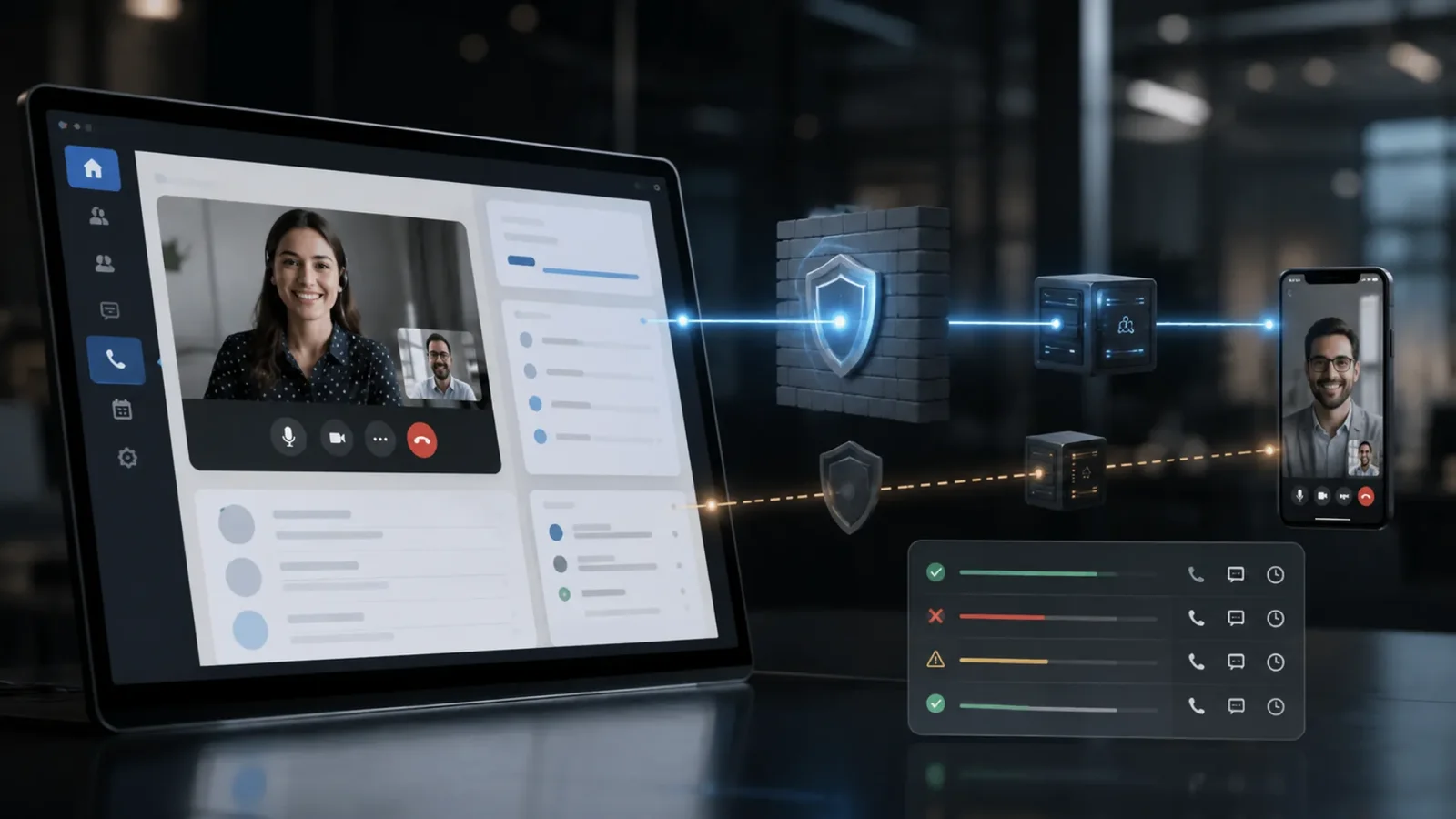
Calls connect through corporate firewalls, with a relay path behind every session and a lower bandwidth mode before a call is lost. Per-minute cost stops scaling with a vendor’s price list, and a failed session leaves a record somebody can read. Video calling app development is the part of this work that decides whether people come back. Two participants have to connect through their home routers, hold the session on a mobile network, and lose quality before they lose the call.
What a WebRTC Development Company Gives Back
What Hygge commits to on this service, and how each commitment is measured.
Where Real-Time Video Changes the Service
Sectors where a live session replaces a trip, a wait, or a phone queue.

Healthcare & Staffing
Consultations and remote assessments held over video, with recording and access controls that meet health data rules.

EdTech
Live classes and office hours with screen sharing, breakout rooms and session recording learners can revisit.
Public Safety & Security
Live feeds from field units into a command center, holding usable quality on a degraded mobile connection.

Media & Entertainment
Live streams and watch-together sessions where sync between viewers is part of the product.
Fitness & Wellness
Live coaching and class streaming where a delayed frame breaks the rhythm of a workout.

LegalTech
Recorded client consultations and remote depositions, with retention rules applied to every file.

Sales & Marketing Technology
Live demos and screen-shared calls logged against the customer record in the CRM.
Real Estate & PropTech
Remote property viewings streamed live to buyers who cannot make the visit.
Real-Time Features Running in Production
Work where live audio, video, or streaming had to hold up for real users on real networks.

Observe
A four-month MVP for a social learning platform, built after a short paid trial. It has profiles, group spaces, payments and live browser video.
- Talent and supportBrought On Board With the MVP
- End to endA Working Product to Demonstrate
- 4 monthsFrom First Trial to a Finished MVP
- 20 hoursPaid Trial That Led to the Build
Crowdflix
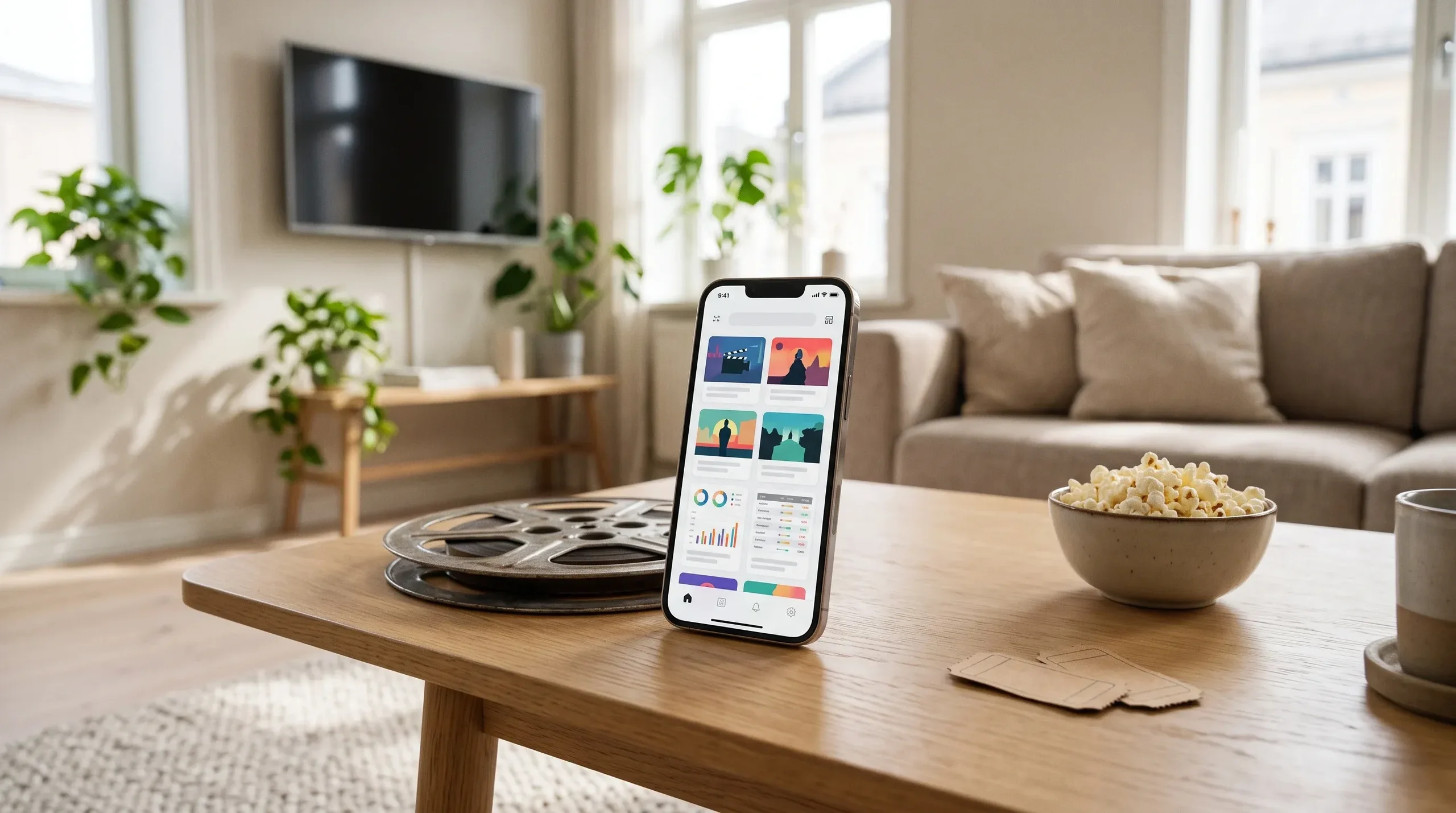
A blockchain marketplace for movie moments, built so a fan who has never touched crypto can buy one without meeting the chain.
- Plain wordsOn every wallet prompt a fan meets
- ~4.5 monthsFrom kickoff to contracts on mainnet
- Pre-launchAn IP risk caught before anything went public
What You Get From the WebRTC Audit
We review your call workflow, the networks your users connect from, and the session load you expect, then hand you a clear next step: what to build, how long it takes, and what it costs. Video chat app development scope gets fixed here, before a budget moves.
The Stack Behind a WebRTC Build
The languages, protocols, and infrastructure behind every real-time feature Hygge ships, from the video call api layer down to TURN, chosen to match your platforms and the systems you run.
The transport carrying audio, video, and data between participants, including the relay servers that get a call through a restrictive corporate firewall.
 WebRTC
 WebSockets
 mediasoup
 Janus
Janus coturn
 LiveKit
 Twilio
 SFU
SFU STUN
STUN SRTP
SRTPFrequently Asked Questions
Common questions about scope, cost, and infrastructure before starting a project with a webrtc development company like Hygge Software.
 What is WebRTC?
How does WebRTC work?
What is WebRTC used for?
What protocol does WebRTC use?
Is WebRTC secure?
How much does webrtc app development cost?
Should I build on WebRTC or keep paying for a hosted video SDK?
How many people can join one call?
Will calls work behind a corporate firewall or on mobile data?
Can I add video to a product I already have?
Does this work in my mobile app, or only in a browser?
Who owns the recordings and the code?
From Your Call Workflow to a Scoped Plan
Tell us who talks to whom inside your product and what the call has to do. Hygge scopes the webrtc development services around a measurable outcome.

Tell Us Who Needs to Be on the Call
Share how many people join at once, the networks they connect from, and whether sessions get recorded.
Get a First Consultation
We review your concurrency, network conditions, and recording needs for anything that would change scope, cost, or timeline.
Receive a Detailed Proposal
A scoped plan with the approach, timeline, and cost, built around your actual call volume.