
Prototype Development Services
Hygge builds two things that come before a product: a clickable prototype that puts your idea in front of investors and users, and a proof of concept that answers whether the hard technical part works at all. Our prototype development services run four to six weeks and end with an answer you can act on.
What a Prototype Answers and What an MVP Proves
Founders arrive asking for a prototype and mean one of two things. Hygge scopes them separately because they cost different money and answer different questions.
Clickable Prototype
Real screens, real navigation, no backend. A clickable prototype lets an investor, a design partner, or a first customer walk your product and react to it. Built in Figma or as a working front-end, depending on how convincing it needs to be.
Interactive Prototype With Live Data
An interactive prototype wires those screens to a thin data layer, so the flow behaves like working software. This is the version you use when the demo has to survive someone typing their own input. Hygge builds the interactive prototype route when the audience will poke at it.
Technical Proof of Concept
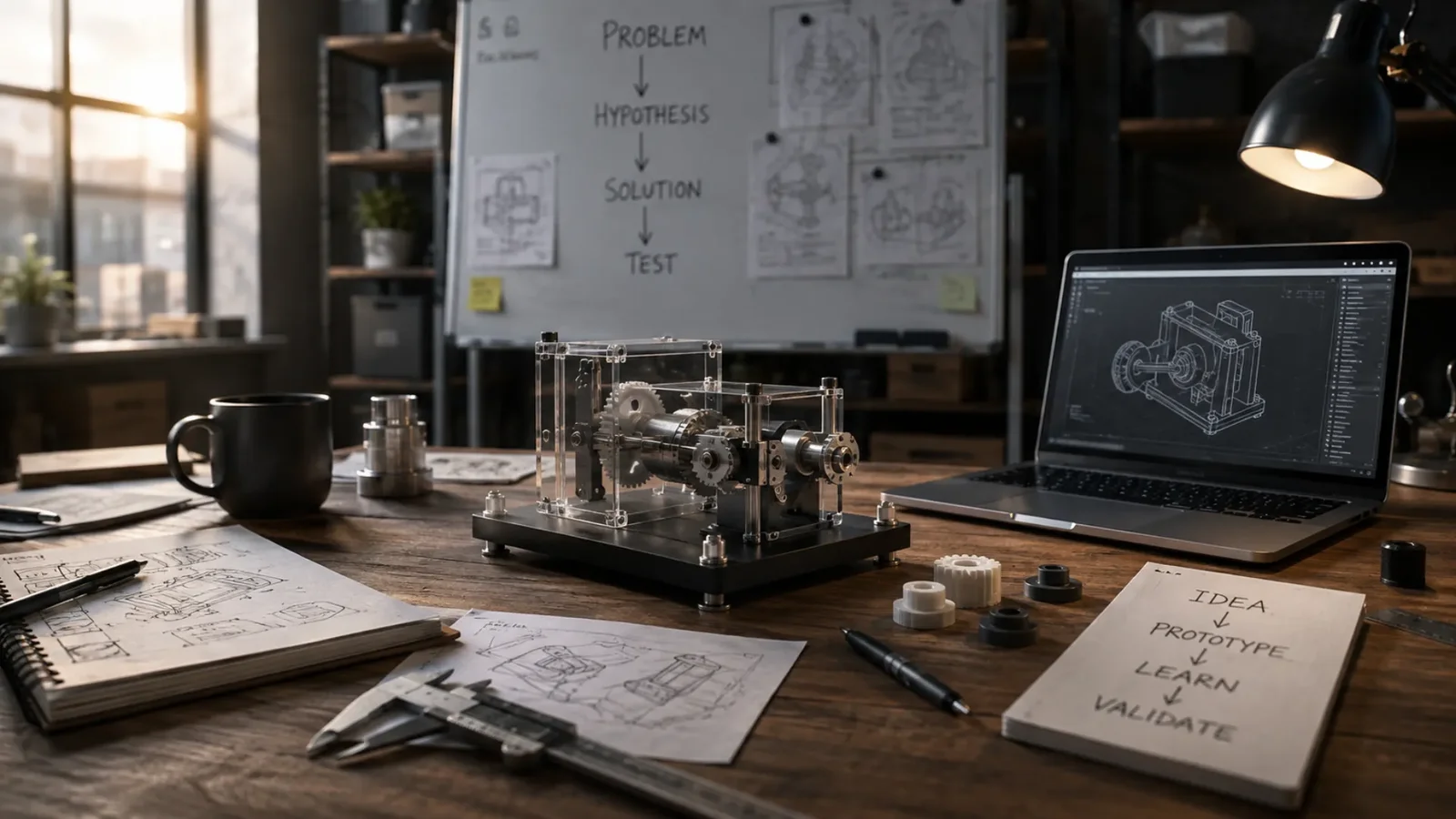
Code written to answer one question: can this be done, at this speed, at this cost. Proof of concept development targets the single riskiest assumption in your architecture, and the deliverable is evidence: measurements, a working test, and a written verdict.
Feasibility and Cost Model
What the full build would take once the prototype answers its question, with a scope and a number. Founders raise on this pair: something to show, and a credible figure for what comes next.
User Testing on the Prototype
Real people running real tasks on prototype screens, so the confusion gets found while a change costs an afternoon.
A Documented Recommendation
Every project ends in writing: what was tested, what the result was, and whether Hygge would build the full product on this basis. Including the times the answer is no.
What Gets Decided Before Prototype Development Starts
Hygge opens with a short free scoping call here. A prototype project is small enough that a long audit would eat a meaningful share of the budget.
The call settles each of these:
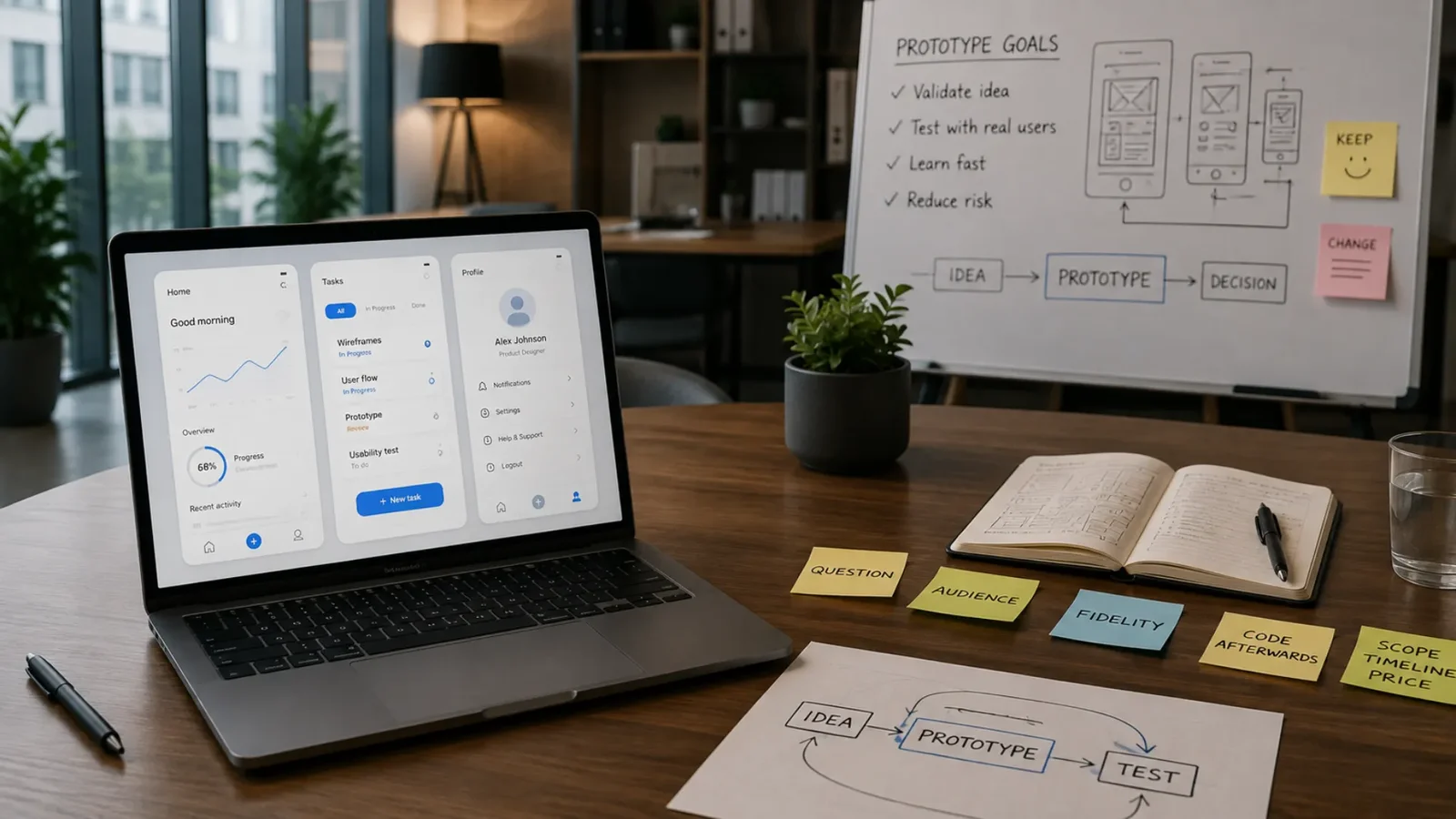
- The question, one sentence naming what this prototype exists to answer.
- The audience, investors, design partners, internal stakeholders, or your own engineering decision.
- Fidelity, how real it has to look and behave to convince that audience.
- What happens with the code afterwards, kept as a base or written to be thrown away.
- Fixed scope, timeline, and price, agreed after the audit.
What Sends a Founder to a Prototype First
The situations where rapid prototyping software work pays for itself before a build budget gets committed.
The raise comes before the product, and one part of the architecture is the part nobody is sure about. A prototype or proof of concept answers that question on its own, in about a month. The audit picks the single risk worth testing first.
The Raise Comes Before the Product
You need something to show in three weeks and a full build takes three months. A prototype fills that gap with screens people can use, at a fraction of the cost.
One Part of the Architecture Is Unproven
The whole product depends on something nobody on the team has done: a model hitting an accuracy bar, a device syncing reliably, a legacy system exposing the data. POC development services answer that in weeks, before it becomes a six-figure discovery.
The Team Disagrees on the Direction
Two credible product paths, no evidence either way, and the argument repeats every week. A prototype in front of ten real users ends it faster than another meeting.
Budget Approval Needs Something Tangible
Your board or your CFO will not sign a large build off a document. A working prototype and a costed plan get the number approved.
The Idea Might Be Wrong
The cheapest outcome of a prototype is finding out in five weeks that the demand is not there, on a budget you can absorb.
How We Run Prototype Development Services
Four to six weeks of prototype development, from the scoping call to a documented answer.
Scoping Call, Week One
The question, the audience, and the fidelity, ending in a fixed scope and price.
Flows and Screens
The path a user takes through the idea, drawn before anything gets built, so the prototype covers the moment that matters.
Build
Screens, interaction, and any thin data layer the demo needs. For a technical proof of concept, the code targeting the risky assumption and the measurements around it.
Test
In front of the audience it was built for, whether that is five users running tasks or a benchmark against your accuracy requirement.
Written Recommendation
What was tested, what happened, what the full build would cost, and whether Hygge would recommend proceeding.
What a Prototype Buys You
You have something real people can open, in time for the conversation it was built for. The riskiest technical assumption gets an answer with evidence, so the full build is scoped against a fact.
The Standards Prototype & Proof of Concept Is Held To
What Hygge commits to on this service, and how each commitment is measured.
Where a Prototype Answers Faster Than a Meeting
Sectors where the risky assumption is cheaper to test than to argue about.
Logistics & Warehouse Automation
A throughput model run against real floor data, proving the software can keep up with the picking rate before hardware is ordered.
Healthcare & Staffing
A clickable clinical flow put in front of nurses, catching the steps that would have failed a compliance review.
Real Estate & PropTech
A 3D listing walkthrough tested with buyers, showing whether the format changes enquiry volume.
LegalTech
A clause-extraction spike run on real matter documents, measuring accuracy before the platform is scoped.

Aviation
A maintenance-log interface tested against regulator formats, confirming the data model before certification work starts.

Media & Entertainment
A playback and sync experiment run at real bitrates, answering whether the viewing experience holds.
Sales & Marketing Technology
A lead-routing prototype wired to the live CRM, showing what the automation saves per rep per week.

Marketing & Creative
A review and approval flow tested with a studio team, confirming which version creative feedback lands on.
Ideas Hygge Proved With a Prototype
Projects where the first deliverable was evidence.
What You Get at the End
A working prototype or measured proof of concept development output, the test results from the audience it was built for, a costed scope for the full build, and a written recommendation on whether to proceed.
The Toolset Behind Rapid Prototyping Software
Picked for speed to a convincing result. In proof of concept development the code exists to answer a question and then step aside.
Screens and flows a stakeholder can click through in a meeting, built so the parts that survive review carry into the production design system.
 Figma
Figma

Frequently Asked Questions
What founders ask about proof of concept software development.
 What is a proof of concept?
What does proof of concept mean in business?
What is proof of concept in software?
What is a proof of concept trying to achieve?
How to run a POC?
What is the difference between a proof of concept and a prototype?
How much does a software prototype cost?
How long does it take to build a prototype?
Do I need a proof of concept before building?
Can I show a prototype to investors?
Does prototype code get reused in the real product?
What do I get at the end of a prototype project?
From an Unproven Idea to an Answer
Tell us what you need to prove and who has to be convinced. You get a prototype development scope, a timeline, and a price.
Tell Us Which Assumption Worries You
Share the part of the idea nobody has tested yet and what a wrong answer there would cost.
Get a First Consultation
We review your riskiest assumption and how to test it for anything that would change scope, cost, or timeline.
Receive a Detailed Proposal
A scoped plan with the approach, timeline, and cost, built around the question you need answered.