
Enterprise Software Development Services
Hygge builds systems that run inside large organizations, where the software has to talk to an ERP that predates the team, respect an access policy written by security, and survive an audit. Our enterprise software development services cover the integration mapping, the build, and the deployment into your own infrastructure, with the compliance evidence produced along the way.
What Custom Enterprise Software Development Services Cover
The layers that make enterprise application development services their own discipline, each one priced and scoped in the audit.
Integration With Systems Already in Place
SAP, Oracle, Dynamics, Salesforce, a warehouse system nobody has touched in nine years. We map every read and write between the new system and the old ones, decide which side owns each record, and build the sync so finance and operations see the same number on the same day.
Identity and Access Control
SSO through your existing SAML or OIDC provider, group membership pulled from Active Directory, and a permission model that matches the org chart, so onboarding a new employee grants the right access without a ticket to engineering.
Audit Logging and Traceability
Every record change carries who, what, when, and the prior value, stored where your auditors can query it. This is the layer that turns a compliance review from a three-week scramble into a report.
Legacy Migration
Moving data and business rules off a system your company still runs on, in stages, with both systems live during the switch and a rollback path at every stage.
Workflow and Approval Engines
The multi-step approvals, escalations, and delegation rules your process already has on paper, encoded so the system enforces them and records each decision.
Reporting and Data Access
The extracts, dashboards, and warehouse feeds your analysts need, built as a supported interface with the same access rules as the rest of the enterprise application development work.
What Gets Decided Before Enterprise Development Starts
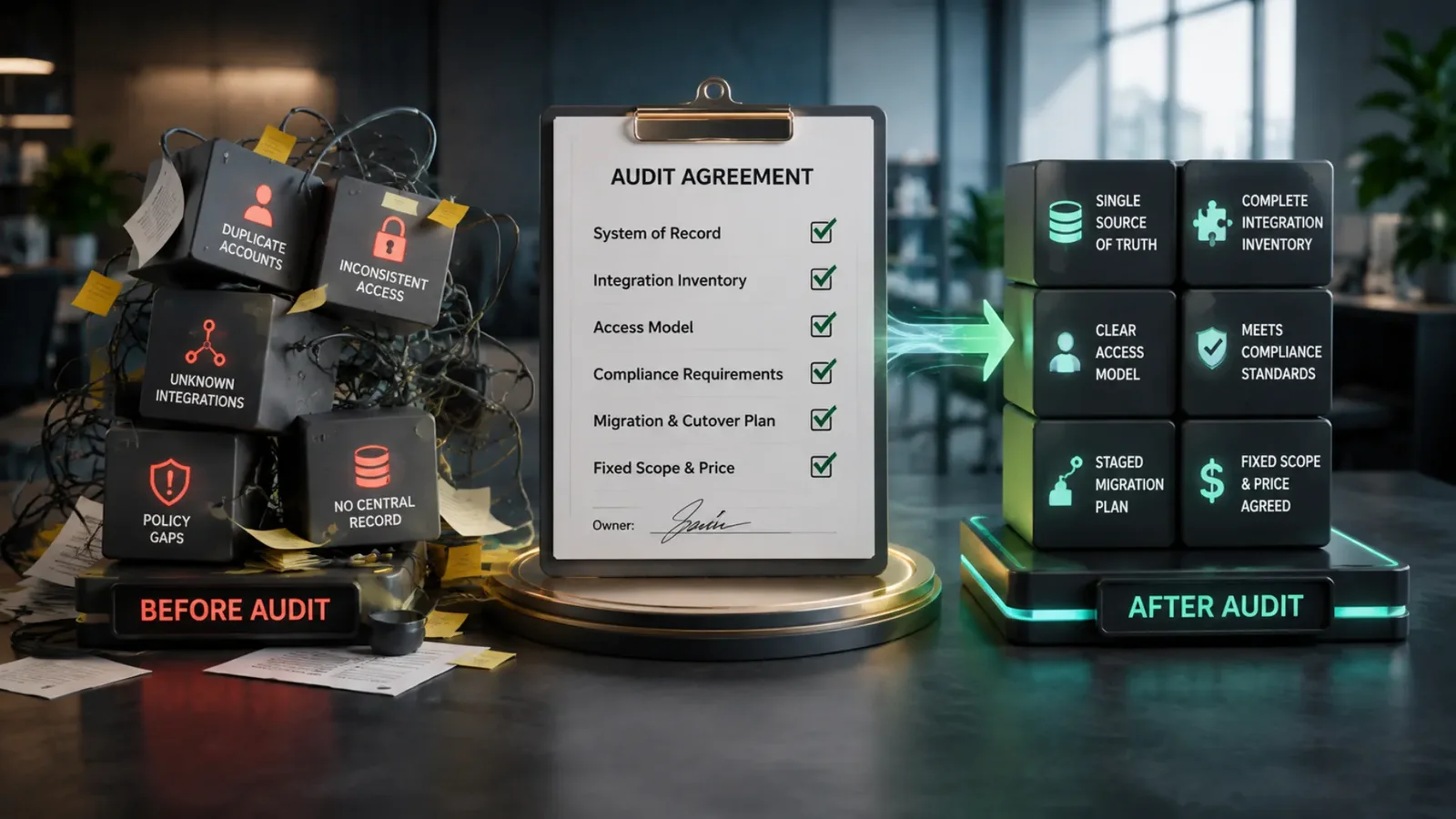
Hygge runs an audit first, because in a large organization the expensive mistakes are made in the first three weeks. That audit is where enterprise software consulting earns its fee.
The audit settles each of these with a named owner on your side:
- System of record for every shared entity, so two systems stop claiming the same customer.
- Integration inventory, every system the new one has to read from or write to, with the interface each one exposes.
- Access model, mapped against your existing identity provider and your real org structure.
- Compliance requirements, the standards you report against and what the system has to log to satisfy them.
- Migration and cutover plan, staged, with rollback defined for each stage.
- Fixed scope and price for phase one, agreed after the audit.
What Pushes an Organisation to Replace Its Software
The conditions that bring companies to a custom enterprise software development partner, taken from the projects Hygge has scoped.
A system nobody dares change, departments working from different numbers, manual steps between automated ones. Enterprise software development replaces those one module at a time, with the old system readable throughout. The audit names what stays and what the figures have to reconcile to.
A System Nobody Can Change
The platform runs the business and the people who built it left. Every change request goes into a queue that never clears, so departments build their own spreadsheets alongside it.
Departments Working From Different Numbers
Finance, operations, and sales each pull from a separate source, and the monthly meeting starts with an argument about whose figure is right. One system of record ends that.
Manual Steps Between Automated Ones
Two systems that never got connected, joined by a person who exports a file every morning. The work is invisible in every process diagram and blocks the whole chain when that person is away.
Licence Costs Rising Faster Than Use
A vendor platform priced per seat, where you pay for capability three departments never touch. Custom enterprise software development covering the part you use puts that cost back under your control.
An Audit That Took Three Weeks
Evidence assembled by hand from six systems because none of them log the change history a regulator asks for.
How We Deliver an Enterprise Project
How an enterprise software development company should sequence the work, built around a rule your IT department will recognize: nothing goes live without a way back. That sequence is what separates enterprise application development from a standard build.
Audit and Integration Mapping
Two to four weeks with your system owners, ending in an integration inventory, an access model, and an exact price for phase one.
Architecture and Environments
Data model, permission layer, and the dev, staging, and production environments inside your own cloud or data centre.
Phased Build
One department or one process at a time, in production, with a working release to review every two weeks.
Migration and Parallel Run
The old system and the new one run side by side while data and users move across, with reconciliation reports proving they agree.
Handover and Support
Documentation, runbooks, and training for your internal team. Hygge's enterprise software development services stay on support for as long as you need them.
What an Enterprise System Changes for Your Operations
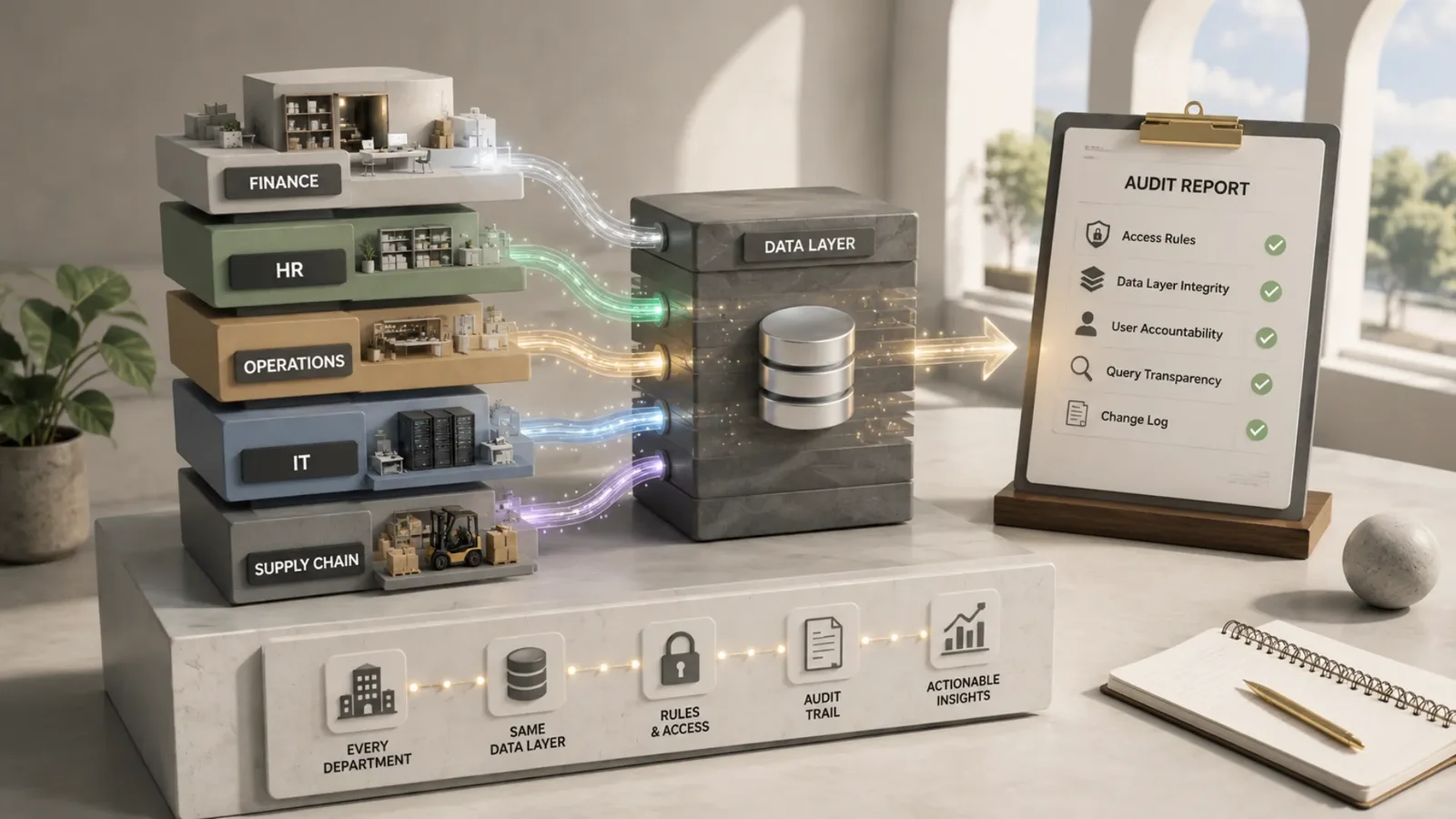
Every department reads the same number, and a change stops depending on the one person who understands the old system. Access rules live in the data layer where every query respects them, so an audit becomes a report you run. Custom enterprise software development services usually arrive as one of two jobs. The first is modernizing what already runs: a system that still runs the business, on a stack nobody wants to hire for, that has to keep working while it is replaced piece by piece. The second is the part the packaged suite never covered, built alongside it.
The Standards This Work Is Held To
The standards this work is held to, set against your current baseline and checked after delivery.
Where Enterprise Software Carries the Operation
Sectors where one system serves thousands of employees and an outage is a business incident.
HR & Recruitment
Assessment, learning and mobility platforms serving global employee populations, with single sign-on tied to the corporate directory.
Logistics & Warehouse Automation
Warehouse and fleet systems spanning sites, where a release has to roll out without pausing operations.
Healthcare & Staffing
Staffing and credentialing systems handling protected health information, with access records an auditor can read.
LegalTech
Matter, billing and conflict systems where retention rules and privilege boundaries are set by regulation.

Aviation
Operations and maintenance platforms bound to certification records and regulator reporting formats.
Public Safety & Security
Command and dispatch systems that stay usable when the network degrades, with role-based access down to the record.
Retail & E-Commerce
Merchandising, inventory and store systems reconciling across hundreds of locations every night.

Media & Entertainment
Rights, scheduling and distribution platforms feeding many downstream partners on contractual deadlines.
Enterprise Systems Rebuilt Without a Shutdown
Enterprise software Hygge has modernized and extended while the business kept running on it.

Pick-to-Light System Integration
Pick to light system integration for an equipment integrator. One layer ties lights, sorters and loaders to the WMS at every site.
- 3Equipment Types on One WMS
- Every pickConfirmed Back to the WMS
- LiveEquipment Faults on Screen
- 1 layerFor Lights, Loaders and Conveyors
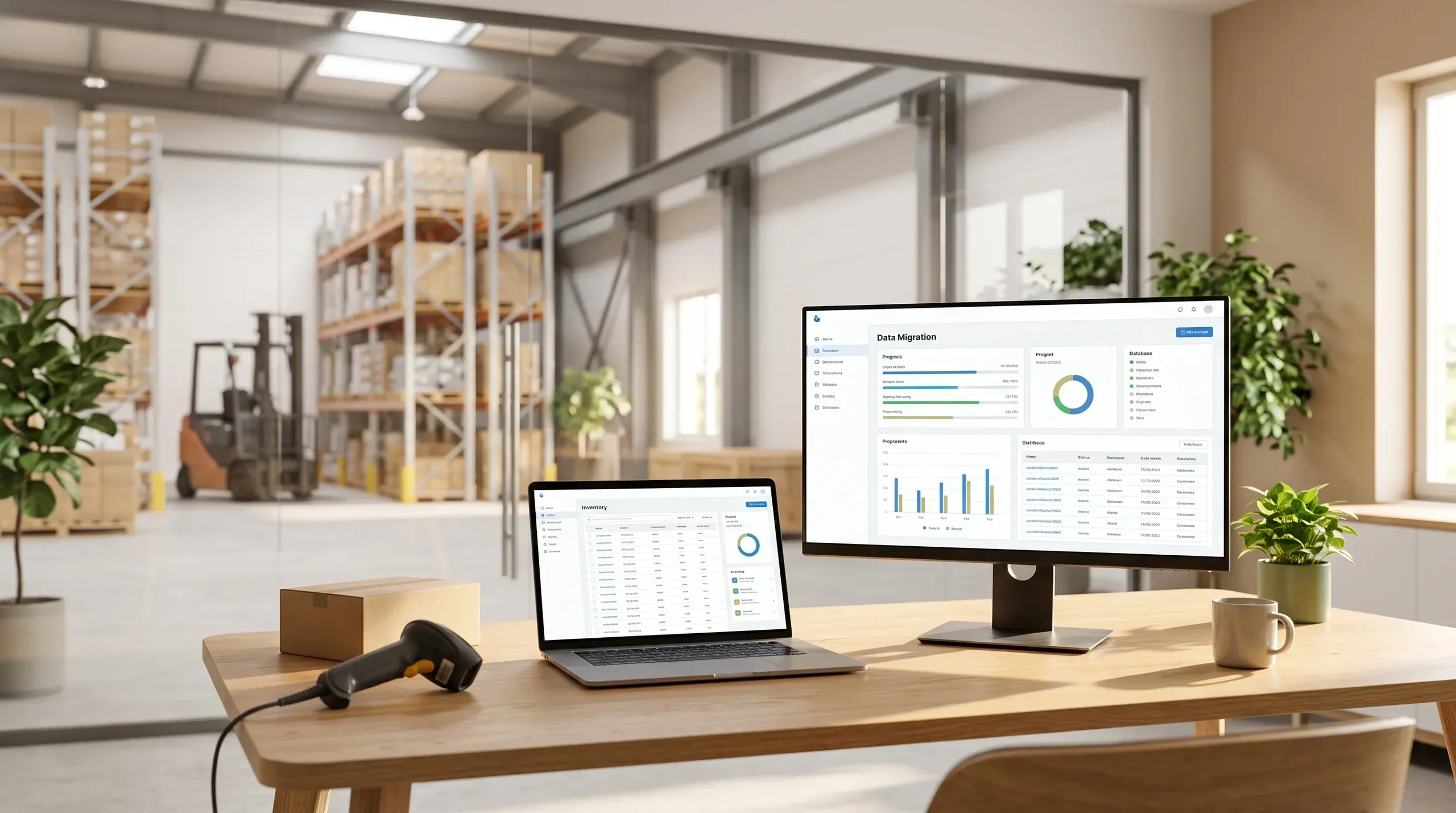
WMS Migration
This WMS migration moves a seven-year-old system off Oracle to Java and PostgreSQL in stages, so the warehouse keeps shipping.
- ≤300 msAPI Response Time
- ≤1 sPage Load on the Floor
- 3 languagesOn Handheld Scanners
- 10 rolesWith Role-Based Access

Logistics Data Exchange Platform
A logistics data exchange platform that puts shipment data from emails, PDFs and calls in one record and moves dock slots for late trucks.
- On the roadWhen a Delay Is Caught
- 1 actionTo Confirm a New Dock Slot
- EUServers for Shipment and eFTI Data
- 1 recordFor Shipper, Warehouse and Carrier
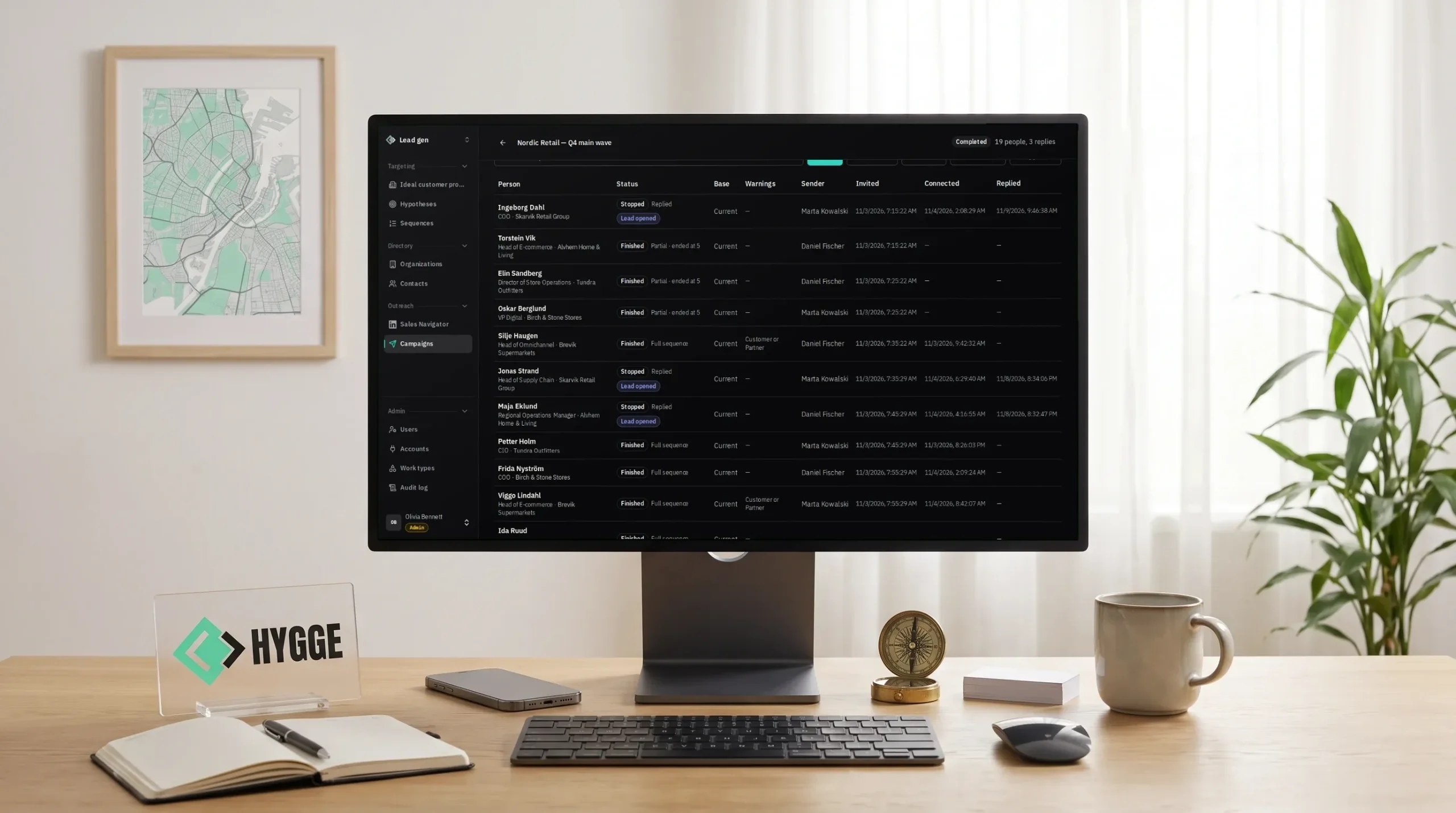
Hygge Lead Generation
Hygge's own outbound platform, where only approved hypotheses run campaigns. Every reply traces back to the targeting behind it.
- 5 toolsReplaced by one platform
- 0Scripted messages sent after a reply
- Every leadTraced to its hypothesis
- Per accountDaily and weekly sending limits
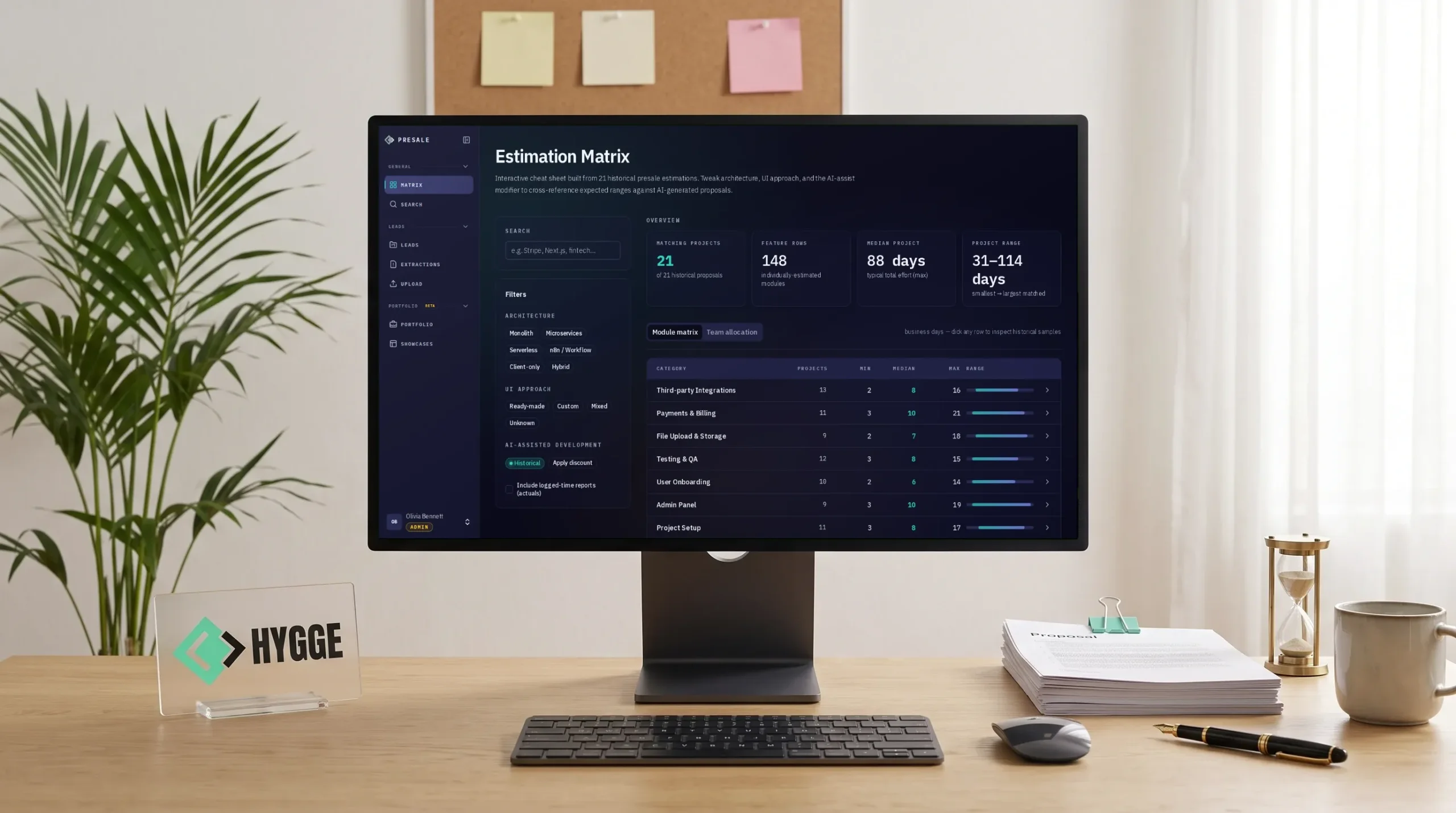
Hygge Presale
Hygge's own presale workspace, where an AI agent drafts estimates from past deals. People approve them, and every proposal feeds the next.
- 6 sub-statusesDrive each pipeline stage
- Every moduleAnchored to evidence
- 5 formatsFrom one approved deck version
- 3 modesOf case disclosure, enforced
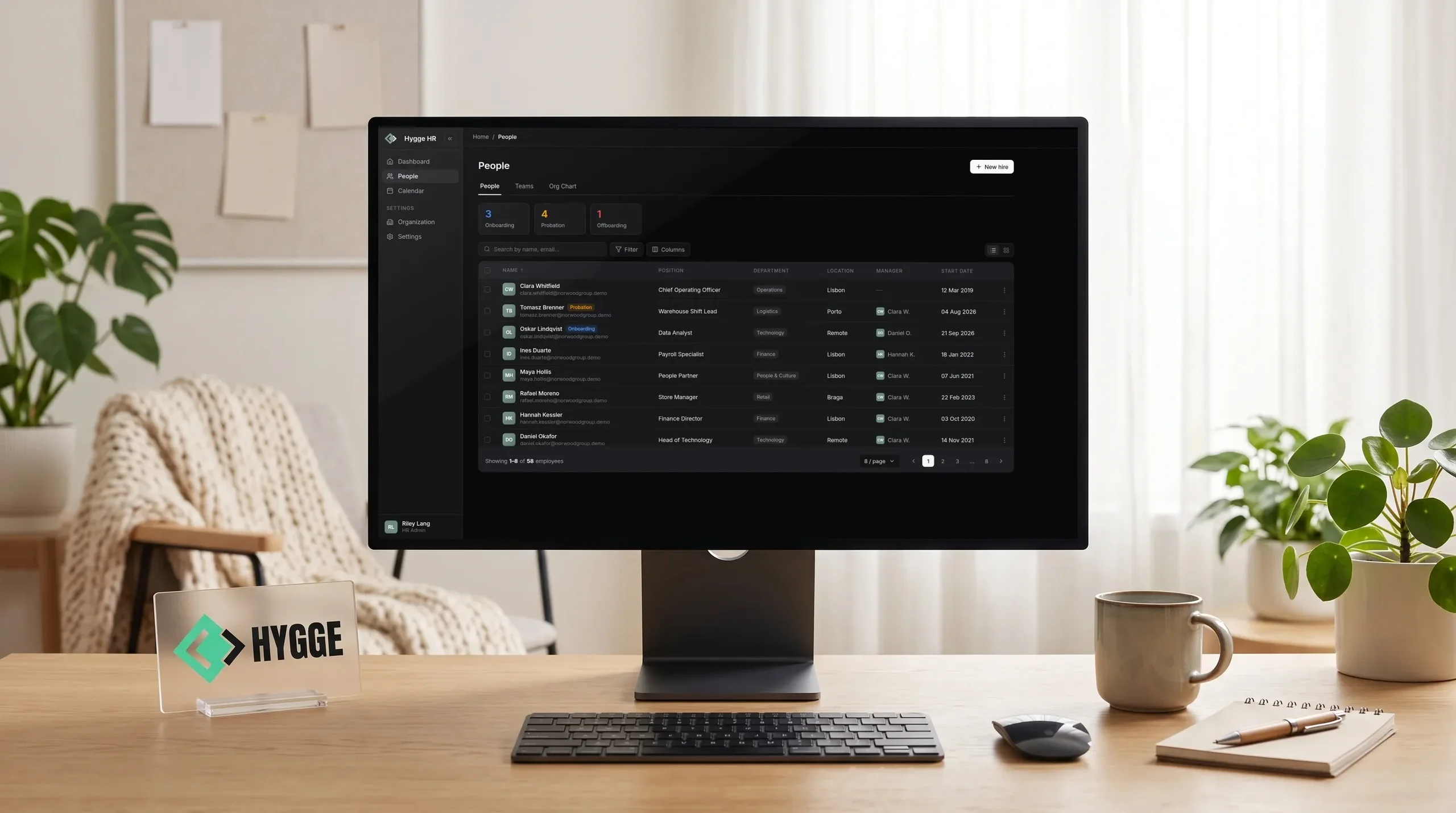
Hygge HR
Hygge's own HR platform: people, time off, hiring and projects in one system. Balances, reminders and pay history update every night.
- 0Manual balance recalculations
- 3+ yearsTenure days added on their own
- 1 platformFor people, time off, hiring and projects
- Any dateRole and pay history on record
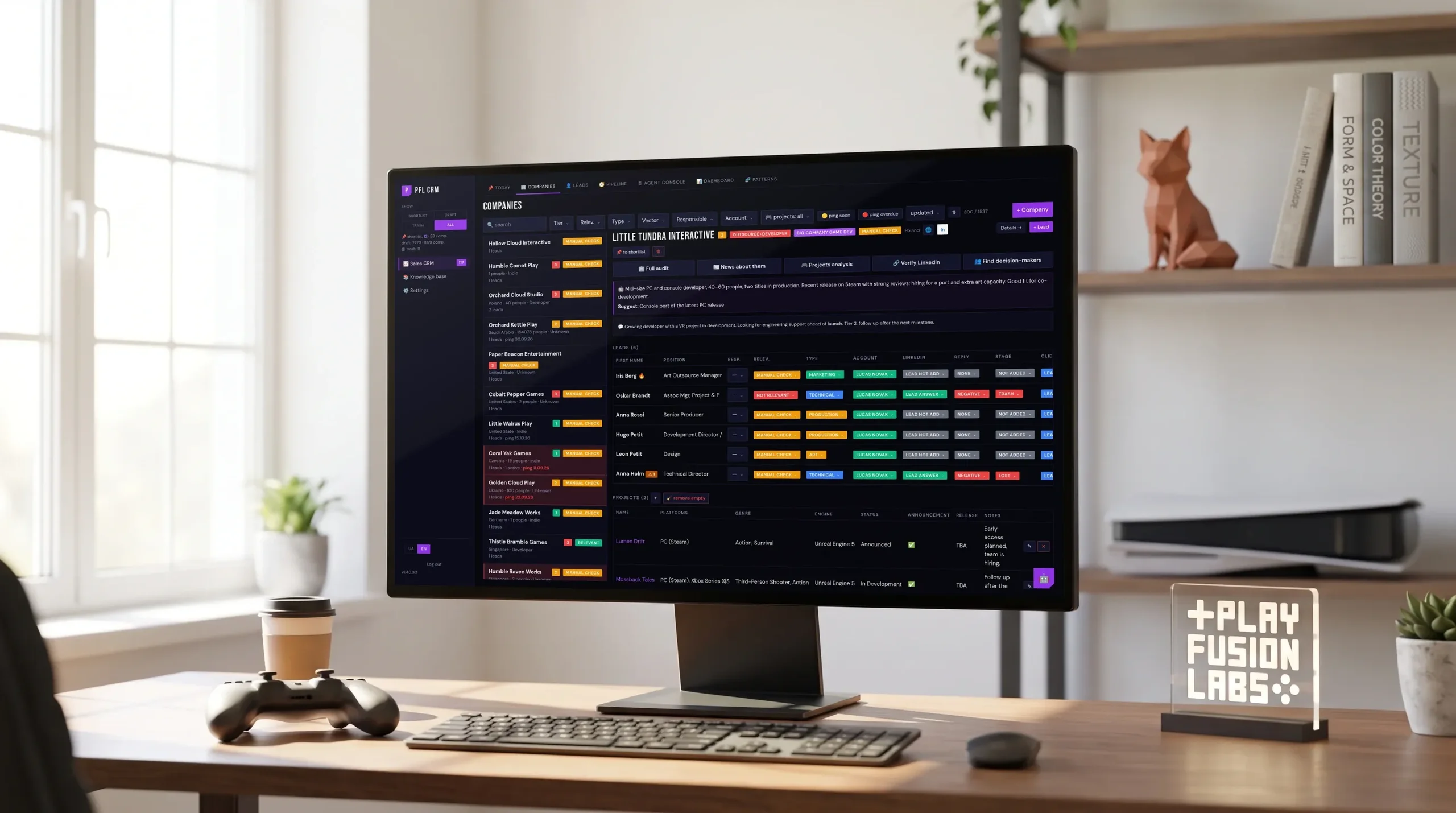
PlayFusionLabs CRM
Custom CRM development for a game studio. An agent researches companies, Today lists who to ping, and finance sits in one database.
- ~2 monthsFrom first call to daily use
- 150+Releases since launch
- 1 databaseFor sales, projects and finance
- $0In per-seat licences
What You Get From the Enterprise Audit
An integration inventory, an access model, a migration plan with rollback at each stage, and a fixed scope and price for phase one, written so your CIO and your CFO can both act on it. ERP and legacy system connections are scoped here too.
The Stack Behind an Enterprise Build
Chosen per project against what your own IT team already runs and can maintain after handover, including the platforms your enterprise app development work has to sit alongside.
Platforms with long support horizons and mature security models, chosen because an enterprise system outlives the team that first built it.
.webp?v=2026-09-29T09%3A19%3A03.736Z) .NET (C#)
.NET (C#) Java
Java Spring Boot
 Node.js
 NestJS
 Python
 Go
Go

Frequently Asked Questions
What decision makers ask before they approve enterprise application modernization.
 What is enterprise software?
What defines enterprise software?
What is enterprise software most often used for?
What is the difference between desktop and enterprise software?
How does enterprise software work?
How much does enterprise software development cost?
How long does an enterprise project take?
Can you work with our existing ERP and legacy systems?
Will this run on our own infrastructure?
How do you handle security and compliance requirements?
What happens to our old system during the migration?
Who owns the code and can our own team maintain it?
From a Legacy Problem to a Phase-One Plan
Tell us which systems you run and what breaks between them. You get an integration map, a phase plan, and a price for the custom enterprise software development work that follows, plus the enterprise app development scope where mobile access matters.
Tell Us Which System Everyone Depends On
Share the platform your business runs on, who uses it daily, and where it is holding the company back.
Get a First Consultation
We review your systems, identity setup, and integrations for anything that would change scope, cost, or timeline.
Receive a Detailed Proposal
A scoped plan with the approach, timeline, and cost, built around your actual enterprise environment.