
MLOps & AI Infrastructure
Hygge builds the deployment pipeline around your existing stack, with monitoring and retraining in place so accuracy drift gets caught before it reaches your users. MLOps services scoped against deploy time and compute cost, priced after an audit.
What AI Infrastructure Services Cover
What each piece of a production MLOps setup does on its own, and how Hygge decides which combination your mlops services project needs after reviewing your stack.
Deployment Pipelines
Automated, repeatable rollout for a new model version, so shipping an update doesn't mean a manual, one-off deploy every time.
Monitoring & Drift Detection
Live tracking of a model's accuracy and behavior after launch, so a drop in performance gets caught by a dashboard first.
Automated Retraining
Triggers that retrain a model when performance drifts or new data arrives, so accuracy holds up without a manual re-run every time something changes.
Infrastructure & Cost Management
Right-sized compute for the model's actual load, so you're not paying for inference capacity you don't use.
Data & Systems Integration
We connect the pipeline through the APIs your existing stack already exposes, so deployment fits into infrastructure your team already runs.
Team Handoff & Documentation
The pipeline is documented and handed off in a state your team can run day to day without Hygge in the room.
What Gets Decided Before We Touch Your ML Infrastructure
The concrete choices behind the pipeline, settled with you during the audit, before mlops services get a scope or a price.
The audit settles each of these:
- Success metric agreed with you, the deployment speed, uptime, or cost target the project is judged on
- Monitoring thresholds, set with your team, what counts as drift and what triggers an alert
- Retraining triggers, scheduled, performance-based, or both
- Integration through your existing stack, nothing in your infrastructure gets rebuilt to fit the pipeline
- Cost and scope agreed, a fixed number for the mlops project, set after the audit maps your current models and infrastructure
What Pushes a Team to Fix Their ML Infrastructure
Models stuck in notebooks, a deploy that takes three weeks of manual steps, or a compute bill nobody can explain. The gaps mlops consulting gets called in to close.
Models sit in notebooks, drift goes unnoticed, and deployment depends on one person. MLOps and AI infrastructure work makes every model version reproducible and every deployment repeatable. The audit reads how models reach production today.
Models That Never Leave the Notebook
A model that scores well in a data scientist's notebook and a model running reliably behind real production traffic are two different things. It hits a spike in requests during a Monday-morning rush, a batch of malformed inputs from an upstream system, or months of drift nobody retrained against, and that's usually where the gap between notebook and production shows up first.
Accuracy Drift Nobody Catches
A model's accuracy quietly degrades as real-world data shifts away from the training set, and without monitoring in place, a client is often the first to notice.
Manual Deployment That Doesn't Scale
Every new model version means a manual, one-off deploy, so shipping improvements slows down exactly as the team's model count grows.
Unclear Return on Investment
The budget for an MLOps project gets approved without a number attached to the deployment time or compute cost it should reduce, and the project's value is impossible to defend at the next budget cycle.
How AI Platform Engineering Runs at Hygge
From your current setup to a pipeline running in production. Hygge builds the mlops platform layer around the stack you already run, with something working to review at the end of each step.
Audit
We review your stack, your existing models, and where MLOps pays off first. That review is what mlops consulting uses to decide what gets automated first and what stays manual for now.
Architecture
We lock in the deployment approach, the monitoring thresholds, and the retraining triggers chosen during the audit, and map how the pipeline connects into your existing infrastructure.
Build
The pipeline gets built against your actual models and infrastructure from week one, so every weekly demo shows a real deployment or monitoring step working end to end.
Deploy
The pipeline goes live in your infrastructure, rolled out in stages so nothing breaks for the models already running.
Support
We stay on after launch to monitor the pipeline itself and tune thresholds as your models and data evolve, with a documented runbook your team can follow without waiting on Hygge.
What Model Monitoring Changes in Your AI Operations
A model reaches users on a pipeline anyone can run, with the data and metrics behind that version recorded. Accuracy is watched after launch, so a drop shows up as an alert. AI infrastructure companies are usually brought in at the point a model works on somebody laptop and has to run every day. AI platform engineering covers what that takes: reproducible training, a deployment path and environments rebuilt from a definition. AI infrastructure services then carry it forward, and model monitoring is the part that decides whether the system is still worth trusting in month six. Drift gets caught against your own data, before somebody downstream notices the answers changed.
The Standards MLOps & AI Infrastructure Is Held To
Every number here is agreed with you and measured against how things run today.
Where We've Already Built This
Industries where Hygge keeps AI systems running in production, built by a team that stays on for monitoring and retraining after launch.
Public Safety & Security
Models running on cameras in the field, with drift checks and staged rollouts so a bad build never reaches a whole fleet at once.
Healthcare & Staffing
Retraining and approval gates around clinical models, with the version that produced any output recorded next to it.
Logistics & Warehouse Automation
Vision and forecasting models kept current as products, packaging and layouts change through the year.

Retail & E-Commerce
Ranking and demand models retrained on a schedule, with accuracy watched against the seasons that move your numbers.
Hygge's MLOps Pipelines Already in Production
MLOps platform work already carrying production models, the stage most AI projects never reach.
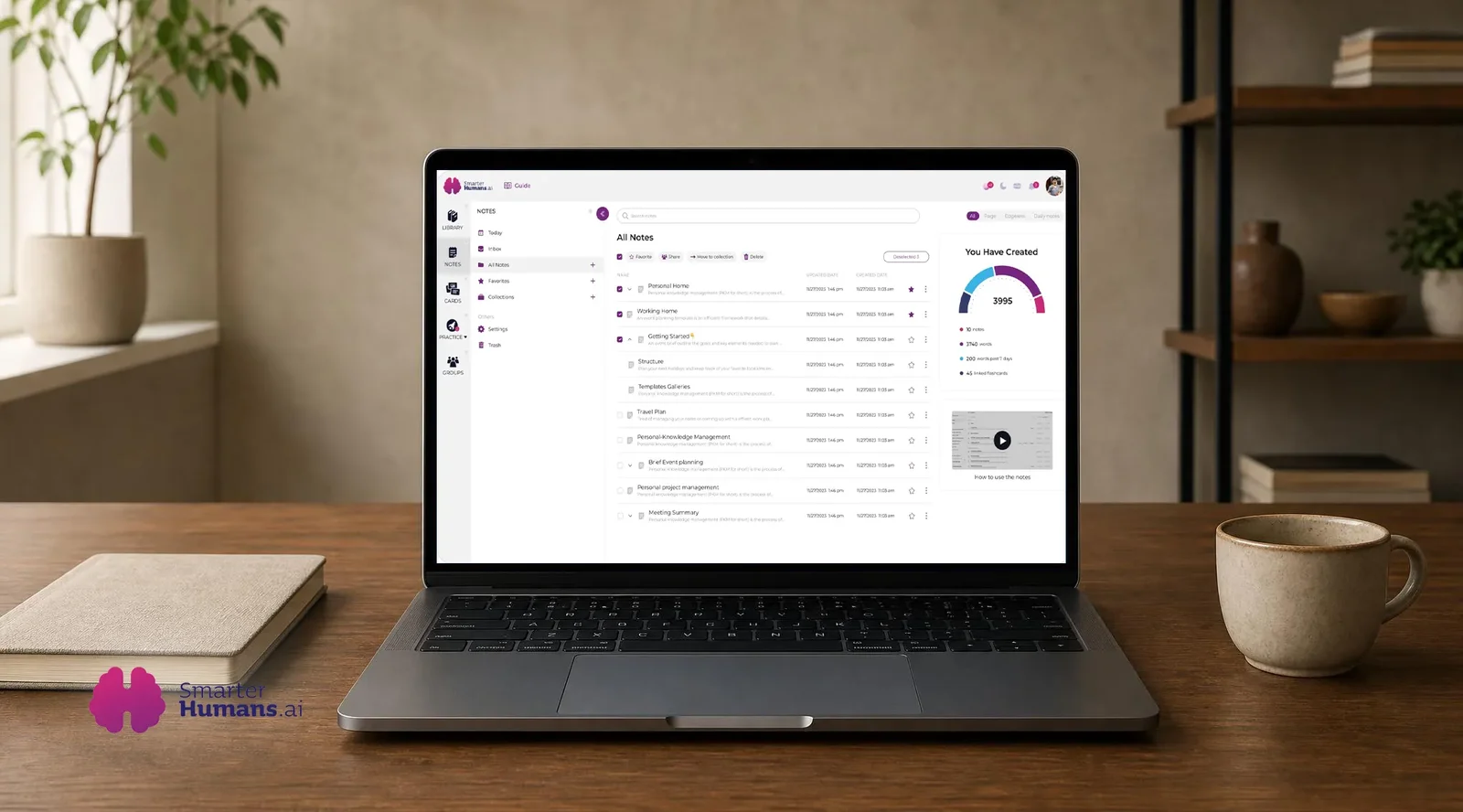
Smarter Humans
A spaced repetition app built by the same team since 2019. About a million users moved to the rebuilt system with zero downtime.
- 93 %Cut off a 20-second document load
- 1 uploadReplaces the card writing people quit over
- 7 yearsOn one product with the same team
What You Get From the MLOps Audit
We review your models, your deployment path, and your compute bill, then hand you a scope, a timeline, and a price. MLOps consulting that ends in a document, whether or not you build with Hygge.
The Stack Behind an MLOps Build
The tools behind every mlops platform Hygge builds, chosen against what your own team can operate after handover.
Versioning, deployment and drift checks around the model, so a retrain is a scheduled task with an owner and a rollback path.
 Docker
 Kubernetes
 Prometheus & Grafana
 NVIDIA Triton Inference Server
 Weights & Biases (W&B)
 GitHub Actions
 GitLab CI/CD
 MLflow

Frequently Asked Questions
What teams ask AI infrastructure companies about scope, cost, and handover about an mlops project.
 What is MLOps?
What does MLOps do?
What is an MLOps pipeline?
What is MLOps used for?
What is an MLOps platform?
Do you build MLOps for models you didn't build?
How do you catch accuracy drift before a client does?
Can this work alongside my existing data science or engineering team?
What happens after the pipeline goes live?
How much does an MLOps project cost?
What if I am already using a platform like SageMaker or Vertex AI?
Do I need MLOps if I only have one model in production?
What does an MLOps company do?
From Your Stack to a Scoped Plan
Tell us what runs today and where it breaks. Hygge scopes the mlops consulting project around deploy time and compute cost.

Tell Us What's Running Unmonitored
Share the models, the stack, and where deployment or monitoring is still manual, whatever's costing your team time right now.
Get a First Consultation
We map your current models and infrastructure for anything that would change scope, cost, or timeline.
Receive a Detailed Proposal
A scoped plan with the approach, timeline, and cost, built around your actual stack.