


Payment Gateway Integration for Systems That Have to Agree
Two systems holding the same record will drift. What keeps them together is the boring part: idempotent writes, queues that survive an outage, retries that do not double-charge, and a reconciliation job that catches the gap before finance does.
What Payment Gateway Integration Services Solve
Where the connection between two systems becomes the weakest thing in the business. A sync fails quietly overnight, a duplicate order lands in the warehouse, and the mismatch surfaces at month end when finance tries to close. The connection is the part nobody owns until it breaks.

A Person Is the Integration
Someone exports from one system and imports into another every morning. The work is invisible until they take a week off.
- Scheduled sync replacing the manual export, with the same mapping written down
- Webhooks where the source can push, polling where it cannot
- A run history showing what moved, when, and what failed

Payments Reconcile by Hand
Charges, refunds and payouts land in the gateway, the ledger and the product, and someone checks the totals against each other every month.
- Payment gateway integration with idempotency keys so a retry never double-charges
- Automatic reconciliation between gateway events and your own ledger
- Payout schedules that survive a failed transfer without losing the record

The Connector Fails Silently
A token expires or a schema changes, the sync stops, and the gap is discovered days later during a close.
- Alerts that name the integration, the run and the failing record
- Dead-letter queues so failed messages wait
- Replay from any point once the cause is fixed
Rate Limits Break the Flow at Volume
The integration works in testing and falls apart at production volume, where the external API starts refusing calls.
- Queues and backpressure sized against the published limits
- Batching where the API supports it, backoff where it does not
- Load tested against the real limits before it goes live
What Makes Integration Work Hold Up
Every integration eventually meets a failure the happy path never covered: a duplicate webhook, a partial write, a timeout after the remote side already committed. What separates an integration that lasts from one that needs a person watching it is how those cases were handled on the first day. Hygge defines the failure behaviour in the audit, before any endpoint is called.

Industries This Applies In
Sectors where this comes up most often, and where Hygge has shipped it. What changes between them is what is being charged: a subscription, a marketplace payout, a deposit, a per-transaction fee. Payment gateway integration services carry the same core in all of them, and the settlement rules move with the model.
Fitness & Wellness
Fitness marketplaces where venue payouts settle weekly against check-ins recorded offline.

Retail & E-Commerce
Retail and e-commerce reconciling vendor billing, campaign spend and orders across systems.

Media & Entertainment
Media platforms taking payment from buyers who never touch a wallet.

Logistics & Warehouse Automation
Logistics operations exchanging events with carriers, warehouses and accounting.

Healthcare & Staffing
Healthcare staffing moving shift, credential and billing records between systems.
The Stack Behind Payment Gateway Integration Services
Integration work is judged on what happens when the other side breaks, so this stack is built around retries, idempotency and a record of every call. A payment is never taken twice, and a failed provider degrades one flow while the rest keeps running.
The services that hold the mapping, the retry policy and the run history.
 Node.js
 NestJS
 Python
 FastAPI
 Go
GoTrack Record
Company numbers across every project, from the first audit through the years a system stays in service. Payment gateway development is judged on the failure paths: a declined card, a duplicate charge, a refund that has to reconcile. The audit at the start is what makes the delivery date and the price hold.
How a Payment Integration Gets Built
Map the contract, define the failure behaviour, then write the connection. Deciding what happens on a timeout or a duplicate is the part that takes the thinking, and the code is short once that is agreed. Each stage ends with a connection you can watch running.
Contract and failure audit
1-2 weeksHygge reads both APIs, records the rate limits, and defines what happens on duplicate, timeout and partial write. The output is a written contract, a scope and an exact price.
First flow in production
2-4 weeksThe flow carrying the most manual work goes live with idempotent writes, a run history and alerts, replacing the export that a person runs today.
Reconciliation and alerting
2 weeksA scheduled job compares both sides and reports differences. Dead-letter queues and replay get wired in before volume rises.
Remaining flows
ongoingEach further flow follows the same pattern, with load testing against real rate limits before it carries production traffic.
Related Payment Gateway Development Work
Projects where the connection between systems, and the money crossing it, decided the build. Each started with two products that had to agree on one record and no rule for what happens when they disagree. What you see is the integration that settled it and the numbers that moved.

Country Navigator
A ten-year-old cultural intelligence training platform rebuilt into services. Enterprise customers kept working through a zero downtime migration.
- 0Downtime moving a ten-year-old platform
- 1 configReplaces the SSO setup only one person knew
- 10 yearsOf monolith rebuilt into services

BoardsOnline
A founder paid for a platform reported as done. Engineers checked every feature, and the rebuild started from what worked.
- 3 verdictsFor every feature reported as done
- 6 monthsFrom the audit to a tested, live platform
- 1+ yearOf support after the contract ended
Hygge Lead Generation
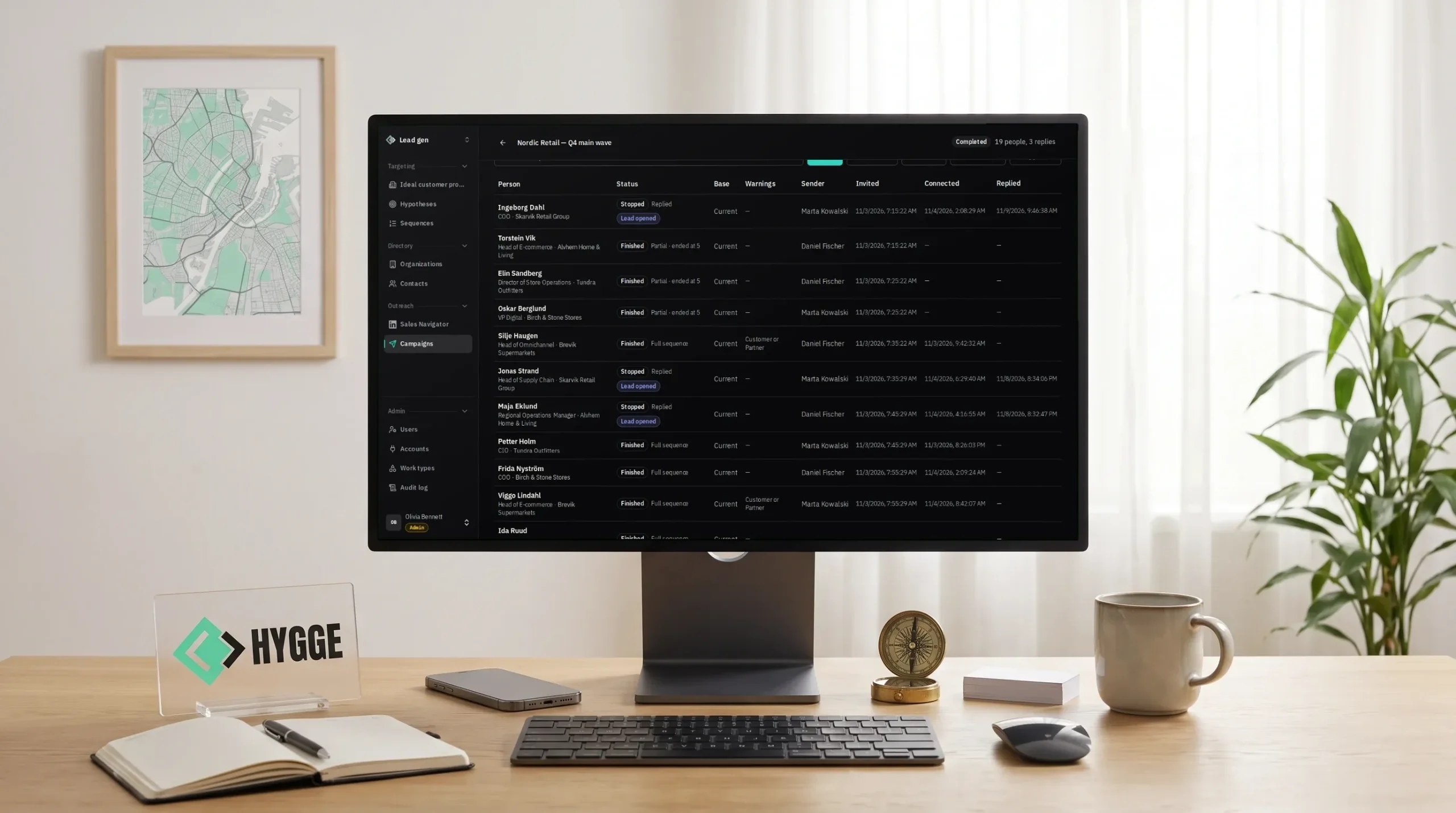
Hygge's own outbound platform, where only approved hypotheses run campaigns. Every reply traces back to the targeting behind it.
- 5 toolsReplaced by one platform
- 0Scripted messages sent after a reply
- Every leadTraced to its hypothesis
- Per accountDaily and weekly sending limits

Crowdflix
A blockchain marketplace for movie moments, built so a fan who has never touched crypto can buy one without meeting the chain.
- Plain wordsOn every wallet prompt a fan meets
- ~4.5 monthsFrom kickoff to contracts on mainnet
- Pre-launchAn IP risk caught before anything went public
Before You Wire Two Systems Together
What breaks when automation touches systems that were never designed for it, where an approval gate belongs, and how a pipeline fails in a way somebody notices. A silent failure is the expensive one, because it stays wrong for weeks. Reading these early is cheaper than reconciling by hand later.

Payment Gateway Development: Frequently Asked Questions
Integration questions worth settling before two systems start holding the same record. The answers below cover retries, duplicates, what happens when a vendor changes an API, and who owns the connection after handover.
 What is a payment gateway?
What does a payment gateway do?
What is the role of a payment gateway?
How does an online payment gateway work?
What is a gateway in payment processing?
What does a payment gateway integration cover?
What happens when the other system goes down?
How do you stop a retry from charging a customer twice?
Can you integrate a system that has no API?
How much does payment gateway integration cost?
Who maintains the integration after launch?
How do you handle rate limits at volume?
Start With the Export Somebody Runs Every Morning
Tell us which systems have to agree and where money crosses between them. You get an audit, a written contract, a scope and an exact price.

Tell Us What Moves by Hand Today
Share the systems involved, the records that cross between them, and the manual step somebody performs to keep them aligned.

Get a Contract and Failure Audit
Hygge reads both APIs, records the rate limits, and defines the behaviour on duplicate, timeout and partial write.

Receive a Written Contract and an Exact Price
A scope with the field mapping, the source of truth per field, the reconciliation job, the timeline and the cost.