


Patient Portal Development With the Data Question Answered First
In healthcare the architecture is decided by obligation. Where records live, who can reach them, what the system writes about every access, and how it exchanges data with an EHR are settled in the audit, because retrofitting them after launch means rebuilding the data layer.
What Patient Portal Development Solves
Where a healthcare product meets its first compliance review. Access rules were added late, audit logs cover some actions, and nobody can produce a record of who read what. Software development for healthcare settles those questions before the build, while they are still cheap to answer.

Every Customer Needs a Different Integration
Each health system exposes records its own way, and integration work restarts with every deal.
- EHR integration services built against HL7 FHIR so one integration serves many vendors
- SMART on FHIR launch so the app opens inside the EHR with context already set
- A mapping layer for the systems that predate the standard

The Access Question Has No Answer Yet
Security review asks who can see a record, what the system logs and where data is stored, and the answers were never designed.
- Role and relationship rules enforced in the data layer
- An audit trail recording every read and write against a patient record
- Data residency and retention decided in the audit and written into the scope

Video Visits Fail on the Networks Patients Use
Calls drop on hotel Wi-Fi and corporate networks, and a failed consultation costs the appointment.
- Media paths that work through restrictive networks
- Fallback to a lower bandwidth mode before the call is lost
- Session records that survive a reconnect
Scheduling and Credentials Live Apart
Shift matching, credential expiry and billing sit in separate systems, so a person checks eligibility by hand before every assignment.
- Credential status held next to the assignment it gates
- Matching and bidding mechanisms where an off-the-shelf tool has no equivalent
- Billing that follows the model the customer contracts on
What a Healthcare App Development Company Has to Get Right
The obligations shape the build before the product does. A patient record has to be reachable by the right clinician in seconds and unreachable by everyone else, permanently, with a log that stands up years later. Hygge defines storage, access, audit and exchange in the audit phase and prices the build against that, so the compliance review is a document review.

Where Healthcare Software Development Services Apply
Sectors where patient and clinician data carries obligation, and where Hygge has shipped it. What changes between them is who touches the record: a clinician, a staffing coordinator, a lab, the patient. A healthcare platform has to hold all of those roles without leaking between them.

Healthcare & Staffing
Staffing and clinical platforms where matching, credentials and patient data sit in one system.
HR & Recruitment
Workforce platforms where credential expiry gates an assignment.

EdTech
Clinical training where completion is an audited credential.

Public Safety & Security
Public agencies where health records meet evidence handling.
The Stack Behind Healthcare Software Development
Patient data carries rules that outlive any release, so this stack is chosen around access tied to a named person and a trail that exports on request. Video and messaging are built to hold on a home connection.
Standards that make one integration work across health systems.
 HL7 FHIR
 SMART on FHIR
 OpenAPI
Patient Portal Track Record
Company numbers across every project, from the first audit through the years a system stays in service. A healthcare software development company is judged on the years after launch, when the clinical workflow and the rules around it both keep moving. The audit at the start is what makes the delivery date and the price hold.
How Healthcare Software Development Runs
Data obligations first, workflow second, integrations as customers arrive. The obligations decide the shape of the record, so settling them early keeps the rest from being rebuilt. Each stage ends with something a clinician can open and use, which is how a healthcare app development company proves progress.
Data and obligation audit
2-3 weeksHygge defines where records live, who can reach them, what gets logged and which exchange standard applies. The output is an architecture document your compliance reviewer reads, a scope and an exact price.
Core records and access
5-7 weeksPatient and clinician records with relationship-based access and full audit, deployed for your team to review from week one.
Workflow and portal
4-6 weeksScheduling, credentials, messaging and the patient-facing portal, with consent recorded as its own history.
EHR integration
3-5 weeksFHIR-based exchange with the first health system, built so the second one is configuration.
Related Healthcare Platform Work
Healthcare and workforce platforms where access, credentials and matching decided the build. Custom healthcare software development earns its keep where a packaged product stops matching the clinical workflow. What you see is the platform that answered that and the numbers that moved.

Healthcare Platform
A live telehealth platform where patients meet doctors and get drugs shipped. The team behind it grew with it.
- LiveSupported a product already used by patients
- Two CRMsZoho customized, Salesforce implemented
- One teamFrom a single developer to a full delivery team
IntellicAIr
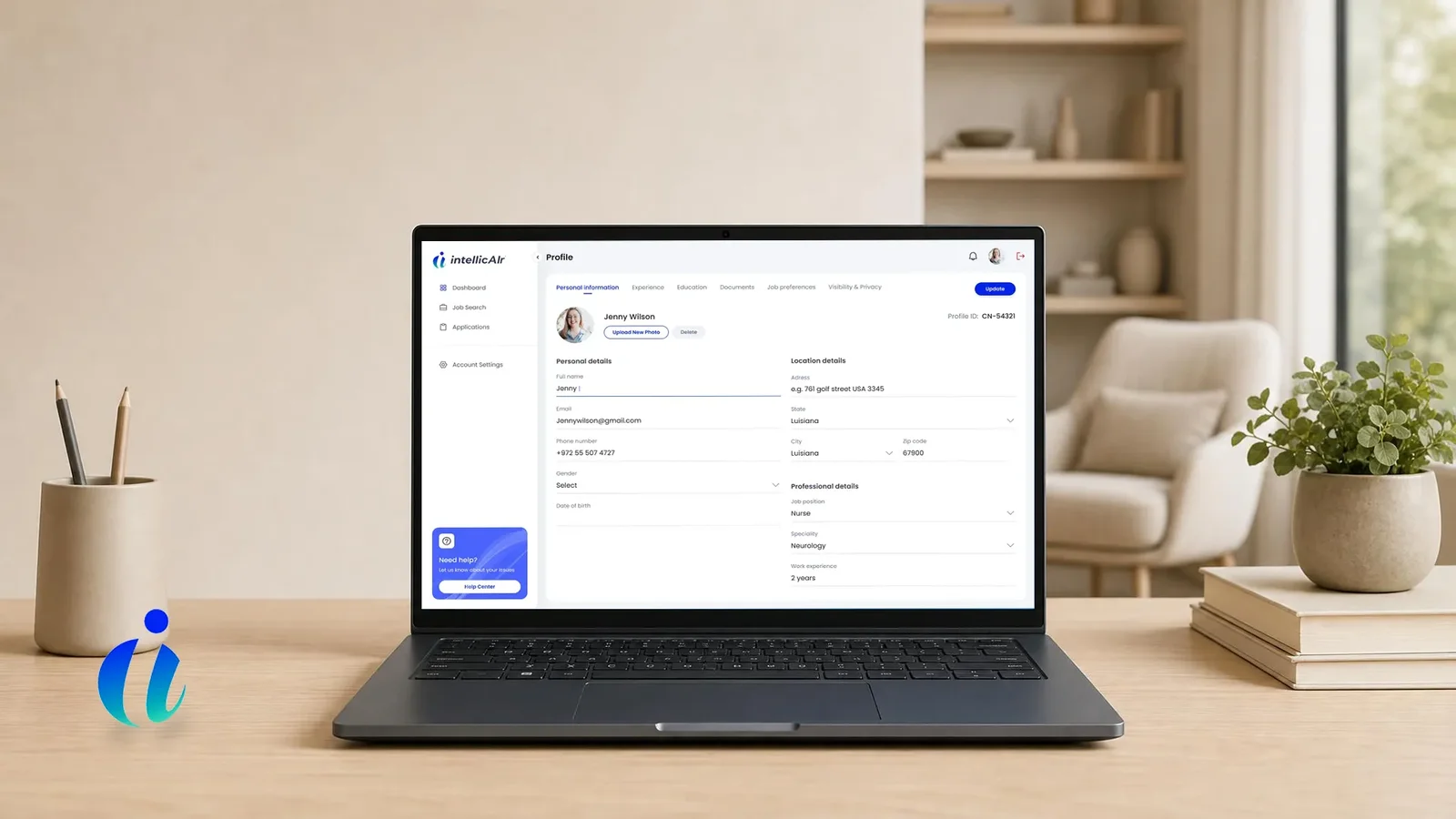
A nurse staffing marketplace built around a sealed bidding engine written from scratch. Bids stay hidden until the round closes.
- 1 roundFor a post that waits 78 days to fill
- No nameOn a bid that used to hide a 40 % cut
- 1 inviteBrings a facility's own agencies onboard

Clia
Two AI apps for consultants on one core, with a trained model that turns legal references into links.
- Auto-linkedCitations a consultant used to look up by hand
- 1 passA document read once, every reference resolved
- 2 appsOn one platform, shipping apart
Healthcare Platform Development: Frequently Asked Questions
What it takes to meet HIPAA, how EHR integration works in practice, and what a first working version costs. The answers below cover data residency, audit logging, and what a healthcare software development company owes you after handover.
 What is patient engagement?
What is remote patient monitoring?
Why is patient engagement in healthcare important?
What are the benefits of patient engagement in healthcare?
Who qualifies for remote patient monitoring?
Where does patient data sit, and who can reach it?
What do EHR integration services involve?
How does HIPAA change the architecture?
Why do video visits fail for some patients?
Can you build the matching or bidding mechanism our model needs?
How much does telemedicine app development cost?
How long does a first version take?
Start With Where the Records Have to Live
Tell us what clinical workflow you are building and which systems hold the records today. You get an audit, an architecture document, a scope and an exact price.

Tell Us the Workflow and the Data
Share who touches a record, which health systems you have to exchange with, and the obligations your customers work under.

Get a Data and Obligation Audit
Hygge defines storage, access, audit and exchange, and produces the document your compliance reviewer reads.

Receive an Architecture and an Exact Price
A written scope with the record model, the access rules, the integration approach, the timeline and the cost.