
RPA Development
Hygge builds RPA systems around your actual workflows and systems of record, adding AI only where the input needs interpretation, scoped against specific hours saved or errors removed. robotic process automation services priced after an audit that maps every system and exception the process touches.
What RPA Development Services Cover
What each piece of a production RPA system does on its own, and how Hygge decides which combination your project needs after reviewing your process.
Process Mapping & Bot Design
The exact sequence of clicks, entries, and checks the bot performs, mapped from your current manual process before a single rule gets automated.
Structured Data Extraction
Where a form, invoice, or document varies in layout, AI reads and extracts the fields the bot needs, so you're not stuck automating only the cases that come in a perfectly fixed format.
Exception Handling
What happens when a case falls outside the rules the bot was built for, a defined path back to a person, so a strange record still gets handled and moves forward.
Scheduling & Triggers
When and how the bot runs, on a fixed schedule, on a new record appearing, or on a request from another system.
Data & Systems Integration
We connect the bot through the APIs your systems of record already expose, so it works inside your existing tools.
Deployment & Monitoring
The bot goes live with logging and monitoring in place, so a rise in failed runs or exceptions shows up before it turns into a backlog.
What Gets Decided Before an RPA Build Starts
The concrete choices behind the bot, settled with you during the audit, before robotic process automation services get a scope or a price.
Settled During the Audit:
- Success metric agreed with you, the hours or error rate the project is judged on
- Which steps stay rule-based and which need AI, decided per process during the audit
- Exception rules, set with your team, what gets flagged for review before the bot goes live
- Integration through your existing systems of record, nothing gets rebuilt to fit the bot
- Cost and scope agreed, a fixed number for the build, set after the audit maps every system and exception the process touches
What Pushes a Team to Automate a Process
A headcount that grows every time transaction volume does, a team re-keying the same fields between two systems, or an error rate that only shows up at month-end. The costs robotic process automation services get called in to remove.
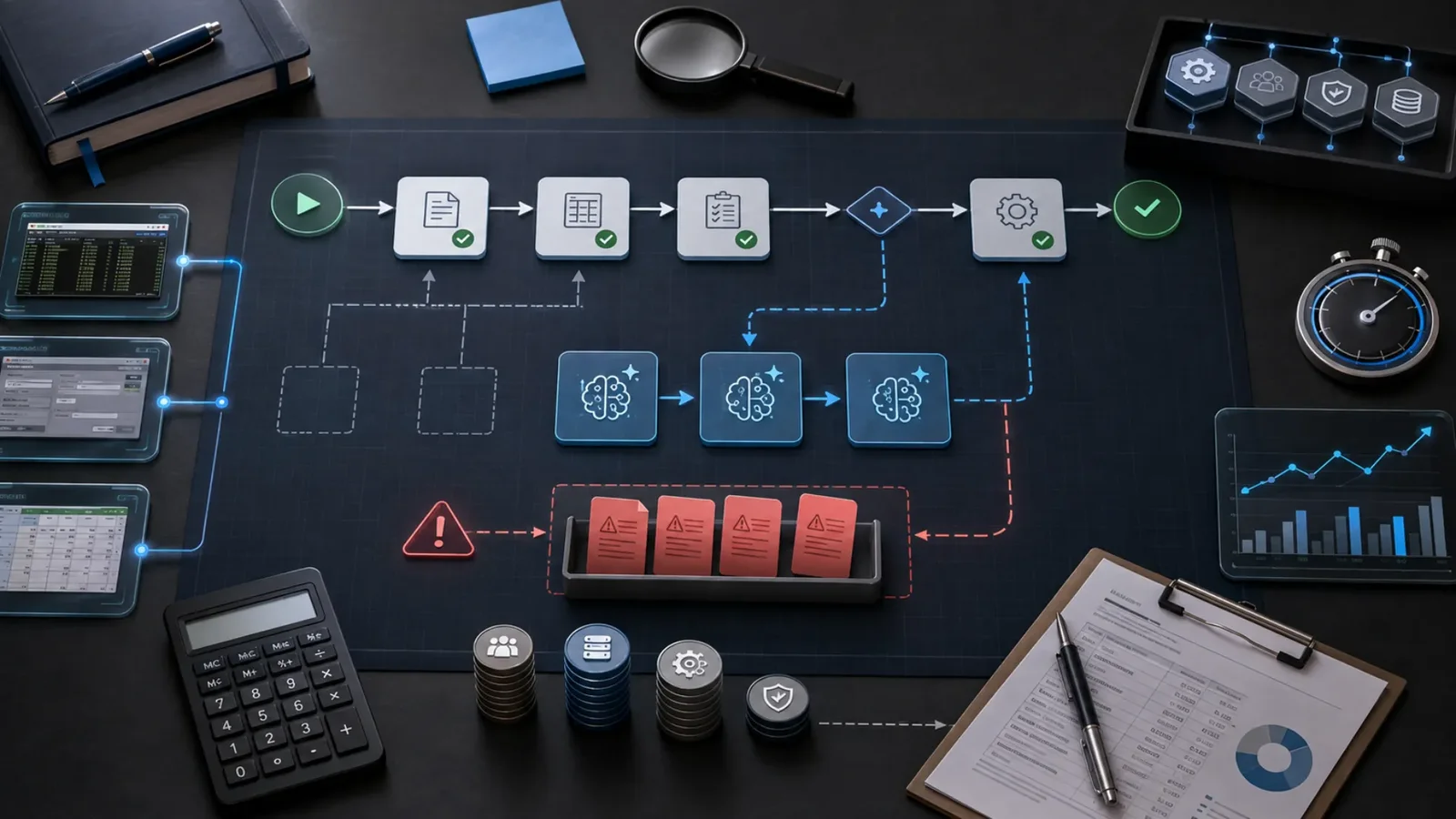
Hours go into moving data between screens, and the errors that follow are found downstream. RPA development takes the rule-based part, working the same screens and APIs your team uses. The audit confirms the process is stable enough to automate before anything is built.
Hours Lost to Manual Data Entry
The same copy-paste, re-key, and cross-check work happens every day across systems that don't talk to each other, and the volume only grows as the business does.
Errors From Repetitive Manual Work
A person doing the same task hundreds of times a week eventually makes a mistake, and by the time it's caught it's already cost money or time to fix.
Automation That Only Handles the Easy Cases
A script built around last quarter's invoice format handles the clean records fine. Then a vendor changes their template, a field comes back blank, or two records arrive out of order, and the bot either breaks the run or quietly skips the record, so a person ends up finding and fixing it manually, usually after it's already caused a problem downstream.
Unclear Return on Investment
The budget for an automation project gets approved without a number attached to the hours or errors it should remove, and the case for phase two gets harder to make without a result to show.
How RPA Implementation Services Run
From your manual process to a bot running in production, the same path every project follows, with a working demo you can see at the end of each step.
Audit
We review your process, the systems it touches, and where automation pays off first. That review is what confirms the process is stable and rule-based enough for rpa development, with predictable inputs from one run to the next.
Architecture
We lock in which steps stay rule-based, where AI reads variable input, and the exception rules chosen during the audit, and map how the bot connects into your systems.
Build
The bot gets built against your real process and input formats from week one, so every weekly demo runs the exact steps it will run once it's live.
Deploy
The bot goes live in your infrastructure, rolled out in stages so it earns trust on lower-risk records before it touches the rest.
Support
We stay on after launch to monitor performance, review exceptions, and adjust the rules as your process changes.
What RPA Changes in Your Operations
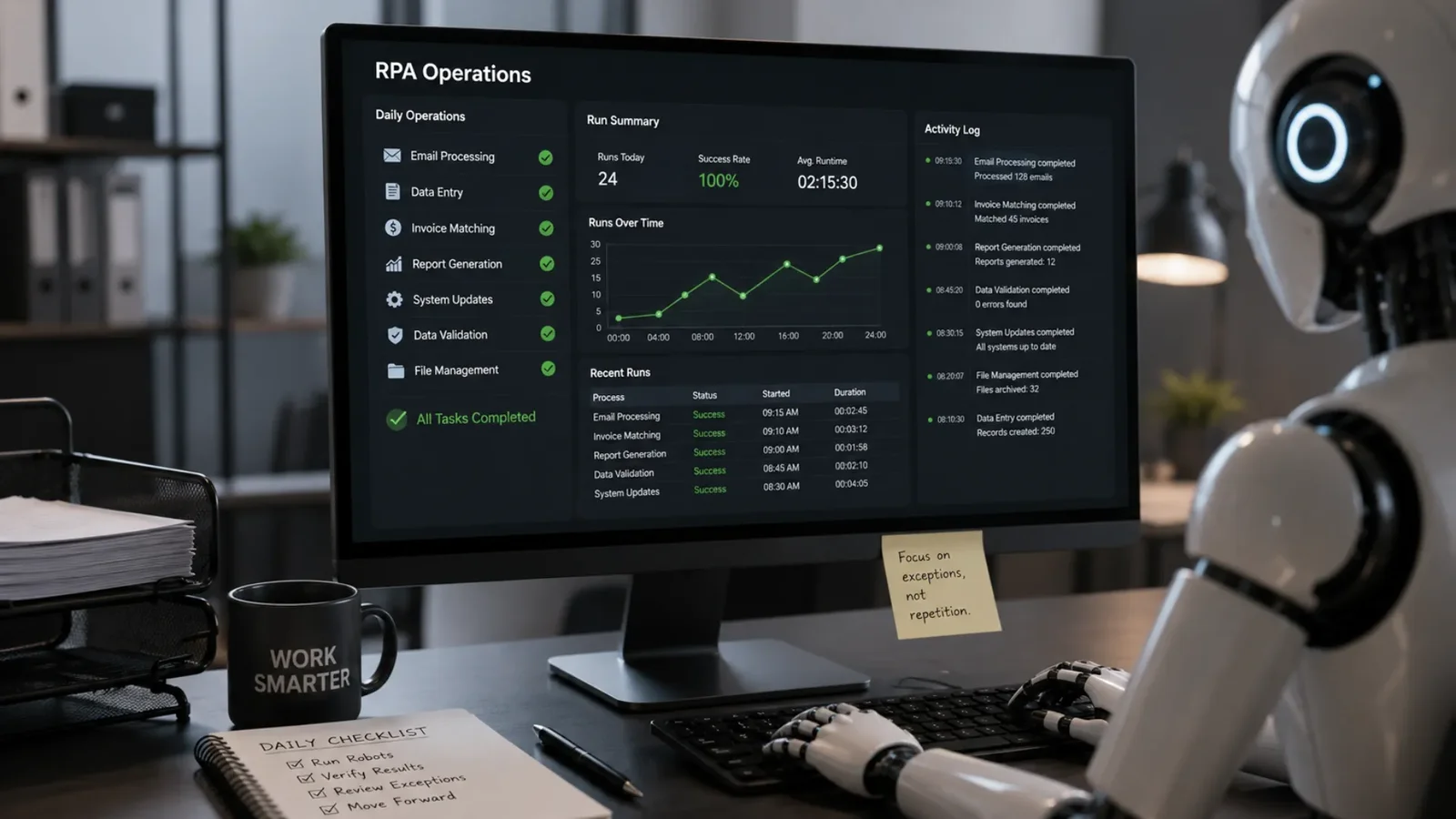
The repetitive run happens overnight, and the people doing it move to work that needs judgement. Every run leaves a log, and a bot that breaks raises an alert the same morning. Most robotic process automation companies start at the tool. Hygge starts at the process, because a workflow automated as it stands today usually automates the workaround with it. RPA consulting services map what happens now, step by step, before anything is built. RPA implementation services then cover the build, the exception paths and the handover. Intelligent automation services extend it where a rule alone cannot decide: reading a document, classifying a request, ranking what to do first.
The Standards RPA Development Is Held To
The standards this work is held to, set against your current baseline and checked after delivery.
Where We've Already Built This
Industries where Hygge's automation work is already running in production, built by an RPA development company that keeps monitoring the process after launch.
HR & Recruitment
Payroll, onboarding and compliance steps handled by bots across the systems HR already runs, with a person on every exception.
Healthcare & Staffing
Claims, eligibility and billing routines automated inside your perimeter, with a full record of what each bot touched.
Sales & Marketing Technology
Data entry between the CRM and the tools around it removed, so a rep keeps selling while the record stays accurate.
Logistics & Warehouse Automation
Order, invoice and customs paperwork routines run overnight, with failures queued for a person in the morning.
Hygge's RPA Systems Already in Production
A sample of robotic process automation services already carrying real production volume, the stage most automation pilots never reach.
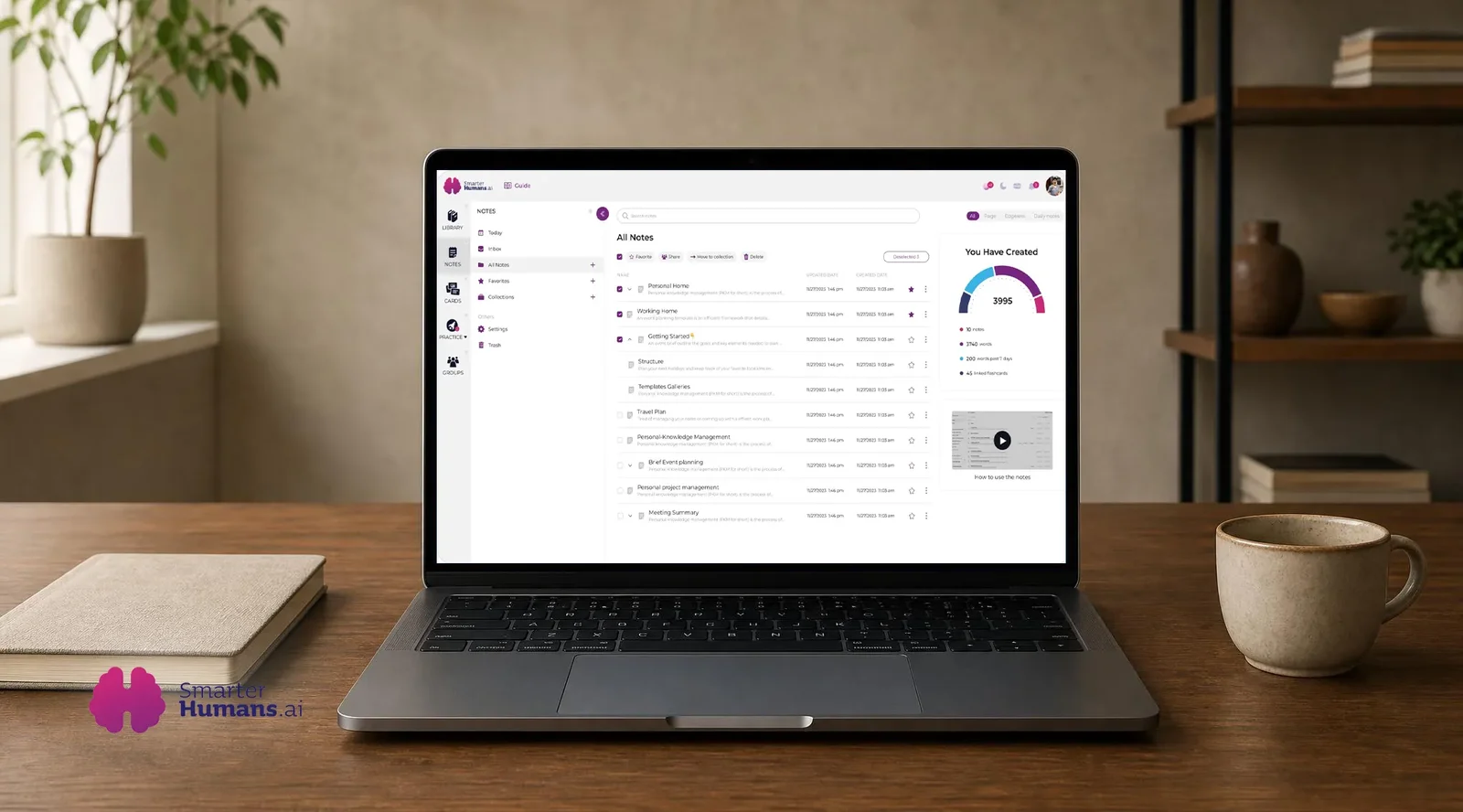
Smarter Humans
A spaced repetition app built by the same team since 2019. About a million users moved to the rebuilt system with zero downtime.
- 93 %Cut off a 20-second document load
- 1 uploadReplaces the card writing people quit over
- 7 yearsOn one product with the same team
What You Get From RPA Consulting Services
We review your process, the systems it touches, and where robotic process automation services pay off first, and hand you a clear next step, what to build, how long it takes, and what it costs.
The Stack Behind RPA Development Services
The languages, models, and infrastructure behind every build Hygge runs.
The model layer the feature runs on, weighed on accuracy for your task, the latency a user will sit through, and what a call costs at production volume.
 Python
 Hugging Face Transformers
 Anthropic Claude API
 OpenAI API
 LangChain
 PyTorch
Frequently Asked Questions
What teams ask robotic process automation companies about scope, accuracy, and cost.
 What is robotic process automation?
How does robotic process automation work?
What is a bot in RPA?
What is intelligent process automation?
How do you create robotic process automation?
Do I need RPA or an AI agent?
Does RPA use AI at all?
Can an RPA bot work alongside my team?
What happens after the bot goes live?
How much does RPA development cost?
What if my process changes often?
Which processes should I automate first?
What do RPA development services include?
From Your Manual Process to a Scoped Plan
Tell us the process that's still eating hours in manual entry or checks. Hygge scopes the rpa development work around a measurable outcome.
Tell Us Where the Manual Work Happens
Share the process, the systems it touches, and where a person is still doing the repetitive part.
Get a First Consultation
We map every system and exception the process touches before locking in scope, cost, and timeline.
Receive a Detailed Proposal
A scoped plan with the approach, timeline, and cost, built around your actual process and systems.