
Inventory Management Software Development That Survives Dead Zones
Accuracy is decided at the moment of the scan. If the handheld has no signal in the back aisle and the driver loses coverage between depots, the software has to record the event locally, resolve conflicts on reconnect, and never lose a movement in between.
What Custom Inventory Software Solves
Where a stock or vehicle record stops matching the physical world. A unit gets moved without a scan, a vehicle goes in for service and nobody updates the schedule, and the report that reaches management is confidently wrong. The gap grows quietly until somebody needs the number.
Counts Drift From What Is on the Shelf
Movements get recorded late or by memory, so the figure in the system and the count on the floor separate a little more each week.
- Stock written by the same event that moves the goods, at the moment it happens
- Cycle counting built into the daily flow
- Variance reports naming the location, the item and the shift
Dead Zones Lose Movements
Racking, cold storage and rural routes drop the connection. Work continues and the record does not.
- Offline capture on the handheld with a durable local queue
- Conflict resolution on reconnect with a rule per field
- A visible sync state so the operator knows what has been accepted

Vehicles Are Located by Phone Call
Dispatch asks the driver where they are, and the answer is already out of date by the time it reaches the customer.
- Live position and status from the vehicle, with history retained per trip
- Fleet management software covering assignment, utilisation and service intervals
- Customer-facing status pulled from the same record dispatch reads
Equipment Already on Site Cannot Be Read
Existing scanners, telematics units and label printers work, and every quote assumes replacing them.
- Integration with the hardware and protocols already deployed
- A gateway layer translating device output into the new system
- Replacement scoped only where the existing device cannot carry the workflow
What Makes Fleet Management Software Development Hard
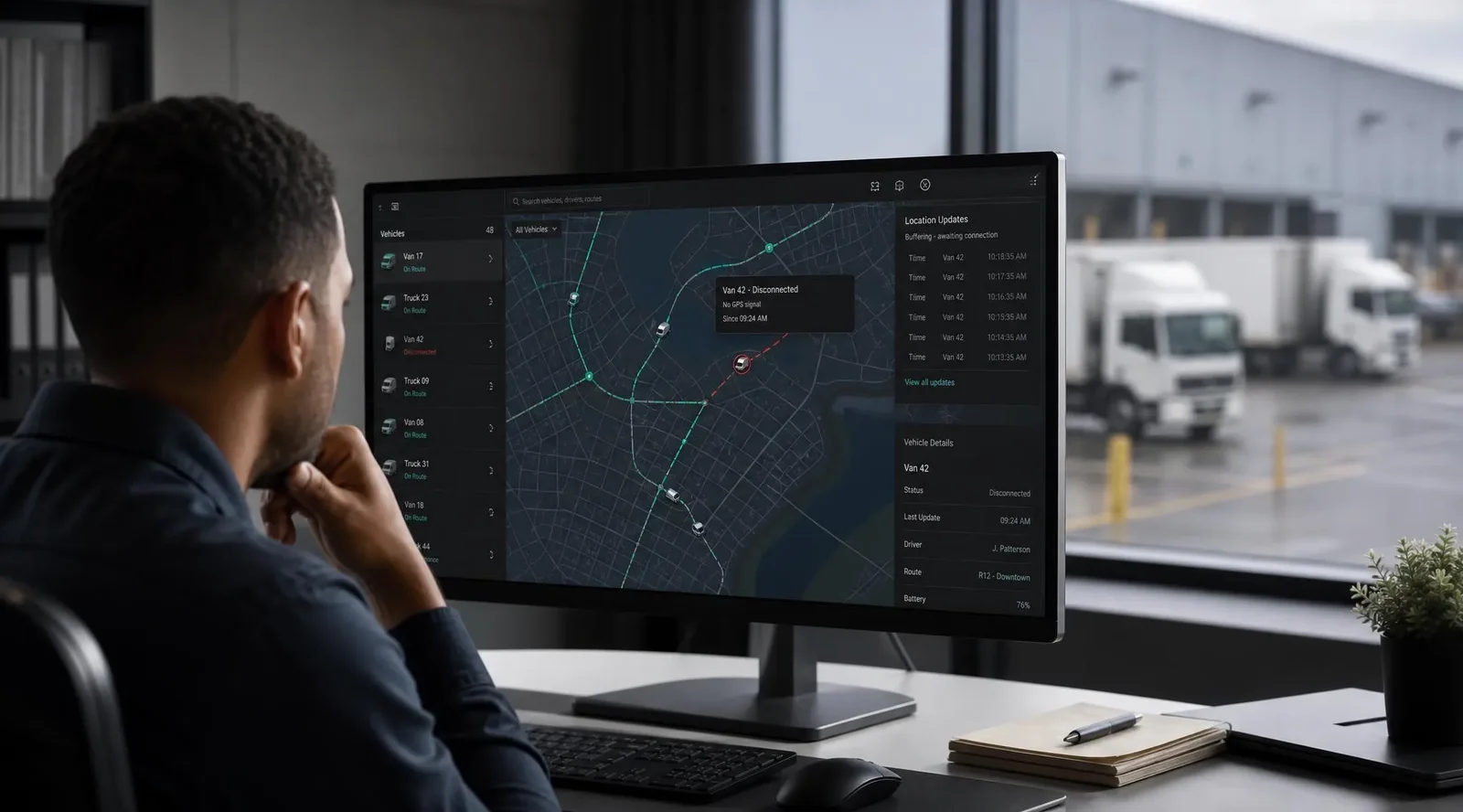
Both problems come down to the same question: what does the system do while it cannot hear from the thing it is tracking. A count taken offline, a movement recorded twice, a vehicle that reappears with four hours of buffered positions. Hygge defines the offline and conflict behaviour in the audit, because retrofitting it after go-live means recounting stock.
Industries This Applies In
Sectors where this comes up most often, and where Hygge has shipped it. What changes between them is what is being tracked: tools, vehicles, medical equipment, rental stock. Custom inventory software follows the same spine in all of them, and the check-out and maintenance rules move with the asset.

Logistics & Warehouse Automation
Warehouse and logistics operations where a cutover has to happen while orders keep shipping.

Retail & E-Commerce
Retail and e-commerce reconciling stock across stores, fulfillment and vendor deliveries.
Public Safety & Security
Public safety fleets where equipment assignment and vehicle status carry an audit trail.

Aviation
Aviation ground operations where every parts movement carries a revision and a signature.
The Stack Behind Inventory and Fleet Management Software
Inventory and fleet data goes stale the moment it stops matching reality, so this stack is chosen around events arriving from the field and reconciling cleanly. It runs on the devices your teams already carry, and holds what happened while a device was offline.
Applications built to keep working with no network and reconcile cleanly on reconnect.
 React Native
 Flutter
 Kotlin
 Swift
Swift Expo
ExpoTrack Record
Company numbers across every project, from the first audit through the years a system stays in service. Fleet management software development is judged on the vehicles that stay on the road, and on the maintenance caught before a breakdown. The audit at the start is what makes the delivery date and the price hold.
How an Inventory and Fleet Management Platform Gets Delivered
One site first, offline behaviour proven, then the rest of the network. The offline path is what decides whether staff keep using the system on a bad signal day. Each stage ends with something the floor team can use on a real shift.
Site and device audit
2 weeksHygge walks the process, records where coverage drops, and lists the scanners, telematics units and systems already in place. The output is a scope and an exact price.
One site in production
4-6 weeksThe first site runs the new capture flow beside the existing system, with offline queueing and conflict rules applied. Counts get compared daily.
Reconciliation and integration
3-4 weeksStock and vehicle records reconcile against the current system for a full cycle, and integrations with accounting, WMS and carrier systems get built.
Rollout across the network
ongoingFurther sites follow the same pattern, each with its own coverage survey before go-live.
Related Asset Management Software Development Work
Projects where this problem showed up and what got built for it. Each started with assets tracked across spreadsheets and nobody able to say where a given unit was. What you see is the system that answered that and the numbers that moved.

Slapstack
The console for autonomous warehouses, rewritten from Flask to React in pieces. No live warehouse went offline.
- 0Warehouse hours lost to a full rewrite
- 1 libraryReplaces hand-rolled pages, screen by screen
- 1 year onThe same client came back for phase two
Before You Replace a Stock or Fleet System
Where a human approval belongs in a check-out or a write-off, how to design the exception path before the happy path, and how to measure what an automation saved. Asset management software development is judged on the exceptions, because a clean check-out was never the expensive part.

Inventory and Fleet Management Platform: Frequently Asked Questions
What inventory software development has to survive: bad signal, old hardware, and a crew with no time for training. The answers below cover scanners you already own, what happens when a device drops offline, and how long a first site takes to go live. Asset management software development is judged on the exceptions, because a clean check-out was never the expensive part. Asset management software development is judged on the exceptions, because a clean check-out was never the expensive part.
 What is fleet management?
What is fleet management software?
How does fleet management software work?
How to manage a fleet of vehicles?
What is a fleet management system?
How do you handle areas with no signal?
Can it work with the scanners and telematics units we already own?
How do you replace a system without stopping the warehouse?
What keeps inventory accuracy from drifting again?
How much does inventory management software development cost?
How long does a first site take?
Do you build the mobile app as well?
Start With the Aisle Where the Signal Drops
Tell us how stock moves, where coverage fails and what equipment is already on site. You get an audit, a rollout plan, a scope and an exact price.

Tell Us Where the Record Breaks
Share how movements are recorded today, where counts drift, and the places on site where the network gives out.
Get a Site and Device Audit
Hygge walks the process, surveys coverage, and lists the scanners, telematics units and systems already in place.
Receive a Rollout Plan and an Exact Price
A written scope with the first site, the offline behaviour, the integrations, the timeline and the cost.