

Backend & API Development Services
Hygge architects the server side your product runs on: the business logic, the APIs your partners connect to, and the database underneath all of it. One team, one contract, one set of backend development services. Our backend development services start with a load profile and an architecture review, and end with a system deployed into your own cloud account, documented, monitored, and alerting before the first spike arrives.
What Goes Into a Backend, API and Database Build
The layers that fail together and get designed together. Hygge decides which parts your system needs after reviewing your traffic, your integrations, and your query patterns.
Service Architecture and High-Load Design
Monolith, modular monolith, or microservices, chosen against your team size and release cadence, then queues, workers, caching, and connection pooling sized to your peak traffic. That architecture is what keeps a system upright during the hour that decides your quarter.
API Design and Integration
The contract between your product and everyone connecting to it: resources, endpoints, request and response shapes, mapped against real workflows. Our api development services include authentication, rate limits, versioning, and the documentation a partner engineer can integrate from without a call.
Third-Party Integration Resilience
Retry logic, circuit breakers, and queued writes cover the integration edge cases, so one partner API going down leaves your checkout running. This is where backend integration work earns its cost, in the hours your system stays up while someone else's is down.
Database Architecture and Optimization
Schema design, indexing, partitioning, and query optimization against your real access patterns. Database development services at Hygge start by profiling the queries that will get slow at ten times your current row count, before they do.
Security and Access Control
Authentication, authorization, secrets management, rate limiting, and input validation applied at the service boundary, so every endpoint you add later inherits the protections already there.
Observability and Cloud Cost Control
Structured logging, metrics, tracing, and alerting, plus a spend review that names the idle instances, the unindexed queries burning CPU, and the cross-zone transfer nobody audited.
What the Audit Decides
Hygge runs a paid architecture audit first. Backend, API, and schema decisions compound, and the ones made in week one set the ceiling on everything built after them. That is where a backend development company earns its fee.
The audit puts a decision and a number on each of these:
- Load profile, peak concurrent users and requests per second the system has to survive, with the growth curve you expect.
- Service boundaries, how the system splits, sized against the team that will operate it.
- API surface, who consumes it, what contract they need, and which version policy you can live with once partners are on it.
- Data access patterns, the queries that run most and the ones that get slow first as volume grows.
- Cloud spend baseline, what you pay now and what the new architecture costs at your projected load.
- Fixed scope and price for phase one, agreed after the audit.

What Sends a Team to Rebuild the Backend
The failures that bring companies to a backend development company, drawn from the audits Hygge has run.
Traffic spikes, climbing query times, brittle integrations and cloud bills growing faster than usage. Backend, API and database work goes after the cause under all four. The audit profiles the real load and reports which layer gives out first.
The System Falls Over Under Traffic Spikes
It handles a normal Tuesday and collapses on launch day, during a campaign, or at month-end close. The fix lives in queueing, caching, and connection limits, designed in before the spike arrives.
Query Times Climbing With the Data
Screens that loaded instantly at 100,000 rows take eight seconds at ten million. Database development services covering indexing and access-pattern work bring that back without a rewrite in most cases.
Brittle Third-Party Integrations
One partner API goes down and your whole checkout stops. Retry logic, circuit breakers, and queued writes keep your system serving while theirs recovers.
Partners Cannot Integrate Without Your Engineers
Every new connection turns into a week of calls because the API has no documentation, no versioning, and no predictable error format. A custom api development company is measured on exactly this: a published contract that takes your engineers out of the integration path.
Cloud Bills Growing Faster Than Traffic
Spend rising while usage stays flat means oversized instances, queries burning CPU on a missing index, and data transfer nobody has audited. The architecture review puts a number on each line.
Every Release Risks Downtime
Deployments happen on Friday night because they might break something. Staged deploys, migrations that run without locking tables, and a tested rollback path change that.
How We Build It
From an architecture review to a monitored production system. This is what a backend development services project looks like week by week, with something running to review at the end of each step.
Audit and Load Profile
Two weeks reviewing your architecture, traffic, integrations, and query patterns, ending in a fixed scope and price for phase one.
Architecture and Schema Lock
Service boundaries, API contract, and data model, settled before feature work starts, because reversing these later means a rewrite.
Build With Weekly Demos
Working services deployed to staging every week, with load tests running against them as they land, proving the architecture holds before it reaches your users.
Staged Deploy and Migration
Into your own cloud account, behind feature flags, with database migrations that run against live data without locking it.
Monitoring and Handover
Dashboards, alerts, the API documentation that ships with every Hygge api development services project, runbooks, and working sessions with your engineers before Hygge steps back.
What a Rebuilt Backend Changes in Your Operations
The system holds through the spike, and query times stay flat as the data grows. Partners integrate from documented endpoints without your engineers on a call, and a release goes out without a downtime window.
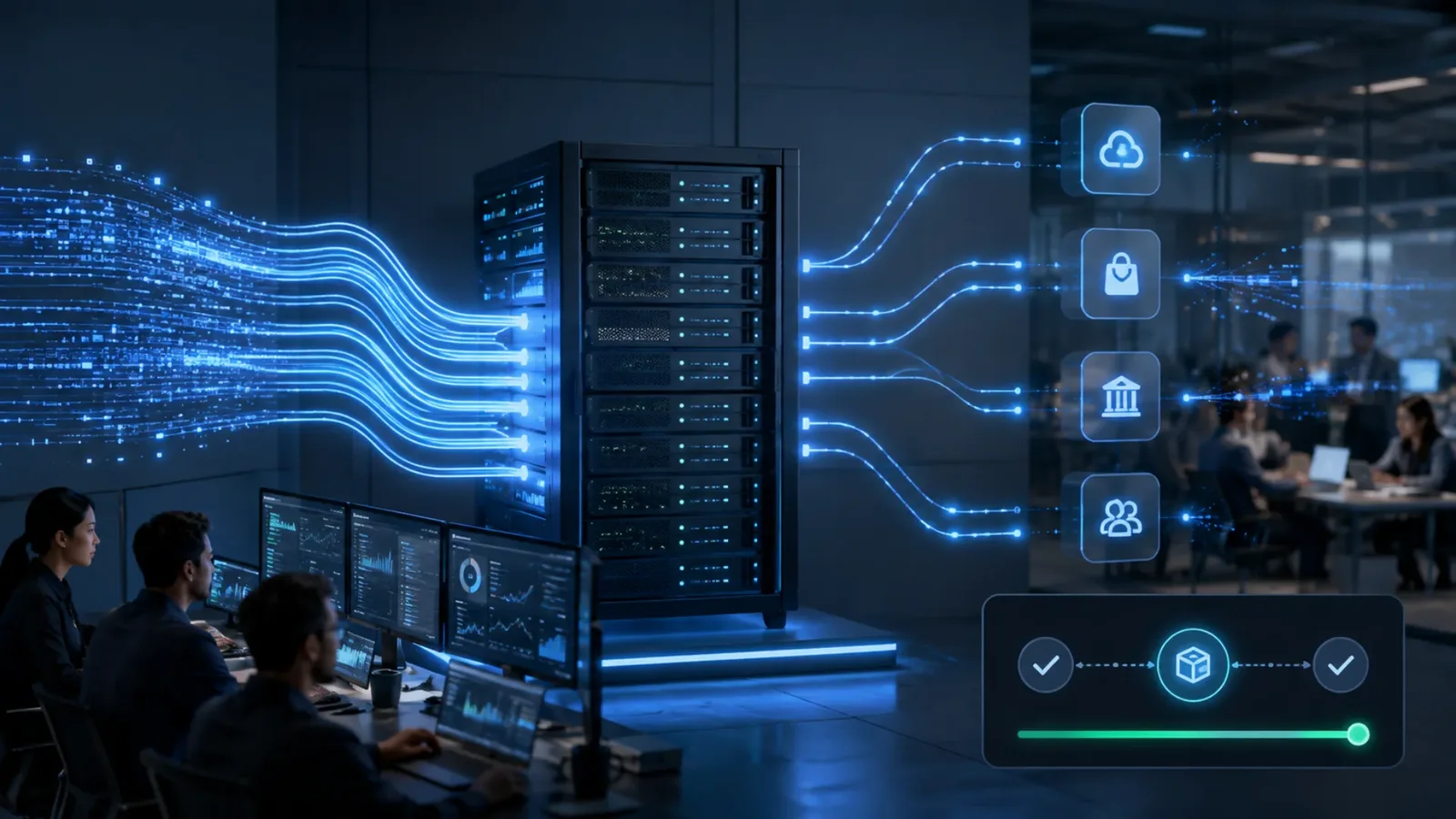
What Backend, API & Database Gives Back
These are the targets the work is built to hit, measured on your own numbers.
Where API Integration Services Decide the Product
Sectors where API integration services and data correctness set the ceiling on what the product can do.

Logistics & Warehouse Automation
Event streams from scanners, robots and conveyors, ingested at a rate that keeps floor dashboards honest.

Retail & E-Commerce
Catalog, inventory and order APIs feeding storefronts, marketplaces and fulfillment partners from one source.

Sales & Marketing Technology
Integrations across the CRM, enrichment vendors and billing, so one customer record stays consistent everywhere.

Healthcare & Staffing
Scheduling and credential APIs exchanging data with hospital systems under health data rules.

Real Estate & PropTech
Listing feeds, valuation services and document APIs shared with portals and partner agencies.

Media & Entertainment
Media metadata, entitlement and playback APIs serving apps across every platform a title ships on.

LegalTech
Document and matter APIs with retention, redaction and audit behavior built into the endpoints.

EdTech
Assessment, progress and roster APIs syncing with institution systems on their own schedules.
Backends Holding Up Under Production Traffic
API development and integration work Hygge has built and kept stable as load grew.

Arlog ApS
Python staff augmentation for a Danish warehouse robotics company: an engineer matched to the stack joins the product team.
- 1Python Engineer in the Product Team
- In-house toolsWhere the Work Happens

Shopspray AB
.NET staff augmentation for a Swedish B2B commerce company: a senior engineer builds the plugins and gateways between procurement systems and supplier storefronts.
- 1Senior .NET Engineer on the Team
- Plugins + gatewaysIntegration Work Covered
- Back on the productWhere the Tech Lead's Time Goes

Budget Van Lines
Moving company software for a US interstate mover: each move is sized from the customer's answers, matched to a truck, assigned to a carrier and tracked.
- 2Backend Engineers Full Time
- In the platformVolume and Truck for Every Move
- Per orderCarrier Assignment
- Booking to deliveryOrder Tracking

Humanitarian Cargo Tracking Platform
Humanitarian cargo tracking for a UK carrier. Every load is on one map, and each handover lands in a ledger funders can check.
- QRCargo Acceptance on the Recipient's Phone
- LivePosition for Every Load
- 3 appsIn One Platform
- 1 ledgerFor Every Movement

Freight Rate Forecasting for a Forwarder
Freight rate forecasting for a forwarder in Lithuania. It flags truck shortages and rate jumps by lane before the trip is quoted.
- By laneSpot Rate and Shortage Forecast
- 1 storeFor ERP, Exchange and Public Data
- TestedOn the Forwarder's Own Trips
- 1 tapFor the Driver's Route

Gym and Studio Management Platform
Gym management software where the member's phone carries the membership, opens the door and pays. Owners and trainers get their own sides.
- 3 rolesOn One System
- 3 jobsFor the Member's Phone
- Any venueGyms, Studios, Schools and Pools
- MVPDelivered and Handed Over

Sickstadium
An AI video clipping MVP: bring in a long video, describe the moments you want, and review ranked clips to title, score and export.
- ~2 monthsFrom First Call to Working MVP
- Multiple promptsPer Pass Over the Footage
- 60 hoursOf Independent QA on a Second Product

Pick-to-Light System Integration
Pick to light system integration for an equipment integrator. One layer ties lights, sorters and loaders to the WMS at every site.
- 3Equipment Types on One WMS
- Every pickConfirmed Back to the WMS
- LiveEquipment Faults on Screen
- 1 layerFor Lights, Loaders and Conveyors
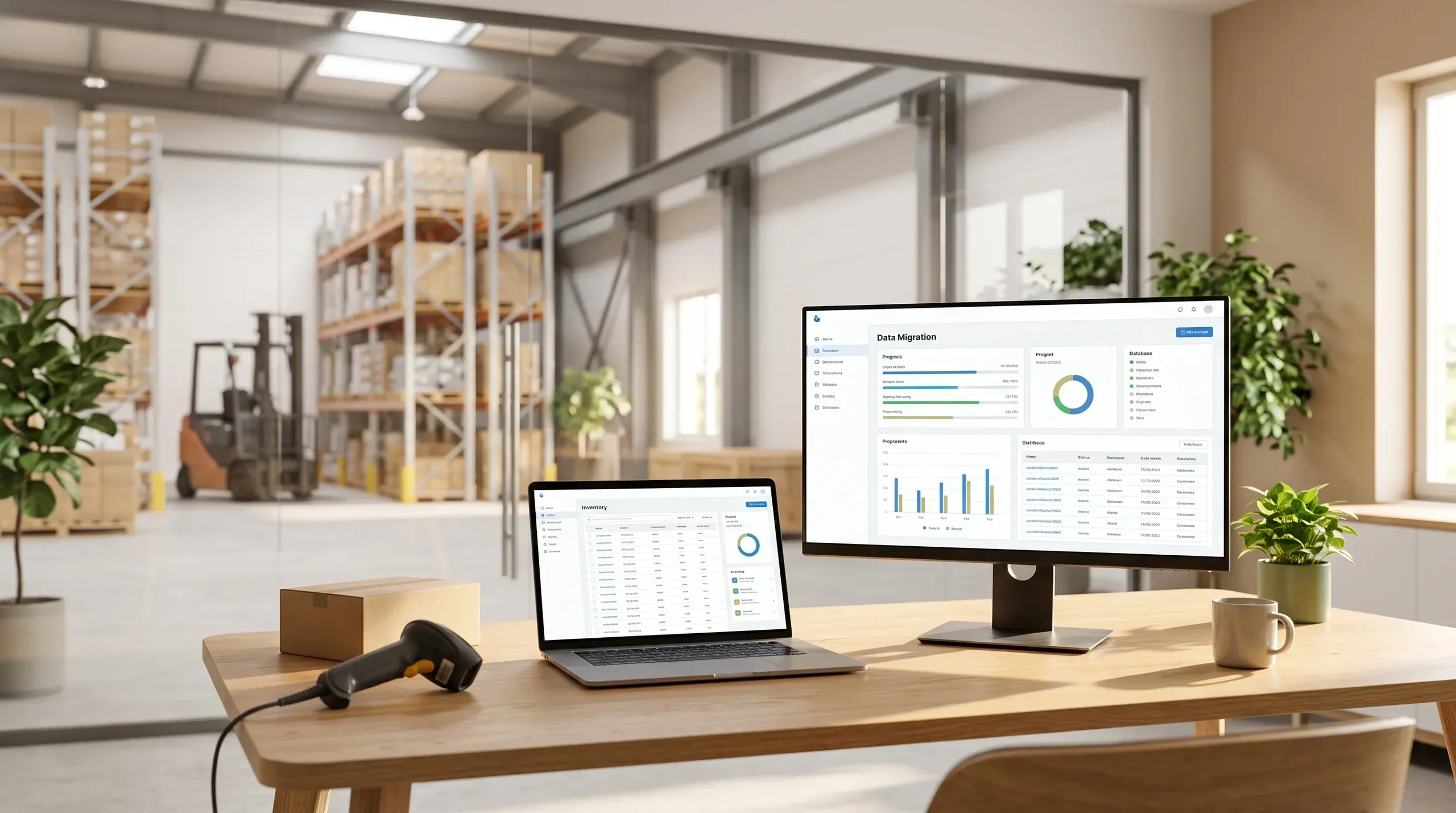
WMS Migration
This WMS migration moves a seven-year-old system off Oracle to Java and PostgreSQL in stages, so the warehouse keeps shipping.
- ≤300 msAPI Response Time
- ≤1 sPage Load on the Floor
- 3 languagesOn Handheld Scanners
- 10 rolesWith Role-Based Access

Logistics Data Exchange Platform
A logistics data exchange platform that puts shipment data from emails, PDFs and calls in one record and moves dock slots for late trucks.
- On the roadWhen a Delay Is Caught
- 1 actionTo Confirm a New Dock Slot
- EUServers for Shipment and eFTI Data
- 1 recordFor Shipper, Warehouse and Carrier

Health Data App Rescue
An app rescue: a health app that would not launch was fixed and put on AWS. It reached both stores in two months, in time for the investor demo.
- 2 monthsFrom Failed Build to Production
- 2 storesApproved and Live
- Original budgetKept Throughout
- OngoingSupport After Handover

AI Meal Planning Platform
An AI meal planning platform built from scratch. It turns the ingredients someone already has into personal, ready-to-cook meals in seconds.
- SecondsFrom Ingredient List to Meal Ideas
- From scratchBuilt End to End by Hygge
- Less wasteThe Goal the Product Is Built On
What You Get From the Architecture Audit
A scoping document covering the whole span of backend development services: a load profile, a service boundary map, an API contract review, a ranked list of the queries that get slow first, a cloud spend baseline with the waste named, and a fixed scope and price for the custom database development work in phase one.
The Stack Behind a Backend Build
Chosen per project against your load profile and what your own engineers can operate after handover, including the rest api development services conventions your partners will build against.
The service layer holding business rules, authorization, and data access. Framework choice follows what your team already maintains and how long the system has to stay supported.
 Node.js
 NestJS
 Python
 Django
 FastAPI
.webp?v=2026-09-29T09%3A19%3A03.736Z) .NET (C#)
.NET (C#) Java
Java Spring Boot
 Go
Go

Frequently Asked Questions
What engineering leaders ask.
 What is backend development?
What is back-end software development?
What is backend programming?
How does backend development work?
How to build a backend for a website?
How much do backend development services cost?
Do I need microservices?
Can you fix our existing backend or does it need a rewrite?
Do you build the API and the database too, or only the backend?
How do you build an API that partners can integrate without our help?
Why is our cloud bill growing faster than our traffic?
How do you handle deployments and database migrations without downtime?
Who owns the code and the infrastructure?
From a System That Buckles to One That Holds
Tell us what breaks and at what load. You get an architecture review, a phase plan, and a price, with database design services scoped alongside the backend work.

Tell Us What the Backend Has to Carry
Share your traffic at peak, the integrations you depend on, and where the current API is showing its limits.

Get a First Consultation
We review your data model, interfaces, and load for anything that would change scope, cost, or timeline.

Receive a Detailed Proposal
A scoped plan with the approach, timeline, and cost, built around your actual load and integrations.