
System Integration Services
The tools your business already runs, connected through the interfaces they expose, with one system named as the owner of each record. Hygge's system integration services start by deciding who wins when two systems disagree, because that is the question every failed integration skipped.
What Software Integration Services Cover
The parts that separate a connection that holds from a script somebody wrote once. Software integration services are scoped to the ones your case needs, after mapping the data flow.
Data Contract and Ownership
Which system owns each field, what a valid record looks like, and what happens when the two disagree. Enterprise integration services without this produce two versions of the truth and a monthly argument.
API and Event Design
Synchronous calls where an answer is needed now, events where it can wait. Hygge gets the choice right before the traffic pattern makes it obvious.
Failure Handling
Retries with backoff, dead-letter queues, and alerts on what stayed stuck, so a failed sync surfaces the same day it happens.
Systems Without an API
File drops, database views, screen automation, or a vendor adapter. Enterprise integration services reach the systems that were never designed to be reached.
Mapping and Transformation
Field mapping, unit conversion, and the reference data both sides need to agree on, held in one place where a change is one edit.
Monitoring and Documentation
A dashboard showing what flowed and what did not, plus documentation written for whoever maintains this after the people who built it move on.
What an Integration Audit Settles
Hygge opens with an audit of the systems, the data, and the volumes involved. Application integration services quoted from a diagram miss the field that means two different things in two systems.
The audit produces each of these:
- A data flow map showing what moves where, how often, and in which direction, including every ERP integration point in scope.
- The owning system for each field, agreed with the people who use both.
- What each system exposes, and what has to be reached another way.
- The failure modes that matter, and what should happen for each.
- Fixed scope and price, agreed after the audit.

What Forces Two Systems Together
The situations behind most enquiries Hygge scopes.
Someone retypes the same record twice, a sync fails and nobody notices, and both systems think they own the field. System integration settles ownership per field first, then builds the connection around failure. The audit reads both contracts and their rate limits.
Someone Retypes the Same Record Twice
An order arrives in one system and gets keyed into another by hand. The cost is the hours plus every typo that reaches a customer.
A Sync Failed and Nobody Noticed
A script has been silently dropping records for weeks. It was discovered during a reconciliation, and nobody knows how far back it goes.
Both Systems Think They Own the Record
An address updated in the CRM gets overwritten by the ERP overnight, and support explains the same thing to the same customer every month.
The Vendor Changed Their API
A supplier deprecated an endpoint with a notice nobody read. The integration broke on a Friday, and there is no test that would have caught it.
The Person Who Built It Left
There is a working script, no documentation, and credentials in a config file. Changing anything means reverse-engineering it first.
How We Connect Systems
From a data flow map to an integration your team can watch and change, with failure handling designed before the happy path. This is how system integration services run at Hygge.
Integration Audit
Two to three weeks mapping the data, the volumes, and what each system exposes, ending in a contract and an exact price. ERP integration work usually carries the longest map.
Agree the Data Contract
Field ownership and conflict rules settled with the people who work in both systems, because they know which one is right in practice.
Build With the Failures First
Retries, dead letters, and alerting go in before the main flow, so the integration is observable from its first run.
Run in Shadow
The integration processes real traffic while the manual process continues, and the two get compared before anything is switched off.
Handover
Dashboards, runbooks, and documentation written for the next person, so enterprise integration services leave something maintainable behind.
What Changes Once the Systems Talk
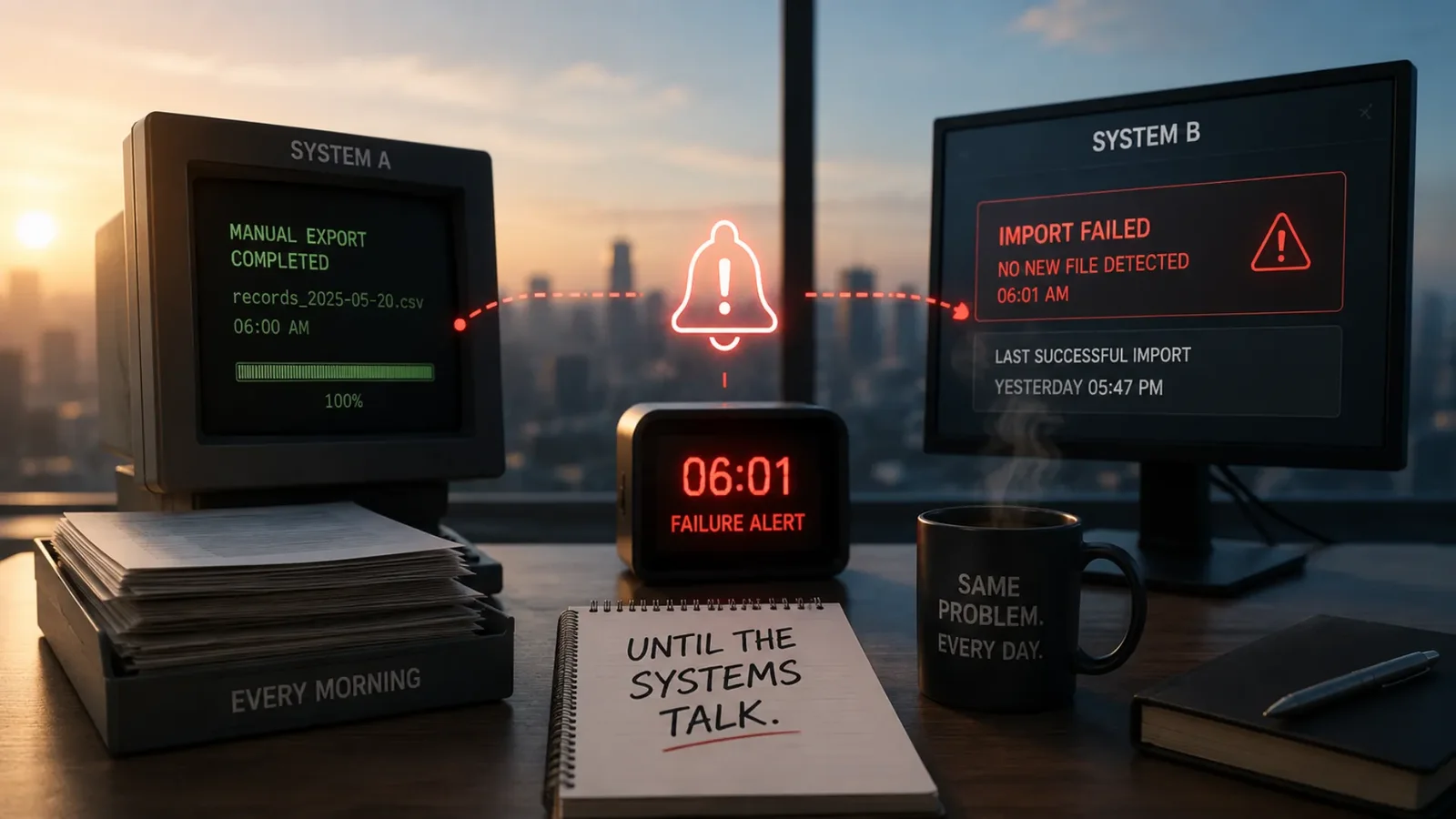
The manual export somebody runs every morning goes away, and the two systems agree without a person checking. A failure becomes an alert with the record attached, and replay picks up where it stopped. Connecting the ERP is where most of this work lands, because the ERP is usually the system everything else has to agree with. Each connection is versioned and contract tested, so a vendor changing their format breaks a test in your pipeline before it breaks a shipment.
The Standards System Integration Is Held To
The standards this work is held to, set against your current baseline and checked after delivery.
Where System Integration Runs Every Day
Sectors where the same record lives in several systems and all of them claim to be right. System integration decides which one the business reads.

Retail & E-Commerce
Catalog, orders, and stock reconciled between the storefront, the warehouse, and the marketplace.

Logistics & Warehouse Automation
Scanners, robots, and the ERP kept in agreement while the floor keeps moving.

Sales & Marketing Technology
CRM, enrichment vendors, and billing joined so one customer record stays consistent.

Healthcare & Staffing
Scheduling and credentialing exchanging data with hospital systems under health data rules.

Real Estate & PropTech
Listing feeds, valuation services, and document stores connected across portals and partners.

Media & Entertainment
Metadata, entitlement, and playback systems feeding every platform a title ships on.

Aviation
Maintenance, crew, and regulator reporting systems joined without losing the audit trail.

LegalTech
Document management, billing, and matter systems connected without breaking privilege rules.
Integrations Carrying Live Traffic
System integration services Hygge has delivered between systems already in production.

Shopspray AB
.NET staff augmentation for a Swedish B2B commerce company: a senior engineer builds the plugins and gateways between procurement systems and supplier storefronts.
- 1Senior .NET Engineer on the Team
- Plugins + gatewaysIntegration Work Covered
- Back on the productWhere the Tech Lead's Time Goes

Budget Van Lines
Moving company software for a US interstate mover: each move is sized from the customer's answers, matched to a truck, assigned to a carrier and tracked.
- 2Backend Engineers Full Time
- In the platformVolume and Truck for Every Move
- Per orderCarrier Assignment
- Booking to deliveryOrder Tracking
Hygge Lead Generation
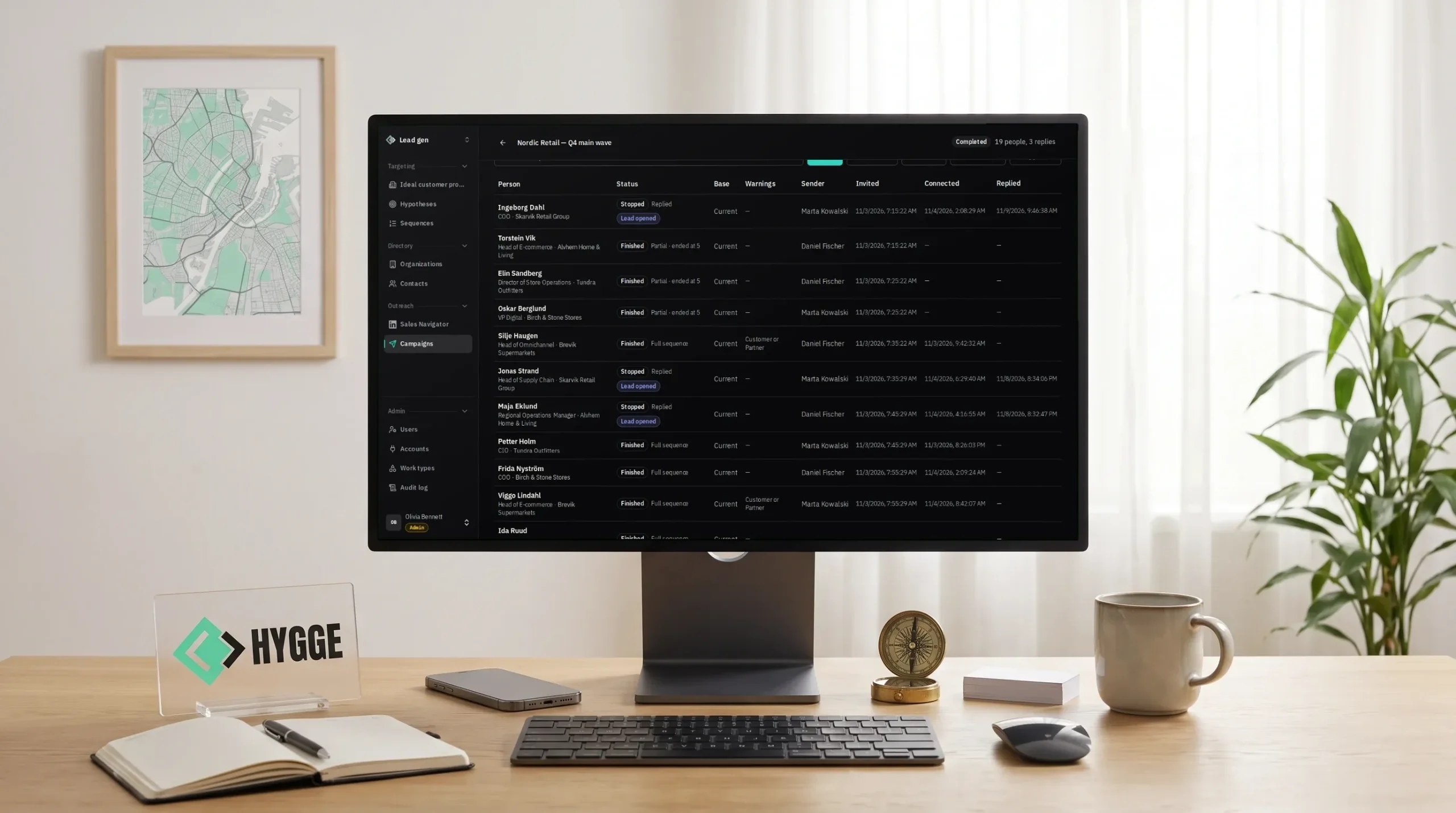
Hygge's own outbound platform, where only approved hypotheses run campaigns. Every reply traces back to the targeting behind it.
- 5 toolsReplaced by one platform
- 0Scripted messages sent after a reply
- Every leadTraced to its hypothesis
- Per accountDaily and weekly sending limits

Healthcare Platform
A live telehealth platform where patients meet doctors and get drugs shipped. The team behind it grew with it.
- LiveSupported a product already used by patients
- Two CRMsZoho customized, Salesforce implemented
- One teamFrom a single developer to a full delivery team
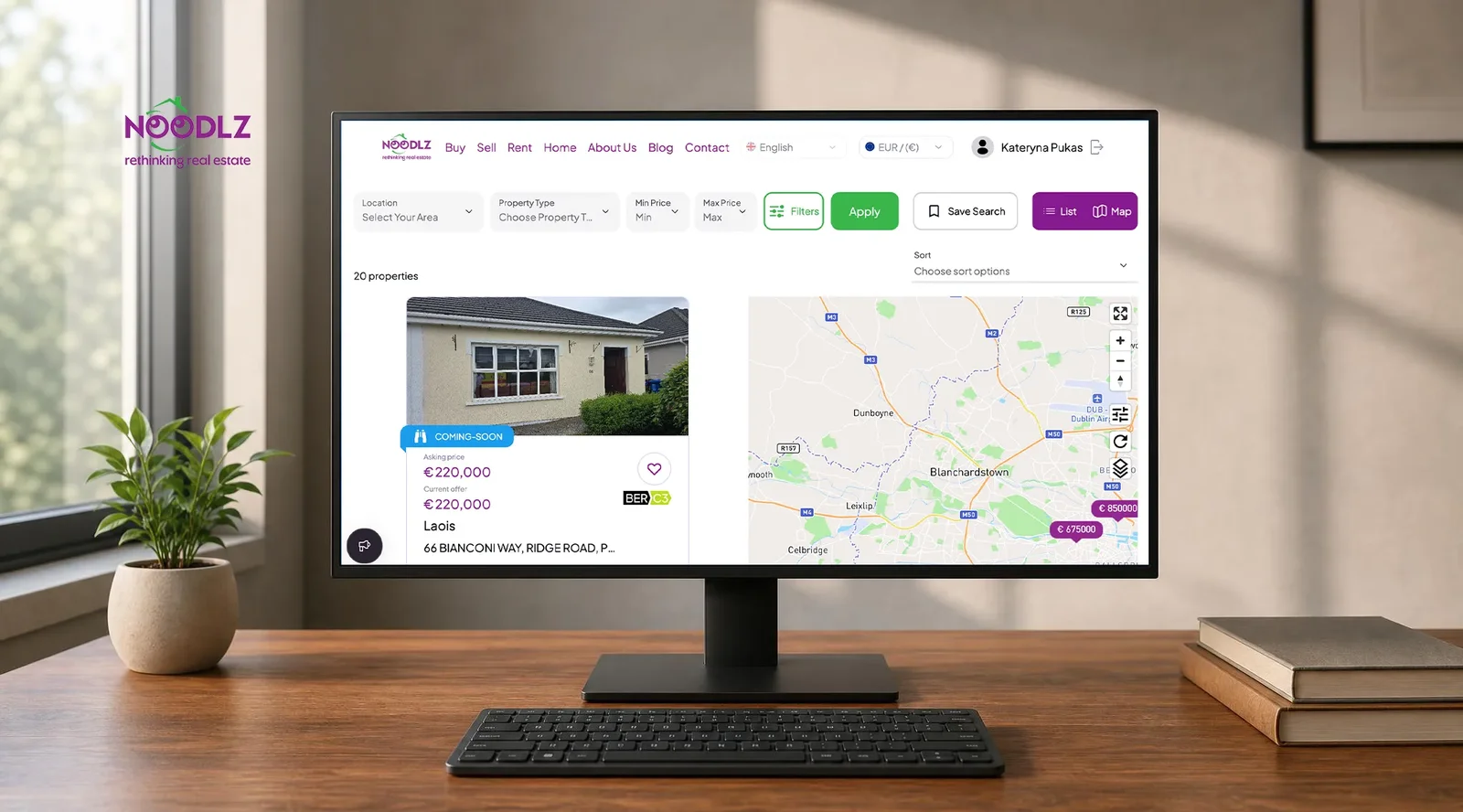
NOODLZ
Live auction software for an Irish agency network. Auctions moved off phone calls into one platform with verified bidders and a document vault.
- 1 platformReplaces auctions run outside any system
- 1 vaultReplaces contracts moving between inboxes
- 2+ yearsOf continuous delivery since 2024

Country Navigator
A ten-year-old cultural intelligence training platform rebuilt into services. Enterprise customers kept working through a zero downtime migration.
- 0Downtime moving a ten-year-old platform
- 1 configReplaces the SSO setup only one person knew
- 10 yearsOf monolith rebuilt into services
What You Get From the Integration Audit
A data flow map with volumes and directions, the owning system named for each field, what has to be reached without an API, the failure modes that matter, and an exact price. ERP integration and every other connection get scoped the same way.
The Stack Behind an Integration
Chosen against your volumes, your systems, and what your own team will operate afterwards, including the third party integration services your customers expect you to offer.
Queues and event streams that let systems exchange data without waiting on each other, so one slow partner stops blocking the rest.
 Kafka
Kafka RabbitMQ
 AWS
AWS Debezium

Frequently Asked Questions
What technical leads ask.
 What is system integration?
How does system integration work?
What is system integration with example?
Why is system integration important?
What do system integrators do?
What does system integration involve?
How do you connect systems without an API?
What happens when one system goes down?
How long does an integration take?
Can you integrate legacy systems?
Who maintains the integration?
What does an integration cost?
What does enterprise system integration involve?
From Two Systems and a Spreadsheet to One Flow
Tell us which systems have to agree and what someone retypes today. You get a data flow map, a contract, and a price, the way every system integration services project at Hygge begins.

Tell Us Which Systems Refuse to Talk
Share the platforms holding your data, what has to move between them, and how often it breaks.
Get a First Consultation
We review your systems, interfaces, and data flows for anything that would change scope, cost, or timeline.

Receive a Detailed Proposal
A scoped plan with the approach, timeline, and cost, built around the systems you already run.