
Product Strategy Consulting Services
Deciding what to build, for whom, and in what order, before a single sprint gets planned. Hygge's product strategy consulting ends in a ranked roadmap with kill criteria attached, so a feature that stops earning its place leaves the plan.
What Goes Into a Digital Product Strategy Project
The pieces that turn an idea into a decision someone can act on. Hygge picks which your case needs after the first conversation about the market.
Buyer and Problem Definition
Who pays, what they are doing today, and what they would have to stop doing to adopt you. An answer more specific than a market segment is where digital product strategy becomes usable.
Competitive and Alternative Analysis
What your buyer uses now, including the spreadsheet and the manual process, and what would have to be true for them to switch.
Value Proposition and Positioning
The sentence a buyer repeats to their own boss when they ask for budget. Everything in the roadmap is judged against whether it makes that sentence more true.
Feature Ranking and Roadmap
Candidates ranked by what the product has to prove next, with a sequence and the reasoning written down. Product management consulting is what keeps a roadmap from becoming a request queue.
Go-to-Market Plan
Channel, pricing shape, and the first ten conversations, sized to a team that has to sell while it builds. Go to market strategy consulting runs alongside the roadmap, not after it.
Kill Criteria and Review Points
The measurement that tells you a bet failed, agreed with you, so a feature leaves the plan on evidence and the budget moves to the next one.
What Gets Settled in the First Two Weeks
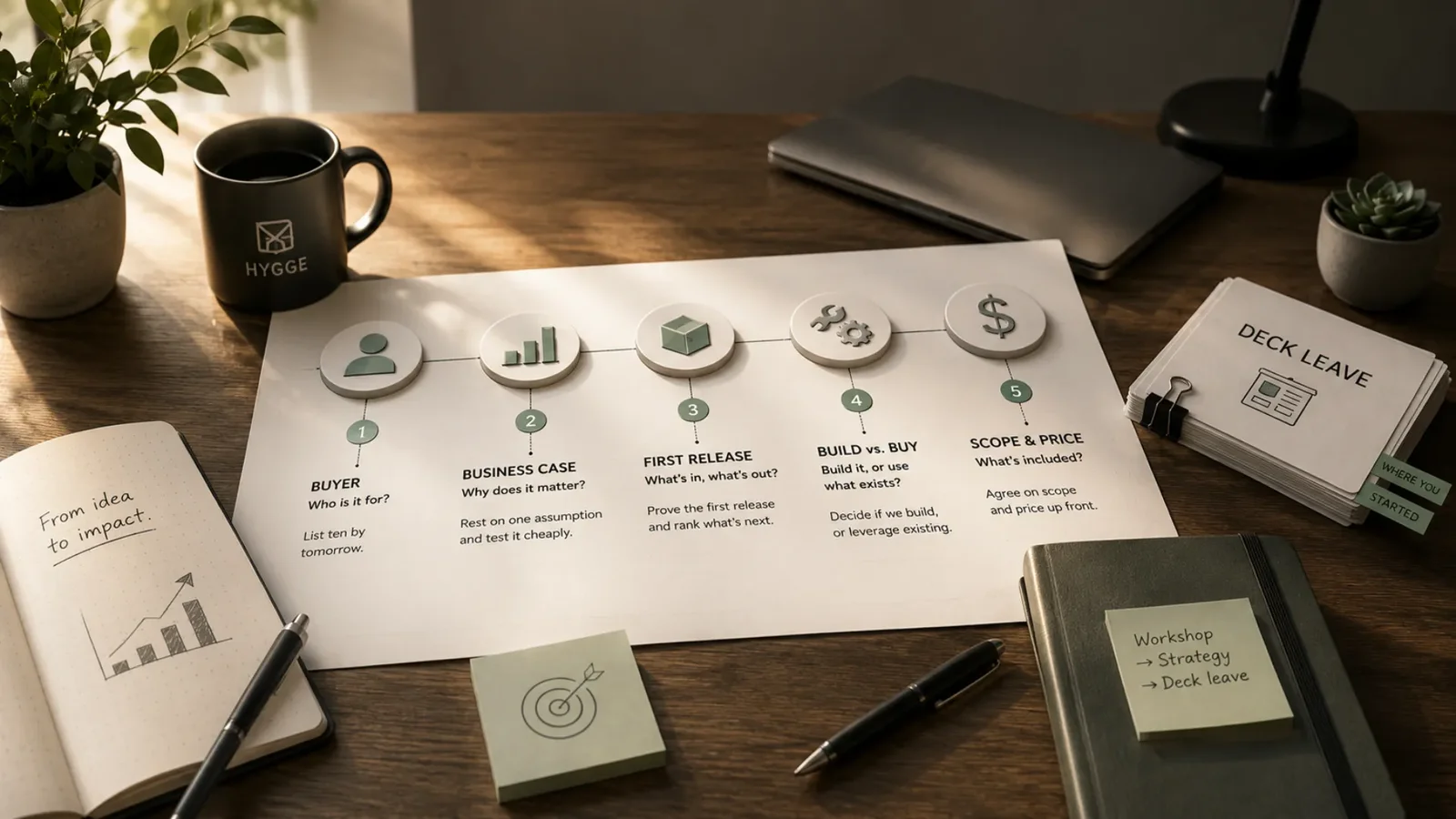
Hygge opens with a paid framing session on your idea and your market. Product strategy services that begin with a workshop and end with a deck leave you where you started.
The framing settles each of these:
- The buyer, named specifically enough that you could list ten of them by tomorrow.
- The assumption the whole business case rests on, and how it gets tested cheaply.
- What the first release has to prove, and what it can leave out, ranked the way product management consulting ranks anything: by the question the business needs answered next.
- Whether the idea needs building at all, or whether an existing tool already covers it.
- Fixed scope and price for the project, agreed before it starts.
What Sends a Founder Looking for Strategy Help
The situations behind most enquiries Hygge takes on.
Features get scoped before anyone writes down the market they have to win. Product strategy fixes that order: who buys, what they are choosing between, and which release proves it. The audit turns that into a roadmap with a cost against each step.
The Roadmap Is a Request Queue
Every feature on the list came from a customer call or an investor comment. Nobody can say which one the product needs next, so the loudest request wins.
The Buyer Is Described as a Segment
The answer to who this is for names a category. A person with a budget, a problem, and a deadline is what a message needs to land, and that answer is missing.
Nothing Ever Leaves the Plan
Features get added and never removed, because no measurement was agreed that would say a bet had failed. The roadmap grows past what the team can build in a year.
The Deck Says Everything and Decides Nothing
A previous consultant left a strategy document nobody has opened since. It described the market well and never named what to build first.
Strategy Ignores What the Team Can Build
A plan written without an engineer in the room commits to a timeline the codebase and the team size cannot support, and reality arrives one quarter later.
How We Build a Product Strategy
From an idea to a ranked roadmap with kill criteria, with a document you keep at the end of each step. Hygge runs product strategy consulting with an engineer in the room, so what gets planned is what can be built.
Framing
Two weeks on your buyer, your market, and the assumption the business case rests on, ending in a decision on whether and what to build.
Evidence
The riskiest assumption tested against the cheapest available signal: buyer conversations, existing usage data, or a landing page with real traffic.
Positioning
The value proposition written as a sentence a buyer would repeat, with the alternatives it has to beat named alongside it.
Roadmap and Sequence
Candidates ranked by what the product has to prove next, sized against your team, with kill criteria attached to each bet. This is the core of product management consulting at Hygge.
Handover
The roadmap, the reasoning, and the review points, written so your team runs the next planning cycle without us in it.
What Changes Once the Strategy Is Written Down
The roadmap has a reason behind every item, so a feature argument becomes a question with an answer. Engineering builds against a market position that is written down, which is also what an investor asks to see. Product discovery services sit under this work: talking to the people who will use the thing, watching how the job is done today, and turning that into a scope somebody can price. Strategy without that step is a document, and documents do not survive contact with real users.

What Product Strategy Is Measured On
What Hygge commits to on this service, and how each commitment is measured.
Where the Roadmap Decision Is Worth More Than the Code
Sectors where building the wrong thing well is the expensive outcome.
Sales & Marketing Technology
Positioning and packaging for revenue tooling sold into teams that already own three overlapping products.
Marketing & Creative
Pricing and scope for creative tooling, where buyers switch on workflow fit more than on features.
Fitness & Wellness
Retention economics for a membership product, where the first two weeks decide the lifetime value.
HR & Recruitment
Buyer research across HR leaders and hiring managers, who want different things from the same platform.

EdTech
Institution buying cycles and pilot design, since one academic year is one chance to prove value.
Real Estate & PropTech
Agency willingness to pay, and the point in the lifecycle where they will switch tools.
Retail & E-Commerce
Merchandising priorities scored against what each feature returns per order.

Media & Entertainment
Catalog and rights strategy weighed against what audiences measurably watch.
Products Shaped Before They Were Built
Work where the scope decision came first and the build followed it.
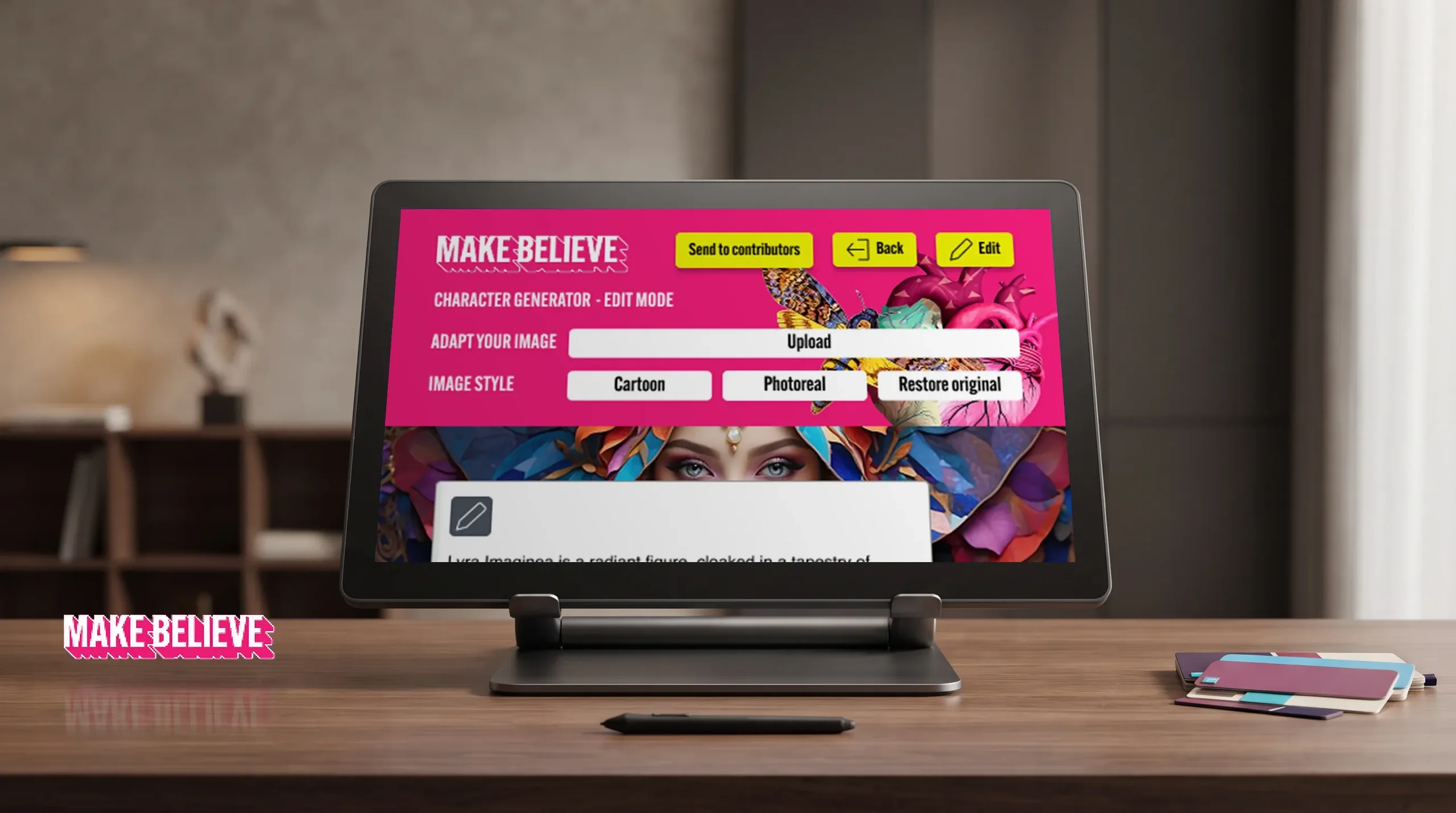
MB Character Tool
An embeddable AI character generator living inside an agency marketing site, built in eight weekly milestones.
- 1 promptFrom landing on the site to a result
- 1 iframePuts the tool inside the existing site
- 8 weeksFrom an empty repository to live on the site
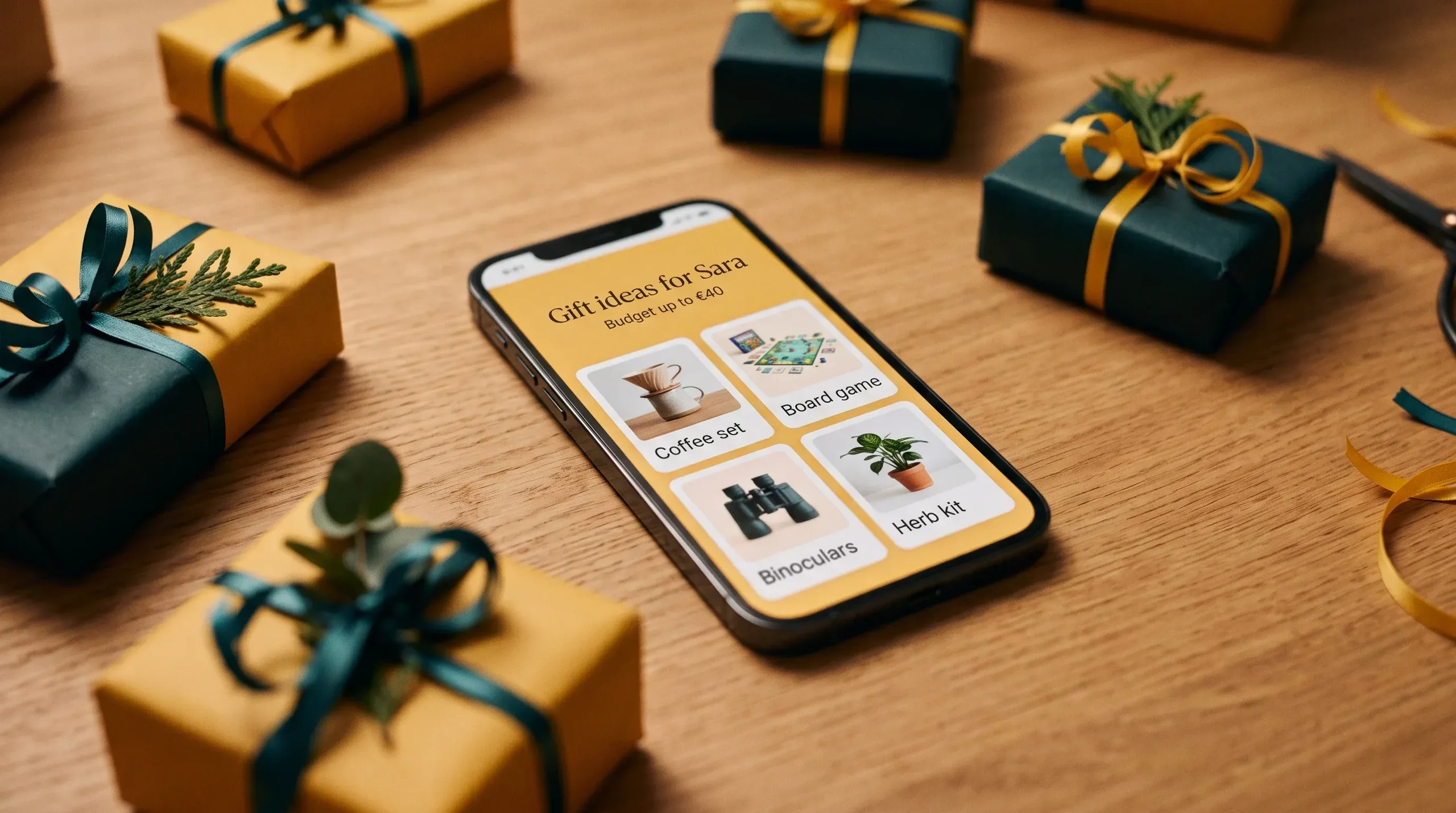
Offra
An AI gift finder built in about a month for a startup whose marketing was booked against a Black Friday date.
- 3 milestonesDelivered before the holiday launch window
- 100 %Of results are products a buyer can order
- ~1 monthAgainst a Black Friday date that could not move
What You Take Away From the Project
A named buyer, a tested assumption, a positioning sentence, a ranked roadmap sized to your team, and kill criteria for every bet on it. Product management consulting that hands you decisions your next planning cycle can run on.
The Methods Behind the Roadmap
Chosen against your stage, your evidence, and how fast a decision has to be made.
Interviews and behavior data from the people who would pay, gathered before a roadmap commits engineering time to a guess.

Frequently Asked Questions
What founders and product leads ask.
 What is a product strategy?
How do you develop a product strategy?
How to write a product strategy document?
What are the 5 stages of product development?
How to build a product strategy?
What does product strategy consulting cover?
How is this different from product discovery?
How do you validate an idea before building?
How long does the project run?
Can you work with a non-technical founder?
What do I get at the end?
Do I have to build with you afterwards?
What does a software product strategy cover?
From an Idea to a Roadmap Someone Can Act On
Tell us what you want to build and who you think it is for. Product consulting services here start with a framing session, a tested assumption, and a sequence, the way every product strategy consultant project at Hygge begins.
Tell Us Who You Are Building For
Share the market, what you already know about buyers, and the roadmap decision you are weighing.
Get a First Consultation
We review your market, buyers, and roadmap for anything that would change scope, cost, or timeline.
Receive a Detailed Proposal
A scoped plan with the approach, timeline, and cost, built around your actual market position.