
The Spreadsheet That Runs the Company
Every operations team has one: the file that holds a critical process, understood by two people, with no history and no rules. Replacing it is usually the highest-return software a company can buy.
What Business Process Automation Software Solves
What happens when a process outgrows the tool holding it. The spreadsheet still works, but one person knows the formulas, three people keep private copies, and a wrong paste turns up a week later inside an invoice. Business process automation software is worth its cost at the point that spreadsheet starts deciding money.

Key-Person Dependency
One person knows why the process works, and the company is exposed the day they are unavailable.
- Rules encoded in the system
- Documented, enforced process steps
- Handover that does not require a month of shadowing
- Everything auditable after the fact
No Record of What Happened
A number changed and nobody can say who changed it, when or why.
- Full audit trail on every record and change
- Approval steps with the approver recorded
- Historical state reconstructable
- Reporting straight from the operational data
Rules That Get Skipped
The process says approve first, and under pressure people skip it because nothing stops them.
- Validation enforced server-side
- Approval gates that cannot be bypassed
- Exception paths that are recorded
- Notifications when something stalls
Copy-Paste Between Systems
Data moves between tools by hand, and every transfer is a chance to be wrong.
- Integrations replacing manual transfer
- Automation for the deterministic steps
- Verification after every write
- Reconciliation reporting between systems
What Makes Operations Management Software Pay Off
The return is measurable because the current process has a number attached: hours spent, error rate, backlog age. That baseline is what makes the project defensible before it starts and provable after it ships.

Where Business Process Automation Services Apply
Sectors where this comes up most often, and where Hygge has shipped it. What changes between them is the process that got too big: claims intake, driver settlement, campaign billing, onboarding. Operations management software follows the same spine in all of them, and the approval rules move with the industry.

Healthcare & Staffing
Marketplaces and workflow tools for care organizations, where the mechanism in the middle decides whether the market is fair.

Logistics & Warehouse Automation
Operator interfaces for autonomous fleets, industrial integration and systems rebuilt without taking a working site offline.

Sales & Marketing Technology
Prospecting and outreach platforms where automation has to look human enough that the platform it runs on does not object.
HR & Recruitment
Hiring platforms, professional networks and staffing marketplaces where matching runs on structured data.

LegalTech
Document-heavy products where a reference has to be exactly right, and an approximately correct citation is a wrong one.
The Stack Behind Business Process Automation Services
Automation earns its cost when the exceptions are handled, so this stack is chosen around long-running processes that survive a restart and a failure. Every step is visible, so an operations lead sees where a case is stuck without opening a ticket.
What the operations team uses every day. A case shows where it is, who has it and what it is waiting on, so nobody chases a status in a chat. The queue is built for people handling dozens an hour, which means bulk actions and keyboard paths for the steps they repeat.
 React
React Next.js
 TypeScript
 Angular
 TailwindCSS
Business Process Automation Software Track Record
Company numbers across every project, from the first audit through the years a system stays in service. Process automation consulting starts by measuring what the current process costs in hours, so the result afterward is arithmetic. The audit at the start is what makes the delivery date and the price hold.
How Business Automation Services Get Delivered
Baseline first, so the result can be proven. Custom automation software gets built one step at a time, with the manual path still available until the automated one matches it on real work. Nothing is switched off on a promise.
Process Audit and Baseline
2 weeksTwo weeks mapping the process as it runs, with volumes, handling times and error rates recorded as the baseline.
Core System
4-6 weeksThe data model, the rules and the screens covering the main path, with validation and audit enforced server-side.
Automation and Integration
3-4 weeksDeterministic steps automated, integrations replacing manual transfer, and exception paths made explicit.
Rollout and Measurement
2-3 weeksParallel running against the old process, then cutover, with the baseline metrics re-measured.
Related Process Automation Work
Projects where this problem showed up and what got built for it. Each started with a process running on spreadsheets and email and a team losing hours to it every week. What you see is the system that replaced that and the numbers that moved.
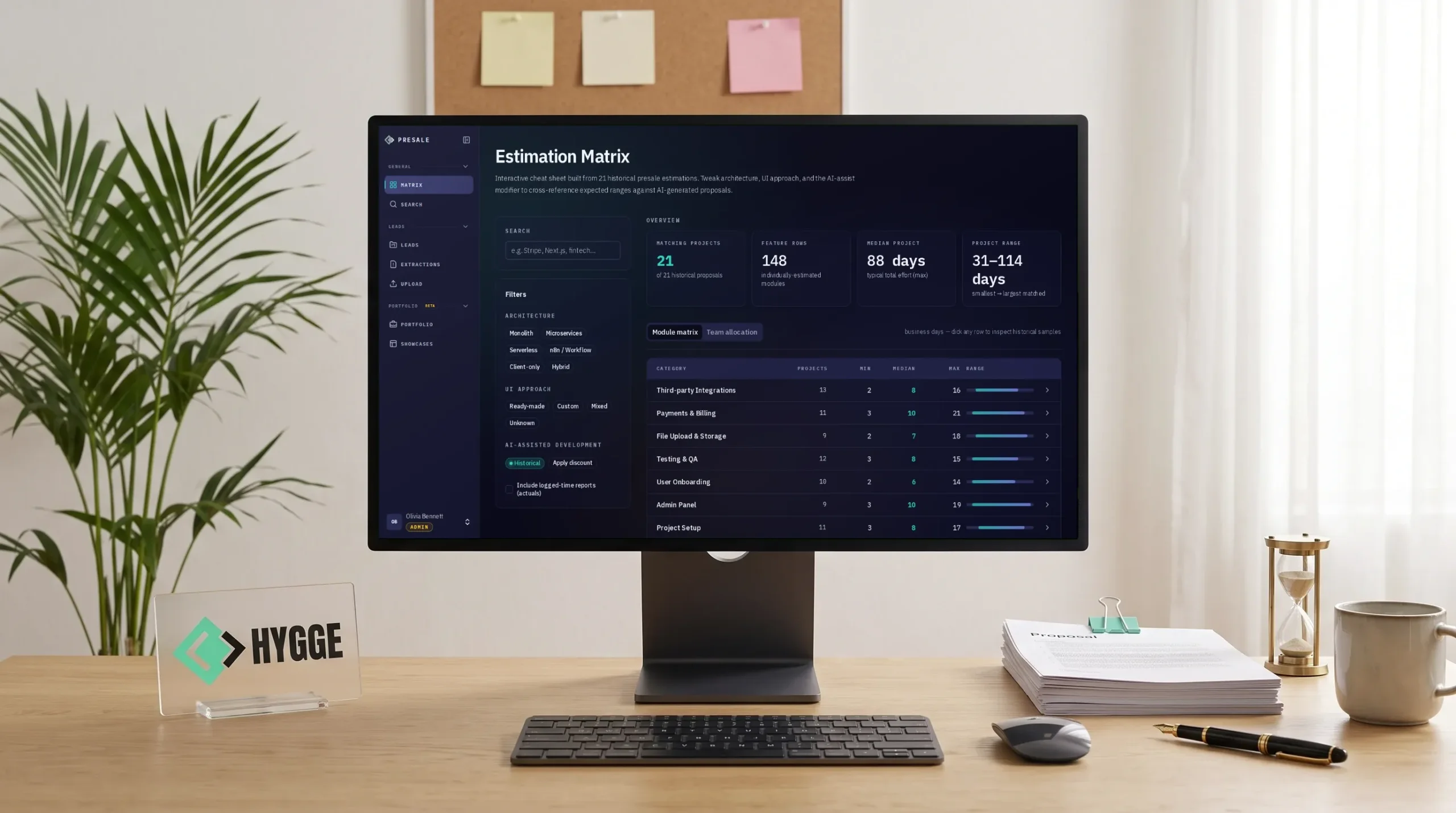
Hygge Presale
Hygge's own presale workspace, where an AI agent drafts estimates from past deals. People approve them, and every proposal feeds the next.
- 6 sub-statusesDrive each pipeline stage
- Every moduleAnchored to evidence
- 5 formatsFrom one approved deck version
- 3 modesOf case disclosure, enforced
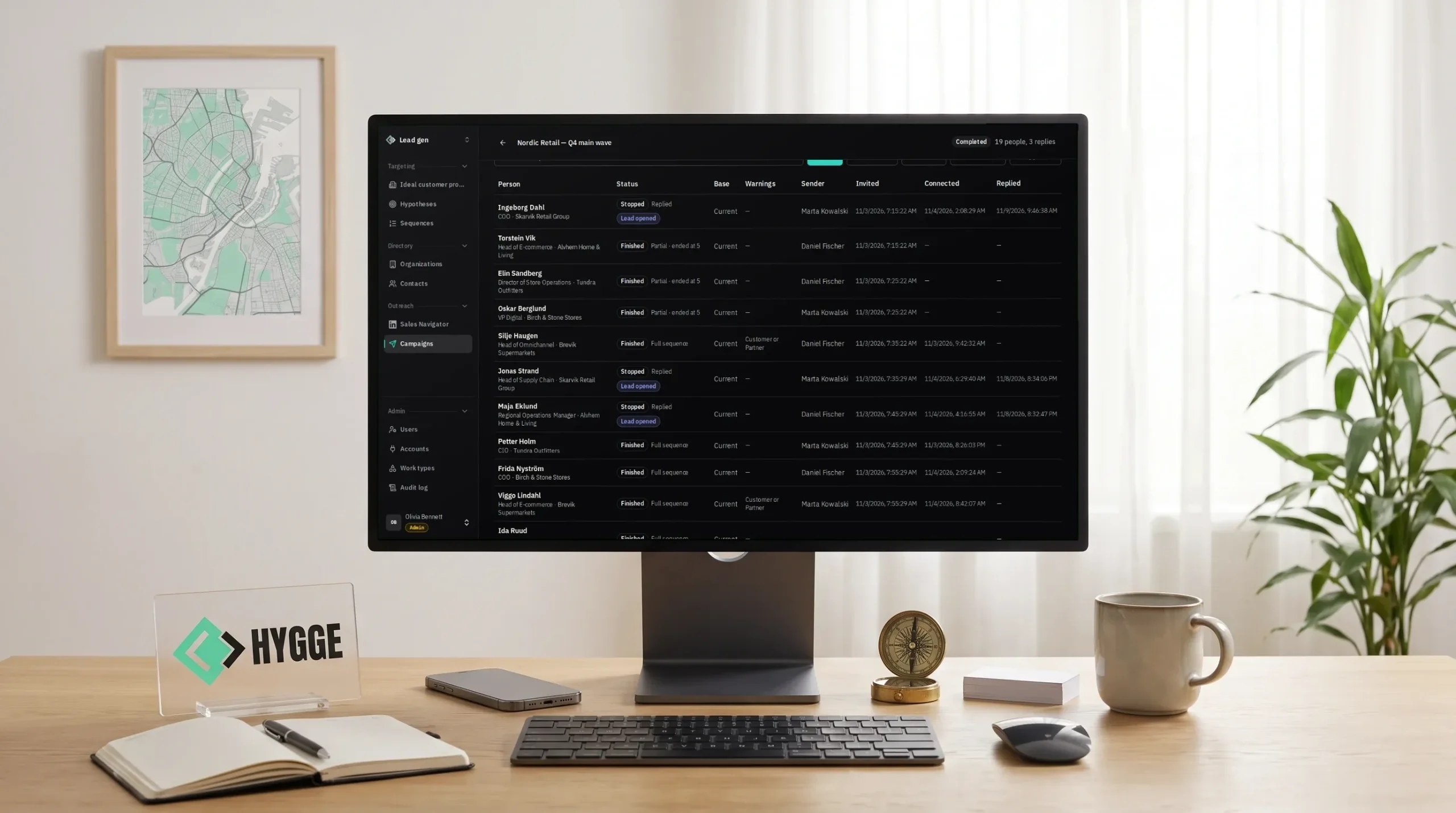
Hygge Lead Generation
Hygge's own outbound platform, where only approved hypotheses run campaigns. Every reply traces back to the targeting behind it.
- 5 toolsReplaced by one platform
- 0Scripted messages sent after a reply
- Every leadTraced to its hypothesis
- Per accountDaily and weekly sending limits
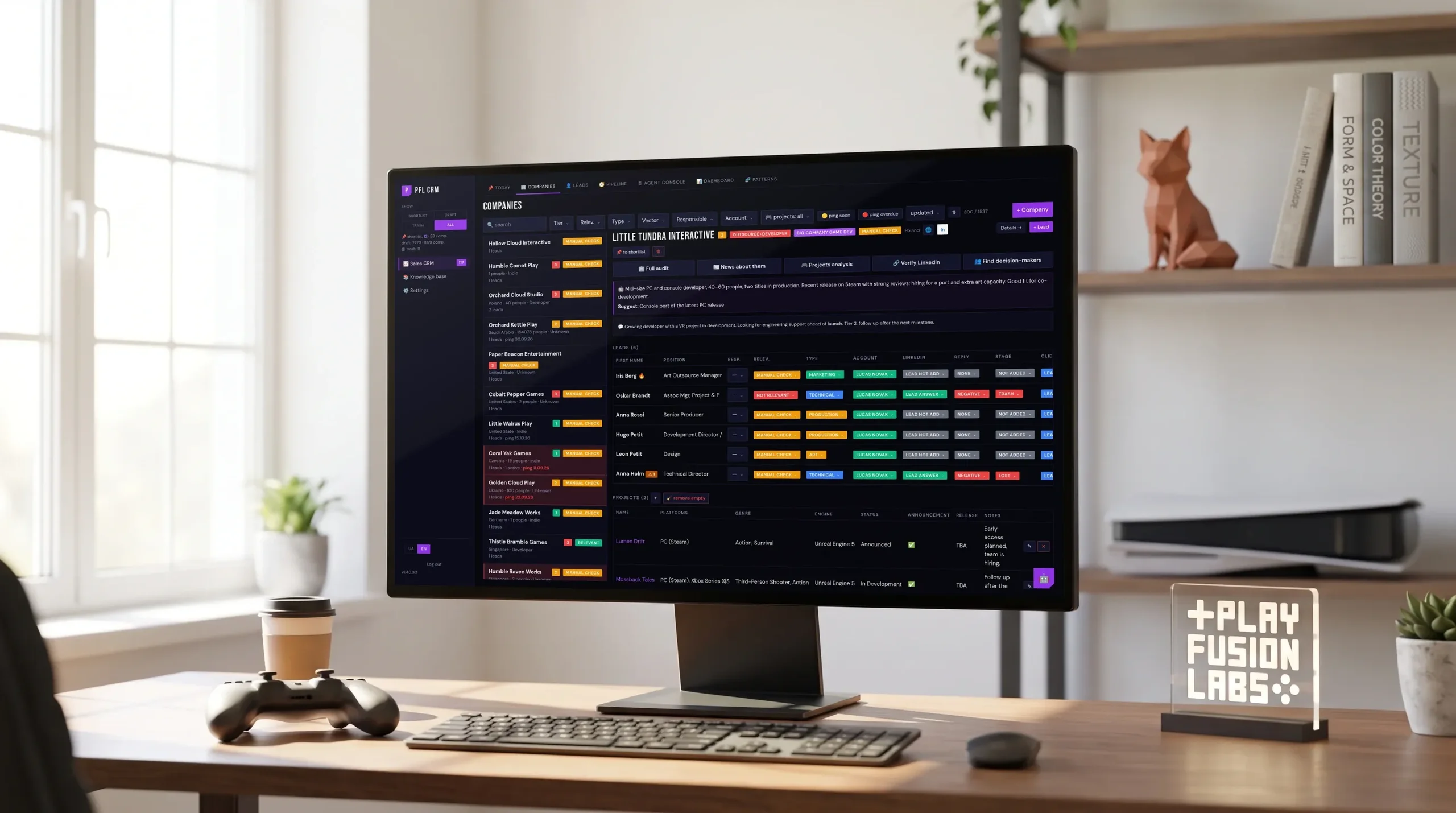
PlayFusionLabs CRM
Custom CRM development for a game studio. An agent researches companies, Today lists who to ping, and finance sits in one database.
- ~2 monthsFrom first call to daily use
- 150+Releases since launch
- 1 databaseFor sales, projects and finance
- $0In per-seat licences
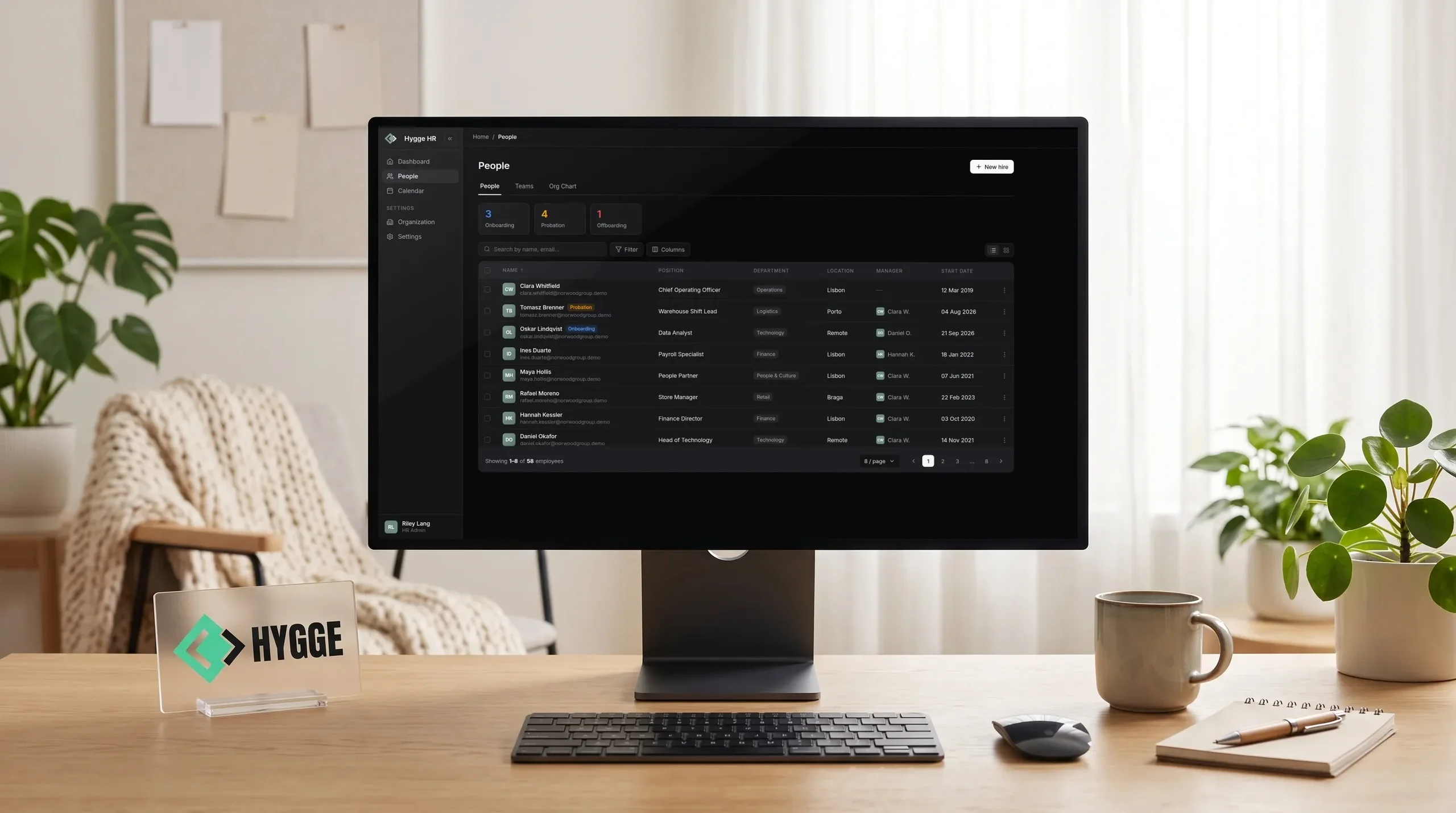
Hygge HR
Hygge's own HR platform: people, time off, hiring and projects in one system. Balances, reminders and pay history update every night.
- 0Manual balance recalculations
- 3+ yearsTenure days added on their own
- 1 platformFor people, time off, hiring and projects
- Any dateRole and pay history on record
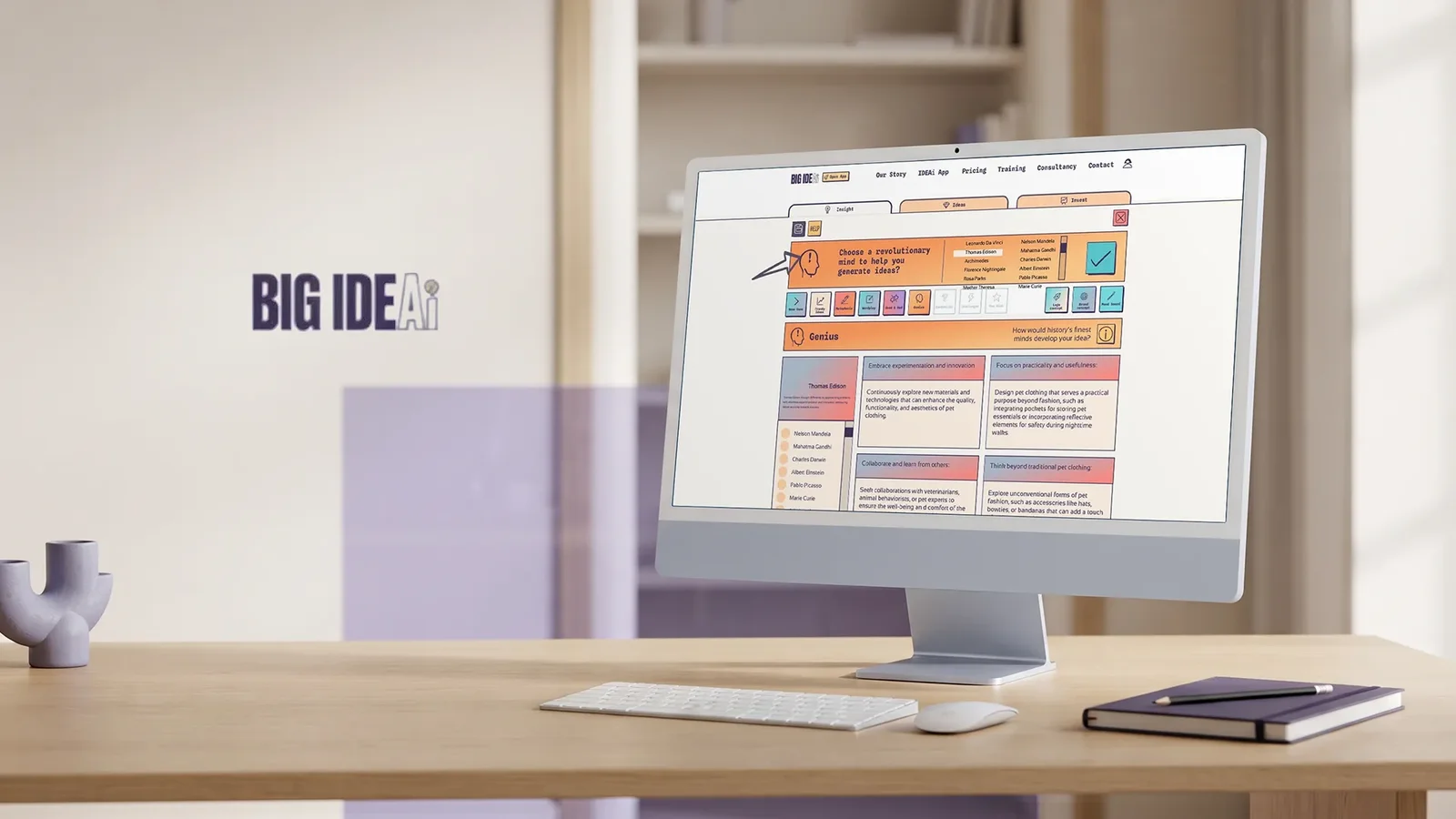
CreAItivity
Creative agency software that runs a UK agency's ideation method without a facilitator, now in its third year.
- 36 widgetsCarry a method that needed a facilitator
- 20+ yearsOf agency practice turned into software
- 3rd yearOn the architecture chosen at the start

Clia
Two AI apps for consultants on one core, with a trained model that turns legal references into links.
- Auto-linkedCitations a consultant used to look up by hand
- 1 passA document read once, every reference resolved
- 2 appsOn one platform, shipping apart
Expert Insights on Process Automation Consulting
Write-ups on measuring what an automation saved, where a human approval belongs in a workflow that touches money or a customer, and how to design the exception path before the happy path. Business process automation software is judged on the exceptions, because the happy path was never the expensive one.

Business Automation Services: Frequently Asked Questions
The case for replacing a spreadsheet that works, how the result gets measured, and how much of a process belongs in the first phase. The answers below cover cost, timeline, and what happens to the people doing the work today. Business process automation software is judged on the exceptions, because the happy path was never the expensive one.
 What is business process management?
What is business process automation software?
Why is business process management important?
What is process automation?
What is business process automation?
How does business process automation work?
How to automate a business process?
Which business process is best suited for automation?
Why replace a spreadsheet that works?
How do you prove the project was worth it?
Should the whole process be automated?
What about the exceptions the spreadsheet handled informally?
From Scattered Sources to One Reliable Layer
Tell us what systems you run and what question you cannot answer today. You get a source inventory, a scope, and a price.
Tell Us What's Running Unmonitored
Share the models, the stack, and where deployment or monitoring is still manual, whatever's costing your team time right now.
Get a First Consultation
We map your current models and infrastructure for anything that would change scope, cost, or timeline.
Receive a Detailed Proposal
A scoped plan with the approach, timeline, and cost, built around your actual stack.