
Embedded Software Development
The software that runs on the device and has to keep running when nobody is there to restart it. Hygge's embedded software development is written against the memory, the power budget, and the timing the board gives you, and verified on that board.
What Embedded Systems Development Covers
The layers between the silicon and the message that reaches your platform. Hygge scopes which of these your device needs after reading the schematics and the datasheet.
Application Logic on the Target
What the device measures, decides, and reports, written for Embedded Linux, Android, or an RTOS depending on what the silicon and the power budget allow.
Connectivity That Survives a Bad Link
MQTT, BLE, LoRaWAN, or cellular with retry, backoff, and session recovery, so a device on a weak signal reconnects without a power cycle. Embedded systems development that treats the link as unreliable by design.
Local Buffering and Time
Data held on the device while the link is down, timestamped at the source, and replayed in order when connectivity returns, sized against the flash you have.
Power Behaviour Against a Real Budget
Sleep states, wake sources, and duty cycles measured on the board with a current probe, so the battery life claim comes from a measurement. Embedded engineering services that report milliamps.
Diagnostics Readable From Home
Structured logs, health counters, and a remote debug path, so a misbehaving unit is understood from the platform without a van and an engineer.
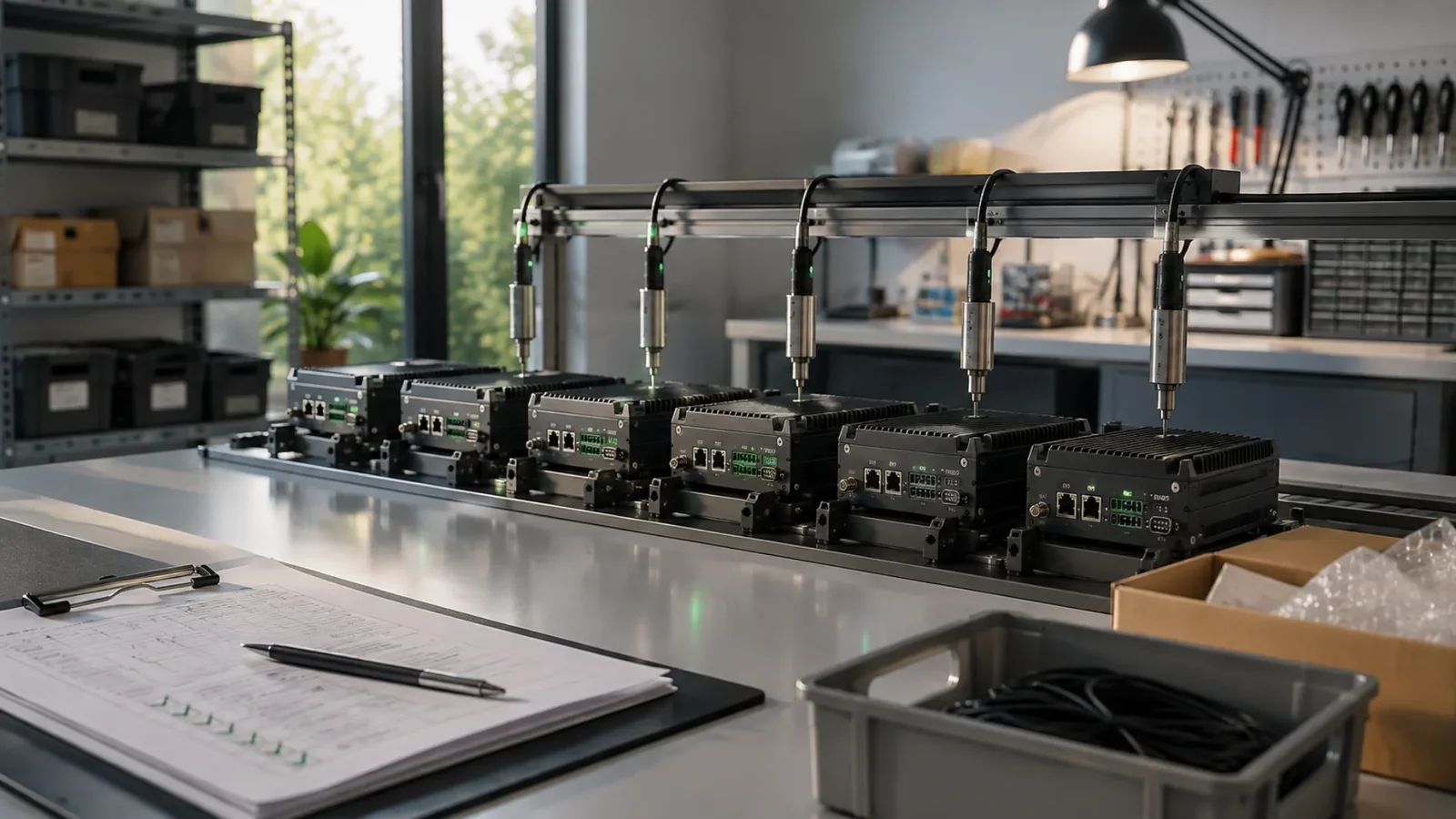
Test Rigs on Real Hardware
Automated tests running on the target board in a rig, covering reboot, link loss, low battery, and the states nobody reproduces by hand. Embedded product development with a regression suite that runs on silicon.
What the Hardware Audit Settles
Hygge opens with an audit of the board, the datasheet, and the behaviour the device has to deliver in the field. Embedded software services quoted from the memory and power you have.
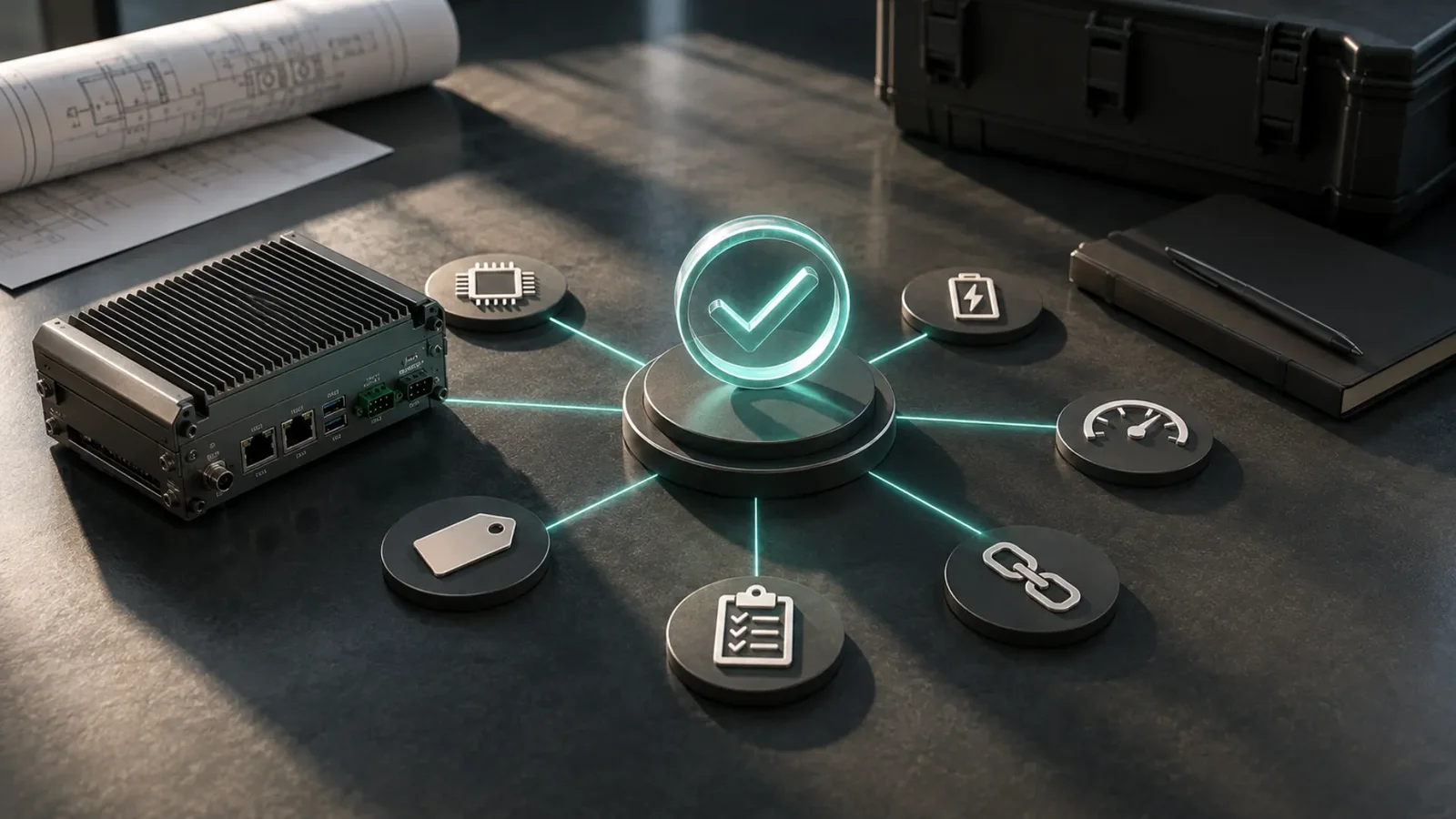
The audit produces each of these:
- What the silicon supports: flash, RAM, peripherals, and the headroom left after the vendor stack.
- The power budget as a number, with the duty cycle the required battery life allows.
- A platform choice between bare metal, an RTOS, and Embedded Linux, argued against those two constraints.
- The behaviour expected when the link drops, the battery falls, or power is cut mid-write.
- Fixed scope and price, agreed after the audit.
What Sends a Team Looking for Device Software
The situations behind most enquiries Hygge scopes.
The board works on the bench and fails in the field, and the build only compiles on one machine. Embedded software work pins the toolchain and puts the build in a pipeline. The audit starts from the hardware constraints.
The Demo Board Works, the Product Does Not
A dev kit runs the logic fine. On the production board with the real antenna and the real battery, it browns out under load and nobody has instrumented why.
Battery Life Was a Marketing Number
The datasheet promised months, the field gives weeks, and the difference is a radio that never sleeps and a wake source nobody traced.
Devices Lock Up in the Field
Units stop reporting and come back after a manual power cycle. There are no logs from before the freeze, so every theory stays a theory.
The Embedded Engineer Left
One person wrote the device code, it builds on one machine, and the toolchain lives in a folder. Changing anything means rebuilding the environment first.
Hardware Is Ready, Software Is the Critical Path
Boards are manufactured and sitting in a warehouse while the launch date holds. An embedded software development company gets called to compress a schedule that already slipped.
How We Build Device Software
From a datasheet and a power budget to firmware images running on production boards, verified in a rig. This is how embedded software development runs at Hygge.
Hardware Audit
Two to three weeks on the schematics, the datasheet, and the required behaviour, ending in a platform choice, an architecture, and an exact price.
Prove the Hard Constraint First
Whichever limit is tightest gets tested on the target board before anything else, whether that is current draw during transmit or the timing margin on a sensor read.
Build Against the Real Board
Development runs on production hardware from the first week, so brownouts, antenna behaviour, and thermal effects surface while the software can still absorb them. Embedded software consulting at Hygge treats the shipping board as the reference.
Instrument Before It Ships
Health counters, structured logs, and a watchdog path go in during development, so the first field failure arrives with evidence attached.
Rig, Then Handover
A test rig covering reboot, link loss, low battery, and power cut mid-write, plus a reproducible toolchain and build documentation your team owns.
What Changes When the Device Behaves
The firmware behaves the same on every unit, because the build is reproducible from a clean machine. Power, memory and timing budgets are set at the start, so the last week is not spent cutting features to fit. Embedded Linux development covers the middle ground between firmware and an application: a real operating system on constrained hardware, with the update path, the boot chain and the power behaviour all decided before the first feature is written.
What Embedded Software Gives Back
What Hygge commits to on this service, and how each commitment is measured.
Where the Software Lives on the Board
Sectors where the code runs on constrained hardware and has to behave every time.
Public Safety & Security
In-vehicle and body-worn units running on limited power, with recording that keeps working offline.
Logistics & Warehouse Automation
Controllers on scanners, conveyors, and autonomous units where timing is part of the specification.

Aviation
Avionics-adjacent and ground equipment where certification decides how the code is written.
Healthcare & Staffing
Clinical devices where a fault has patient consequences and a regulator reviews the process.
Fitness & Wellness
Connected fitness equipment reading sensors and driving displays in real time.

Retail & E-Commerce
Point of sale and shelf hardware running for years without a technician visit.

Media & Entertainment
Playback and display units running fixed schedules in unattended locations.
Real Estate & PropTech
Access control and building units that keep operating through network outages.
Devices Running Unattended
Work Hygge has delivered on hardware already deployed.
What You Get From the Hardware Audit
What the silicon supports after the vendor stack, the power budget as a number with the duty cycle it allows, a platform choice argued against both, the behaviour expected when the link or the battery gives out, and an exact price. Embedded software development services scoped from a datasheet and a board.
What Embedded Linux Development Builds On
Chosen against your silicon, your power budget, and the certification path ahead of you, so embedded engineering services stay inside a toolchain your own team can build with.
The layer between the driver and the application, written for the timing the product has to hold under load.
 C
C C++
C++ Rust
Rust Go
Go Python
Frequently Asked Questions
What hardware and product leads ask.
 What is an embedded system?
What are embedded systems?
What are embedded devices?
What is embedded computing?
What is embedded software development?
Which platforms and chips do you work with?
How do you test on real hardware?
Can you work with our hardware team?
How do you handle power and memory limits?
Who owns the firmware afterwards?
What does it cost?
From a Board on the Bench to a Device That Ships
Tell us what the device does, what it runs on, and how long it has to last on a charge. You get a platform choice, an architecture, and an exact price, the way every embedded software development project at Hygge starts.
Tell Us What the Hardware Has to Do
Share the board, the constraints it runs under, and the certification it has to pass.
Get a First Consultation
We review your hardware, constraints, and certification path for anything that would change scope, cost, or timeline.
Receive a Detailed Proposal
A scoped plan with the approach, timeline, and cost, built around your actual hardware.