


Sales Enablement Software for Sales, Marketing and Revenue Operations
Automated outreach is an engineering problem shaped by someone else’s detection rules. Pacing is a feature, and speed that trips those rules costs the account.
Where the Pipeline Goes Soft
What sales leaders describe when they call us. The forecast comes out of the CRM, the real pipeline lives in a rep spreadsheet, and the two disagree by the end of the quarter. Every hour a rep spends reconciling them is an hour away from a customer.
None of this reads as a software problem on the day. It reads as a busy quarter. The cost turns up somewhere else: in a forecast nobody trusts, in a rep spending the week on admin, and in an account that went quiet because a follow-up was never logged. Custom CRM development removes the repetition and puts the account in one place.
The Forecast Is Built on What Reps Remembered to Type
The pipeline in the system is a version of reality assembled at the end of the week. Deals that moved are still where they were, and the number you take to a board meeting is a guess dressed as a report.
Reps Keep Their Real Pipeline in a Spreadsheet
The system asks for fields that help somebody else, so the people doing the selling keep what they need somewhere they control. When one of them leaves, the account history leaves with them.
You Pay Per Seat in Five Tools That Hold the Same Contact
A CRM, an outreach tool, an enrichment tool, a scheduling tool and a proposal tool, each billed per person, each holding part of the account. The rule your business runs on, who owns what and when a deal is real, lives in none of them.
Your Whole Customer List Fits in One Export
Any rep with a login can pull the client base into a spreadsheet, and nobody would know until it turned up at a competitor. Access limits, export rules and what a leaver keeps are decisions most teams have never made.
Systems Hygge Builds for Sales and Revenue Teams
Each card is a system a team moves to once a manual process stops holding. On the right is what changes and by how much.
CRM Development
A pipeline shaped around how your business sells, where logging happens as a side effect of the work. Emails, calls and meetings land against the account on their own, so what a manager reads on Monday is what happened last week.
- 1 recordEvery account, contact and deal held by the company
- 3 xMore activity captured without a rep typing it
- 30 %More accurate forecast from data that reflects the week
Business Process Automation
The routine around a deal: discount approvals, handover to delivery, renewal reminders and the documents each stage produces. The chasing that used to be messages becomes steps the system runs.
- 3 xFaster from a verbal yes to a signed contract
- 100 %Of discount approvals recorded against the deal they cleared
- 1 entryAn account is captured once and read by every document that needs it
API & Payment Integration
The connections between your CRM, your outreach tooling, your enrichment providers, your billing and your product. A record updated in one place is updated everywhere within seconds, so nobody keeps a private copy.
- 100 %Of transfers logged with what was sent and what came back
- 1 hFrom a failed sync to somebody knowing about it
- 1 recordOne contact across every tool that touches them
Business Intelligence & Reporting
Conversion by stage, by source and by rep, with the cost behind each one. The report answers which channel deserves more budget, which is the question every quarter starts with.
- 1 dayFrom month end to a pipeline and cost report per channel
- 100 %Of closed revenue traceable to the source that produced it
- 5 xMore questions answered without an analyst building an export
Customer & Partner Portal Development
A partner or client portal where the other side sees their own pipeline, deal registrations and performance without emailing your team. Your staff approve, and the assembly happens behind it.
- 80 %Of partner enquiries answered without a person on your side
- 100 %Of deal registrations recorded with who registered and when
- 48 hTypical turnaround on a partner request
Retail Media & AdTech Platforms
Booking, delivery and reporting for the inventory you sell to advertisers or partners. Booked, delivered and invoiced are compared in one place, so a month closes without a spreadsheet.
- 100 %Of bookings reconciled against what was delivered
- 1 dayTo close a month across advertisers
- 3 xMore campaigns handled by the same team
Fintech & Payment Products
Subscriptions, usage billing and the revenue recognition behind them built on a ledger nobody can edit. What was sold, what was delivered and what was invoiced agree without anyone reconciling by hand.
- 1 dayTo close a billing period across plans and usage
- 100 %Of invoices derived from recorded, traceable events
- 99 %Of billing runs completed without a manual correction
What Sales Enablement Software Draws On
Why each of these gets used on a sales technology build, in the order it usually gets needed. This work touches a pipeline, a quote, a billing system and a rep who has stopped trusting the CRM in the same quarter. These are the services that hold those together.
UI/UX & Product Design
A rep who finds the CRM slower than a spreadsheet keeps the real pipeline in the spreadsheet. The interface decides whether your forecast reflects the business or a guess. Design work here is what gets the data entered in the first place.
Open the serviceSystem Integration
The CRM, the marketing platform, the billing system and the support desk were bought separately. Making one account the same record across all of them is what ends a renewal conversation that ignores an open support ticket. Reporting then comes out of one source.
Open the serviceAI Agent Development
Research, enrichment, follow-up drafting and meeting notes eat the hours a rep should spend selling. Agents handle those steps inside approval rules and access limits you set. The rep keeps every decision that touches a customer, with the preparation already done.
Open the serviceBackend, API & Database
Activity, quotes and billing events arrive constantly and have to reconcile into one account history. This layer decides whether what a customer is quoted and what they are invoiced agree. It is also where the rules about who can see which deal are enforced.
Open the serviceData Engineering
Pipeline, campaign spend, product usage and support tickets sit in different tools. Joining them shows which channels bring accounts that stay and which bring churn. A budget decision then rests on a number.
Open the serviceSecurity Consulting
Your whole customer list fits in one export, and access to it was granted over years by different people. Reviewing who can reach it, and closing accounts that outlived their owner, is what an enterprise buyer asks about in their security review.
Open the serviceWhat AdTech Software Development Is Measured On
Agreed with you before the build starts, then measured against how the team sells today. Every number here comes out of the audit, so it describes your own pipeline and your own cycle length. That is what makes the delivery date and the price hold.
The Stack Behind Sales Enablement Software and Outreach Tooling
Outreach tooling runs inside someone else's detection rules, so pacing and deliverability are engineering decisions in this stack. The rest is chosen so your CRM stays the single record and nothing has to be re-entered by hand.
What a sales team works in every day. A rep sees the next action without building a view for it, and a manager sees whether the follow-ups happened. Anything that adds a step to a rep's day gets cut here, because a tool reps avoid produces a pipeline nobody trusts. Logging happens as a side effect of the work.
 React
React TypeScript
 Next.js
 Node.js
 NestJS
Builds With the Same Shape
Each of these solved a problem a sales build runs into: outreach drafted from account data with a person approving, ranking that has to work on what exists, expert judgement turned into a repeatable tool, and an inherited platform rebuilt without stopping the business. Every one started with a team working around its own system. What you see is the build that pulled them back into it.

Data Vizioner
Stripe subscription management and user management for Data Vizioner, a Power BI platform. Access follows each customer's plan.
- 1 flowFor Selling, Granting and Taking Back Access
- 2 modulesSubscriptions and User Management
- Power BIStatistics Shaped for Customers

Revvy
CRM analytics by voice: a salesperson speaks a question into a mobile app and gets back the chart that answers it.
- 1 phraseFrom Question to Chart
- 3 stepsSpeech, Query, Chart
- Any managerCan Ask the CRM
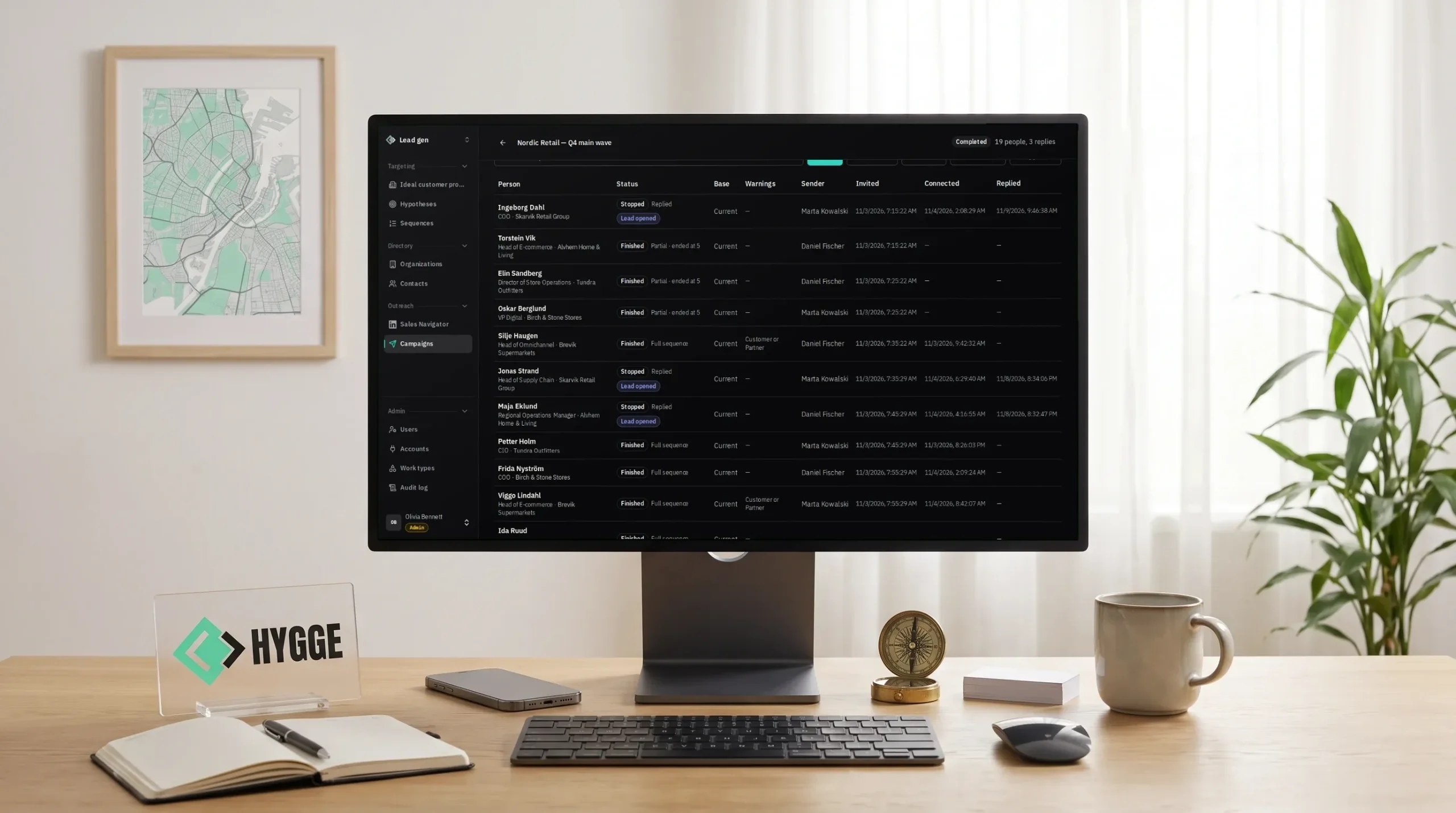
Hygge Lead Generation
Hygge's own outbound platform, where only approved hypotheses run campaigns. Every reply traces back to the targeting behind it.
- 5 toolsReplaced by one platform
- 0Scripted messages sent after a reply
- Every leadTraced to its hypothesis
- Per accountDaily and weekly sending limits
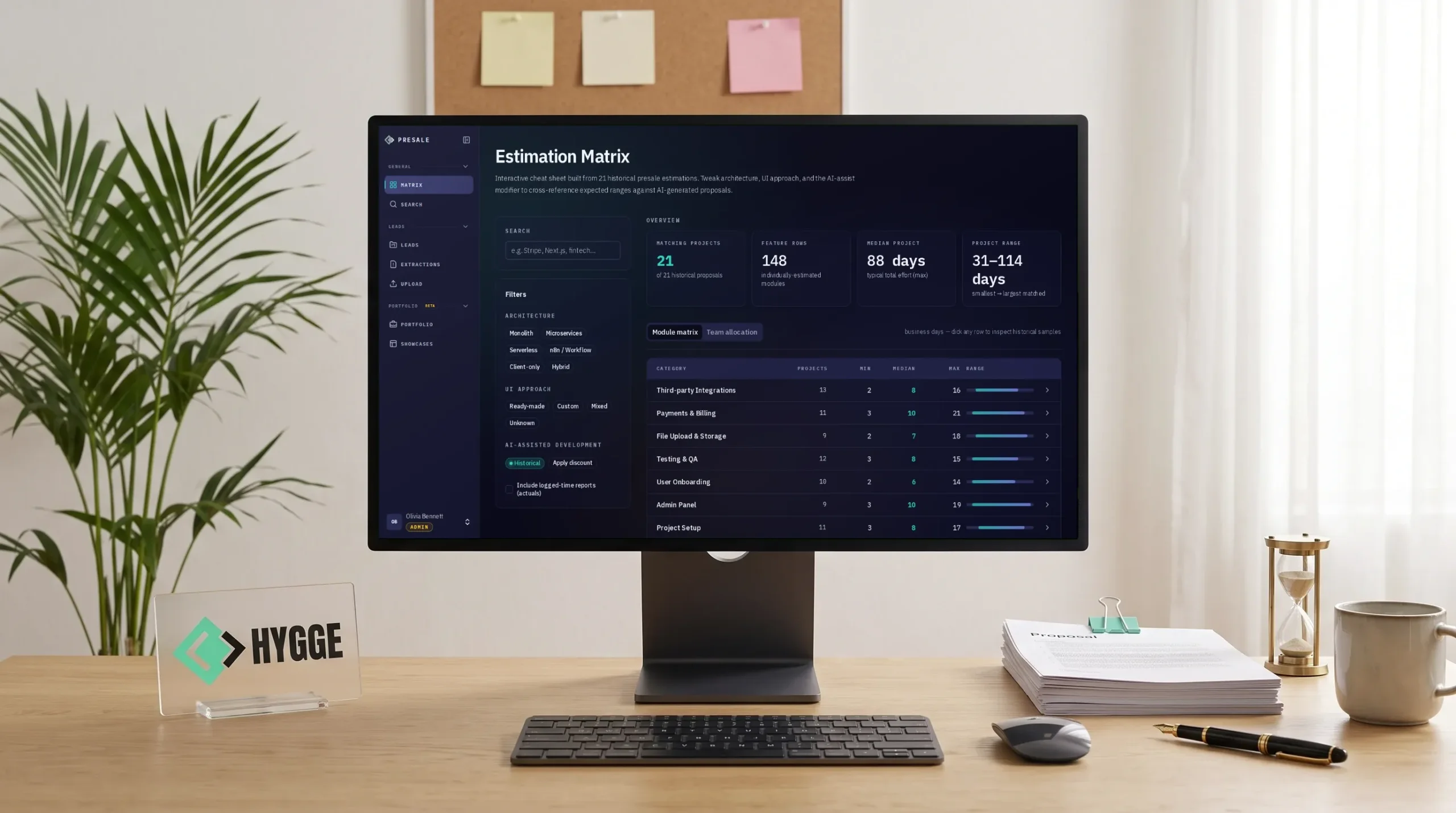
Hygge Presale
Hygge's own presale workspace, where an AI agent drafts estimates from past deals. People approve them, and every proposal feeds the next.
- 6 sub-statusesDrive each pipeline stage
- Every moduleAnchored to evidence
- 5 formatsFrom one approved deck version
- 3 modesOf case disclosure, enforced
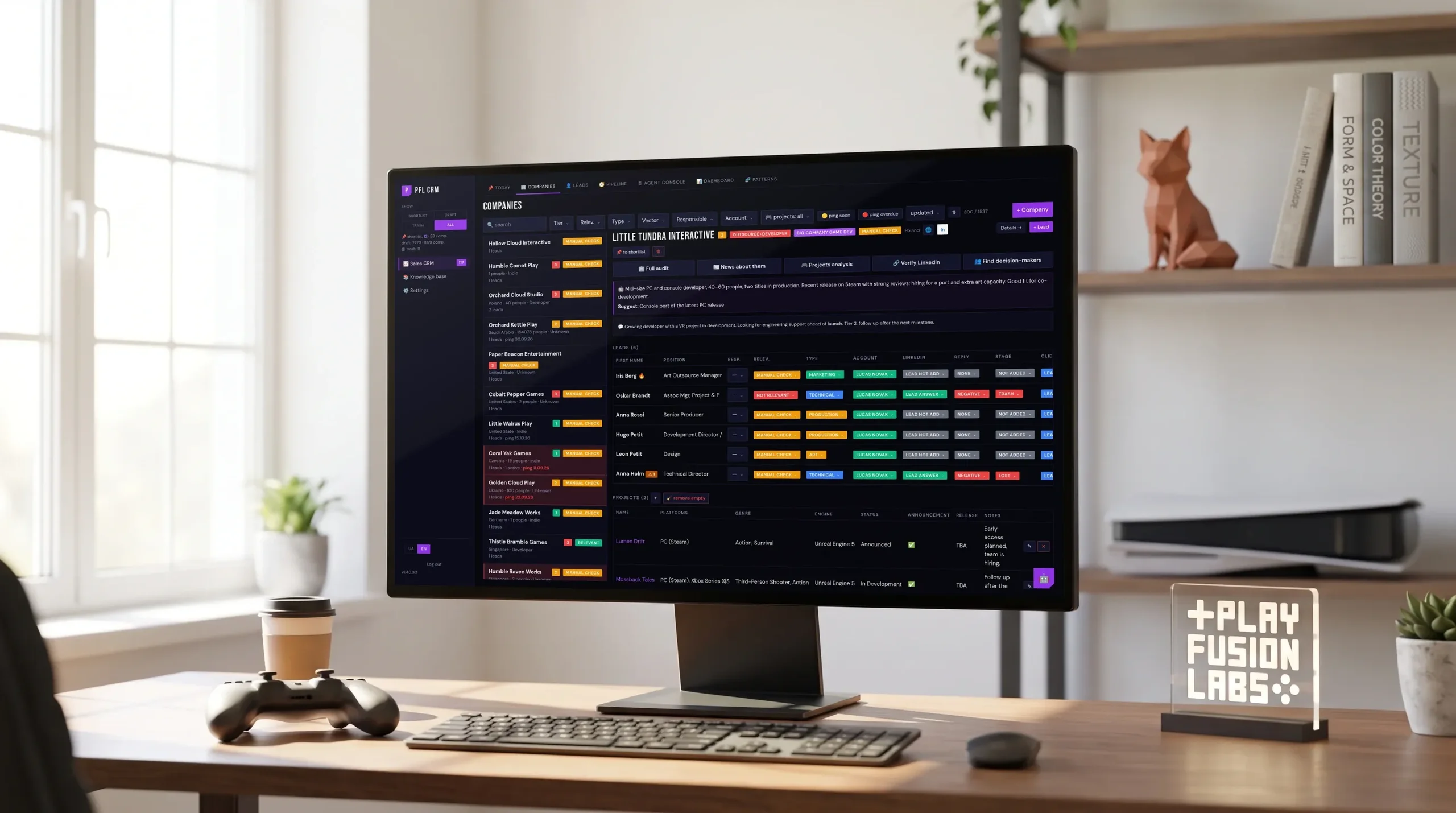
PlayFusionLabs CRM
Custom CRM development for a game studio. An agent researches companies, Today lists who to ping, and finance sits in one database.
- ~2 monthsFrom first call to daily use
- 150+Releases since launch
- 1 databaseFor sales, projects and finance
- $0In per-seat licences

Healthcare Platform
A live telehealth platform where patients meet doctors and get drugs shipped. The team behind it grew with it.
- LiveSupported a product already used by patients
- Two CRMsZoho customized, Salesforce implemented
- One teamFrom a single developer to a full delivery team
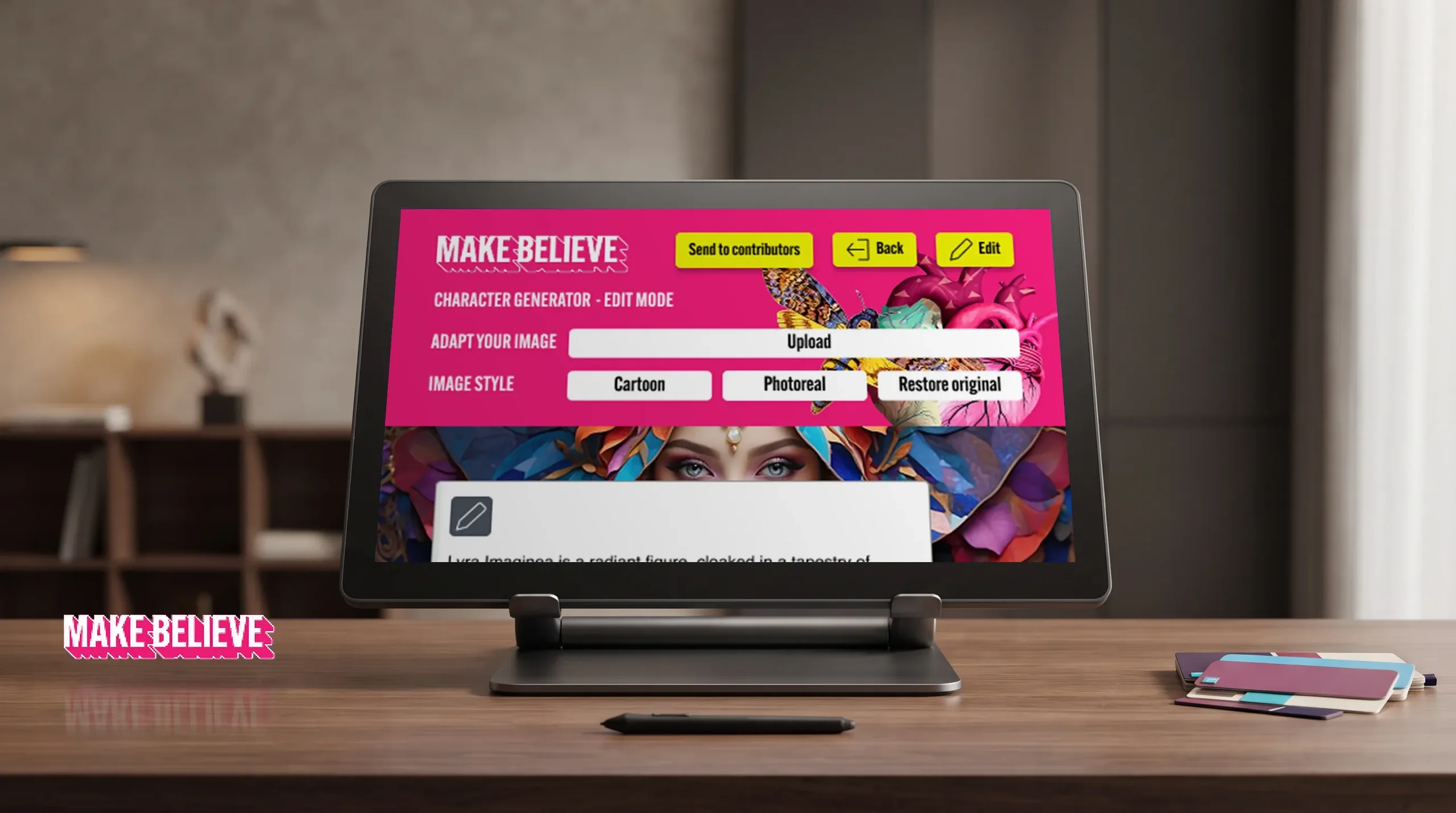
MB Character Tool
An embeddable AI character generator living inside an agency marketing site, built in eight weekly milestones.
- 1 promptFrom landing on the site to a result
- 1 iframePuts the tool inside the existing site
- 8 weeksFrom an empty repository to live on the site

Offra
An AI gift finder built in about a month for a startup whose marketing was booked against a Black Friday date.
- 3 milestonesDelivered before the holiday launch window
- 100 %Of results are products a buyer can order
- ~1 monthAgainst a Black Friday date that could not move
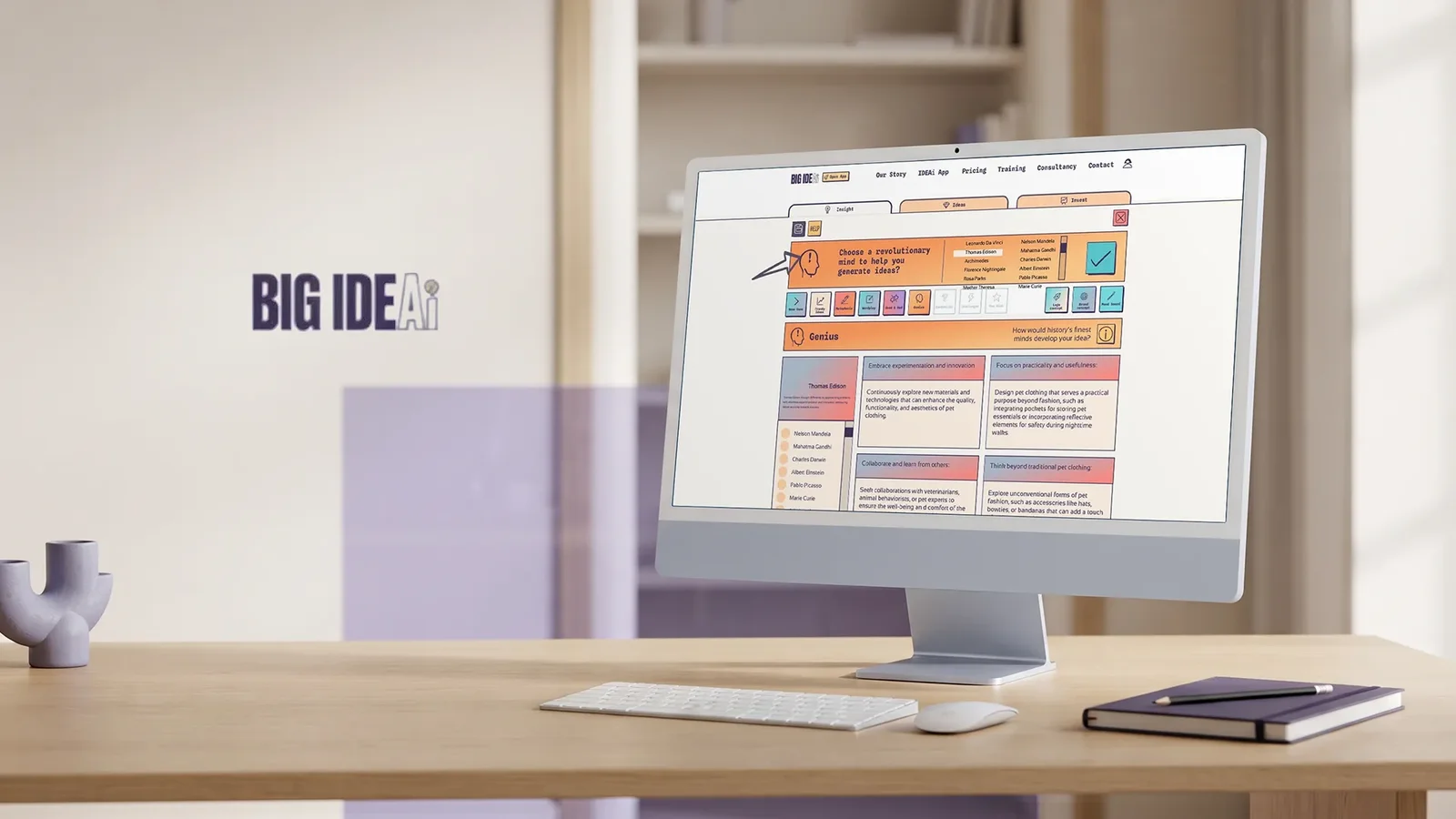
CreAItivity
Creative agency software that runs a UK agency's ideation method without a facilitator, now in its third year.
- 36 widgetsCarry a method that needed a facilitator
- 20+ yearsOf agency practice turned into software
- 3rd yearOn the architecture chosen at the start
Sales Enablement Software: Frequently Asked Questions
Deliverability, personalization at volume, growth from a pilot to thousands of seats, and CRM integration are what sales technology teams want covered before a build starts. The answers below come from systems already carrying live pipelines, including adtech development that bills on what played. They also cover what happens to the data you hold today.
 What is sales enablement?
What does sales enablement do?
Why is sales enablement important?
Is a CRM a sales enablement tool?
What are the benefits of sales enablement software?
What are the components of sales enablement?
How do you automate outreach without triggering spam detection?
What makes AI outreach different from mail merge?
How do you prepare for growth from pilot to thousands of users?
Does it integrate with our CRM?
What should you ask a sales enablement software partner before starting?
What does martech software development cover?
From Scattered Sources to One Reliable Layer
Tell us what systems you run and what question you cannot answer today. You get a source inventory, a scope, and a price.

Tell Us What's Running Unmonitored
Share the models, the stack, and where deployment or monitoring is still manual, whatever's costing your team time right now.

Get a First Consultation
We map your current models and infrastructure for anything that would change scope, cost, or timeline.
Receive a Detailed Proposal
A scoped plan with the approach, timeline, and cost, built around your actual stack.