
Firmware Development Services
The layer closest to the silicon: bring-up, drivers, the boot chain, and an update path that lets you ship a fix to hardware nobody plans to visit. Hygge's firmware development services arrive with the rig that proves the image on the board it will run on.
What Firmware Engineering Services Cover
Everything between power-on and the point where application code can run. Firmware development services at Hygge scope which of these your board needs after reading the schematics.
Board Bring-Up
First power-on, clock and pin configuration, memory map, and a working console, so the hardware team gets an answer on whether the board behaves as designed.
Drivers for What Is on the Board
Sensors, radios, storage, and displays reached through SPI, I2C, UART, or a vendor bus, with datasheet errata handled where the part misbehaves. Device driver development written against the silicon you shipped.
Boot Chain and Recovery
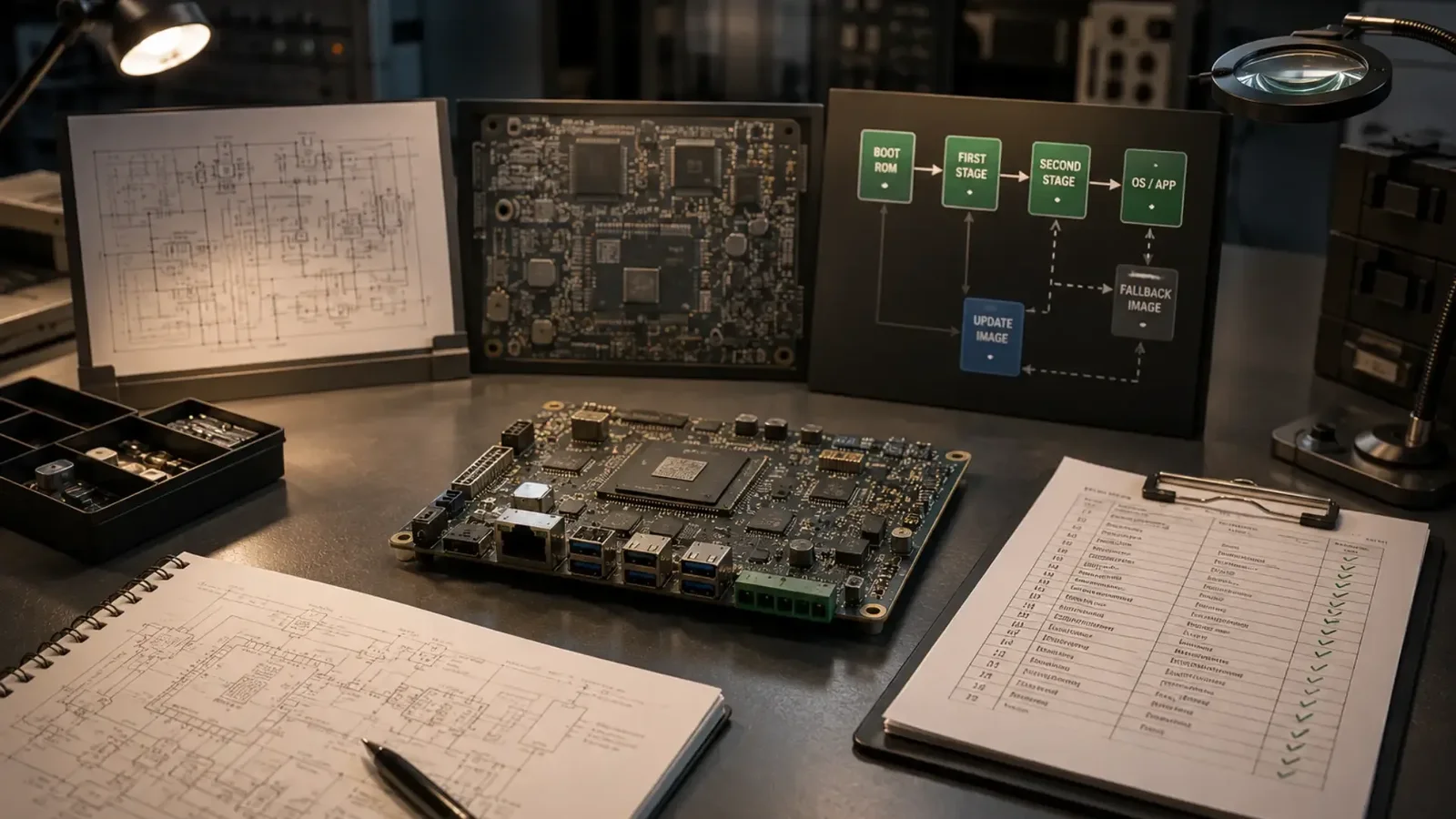
A bootloader with an A/B partition scheme, signed images where the silicon supports verification, and a recovery path that survives power loss halfway through a write.
Over-the-Air Update Mechanism
The device side of updates: download, verify, stage, apply, and roll back on a failed boot, sized for the flash and the bandwidth available.
Bare Metal and RTOS Builds
Scheduling, interrupt priorities, and stack sizing on FreeRTOS or Zephyr, or a super-loop where the power budget rules out a scheduler. RTOS development with timing measured on the target.
Linux Board Support
Kernel configuration, device trees, and a Yocto or Buildroot image trimmed to what the product needs. Linux-based firmware for devices with enough silicon to carry it.
What the Board Review Settles
Hygge opens with a review of the schematics, the parts list, and the behaviour the device has to guarantee. Firmware development quoted from a real board and a real memory map.
The review produces each of these:
- The flash and RAM budget after the vendor stack, and what is left for your product.
- Which parts have usable drivers already and which need writing, with the errata each one carries.
- A boot and update scheme that fits the flash, including where the fallback image lives.
- The timing requirements that bind, and how they will be measured on the target.
- Fixed scope and price, agreed after the audit.
What Sends a Team Looking for Firmware Help
The situations behind most enquiries Hygge scopes, most of them with boards already manufactured.
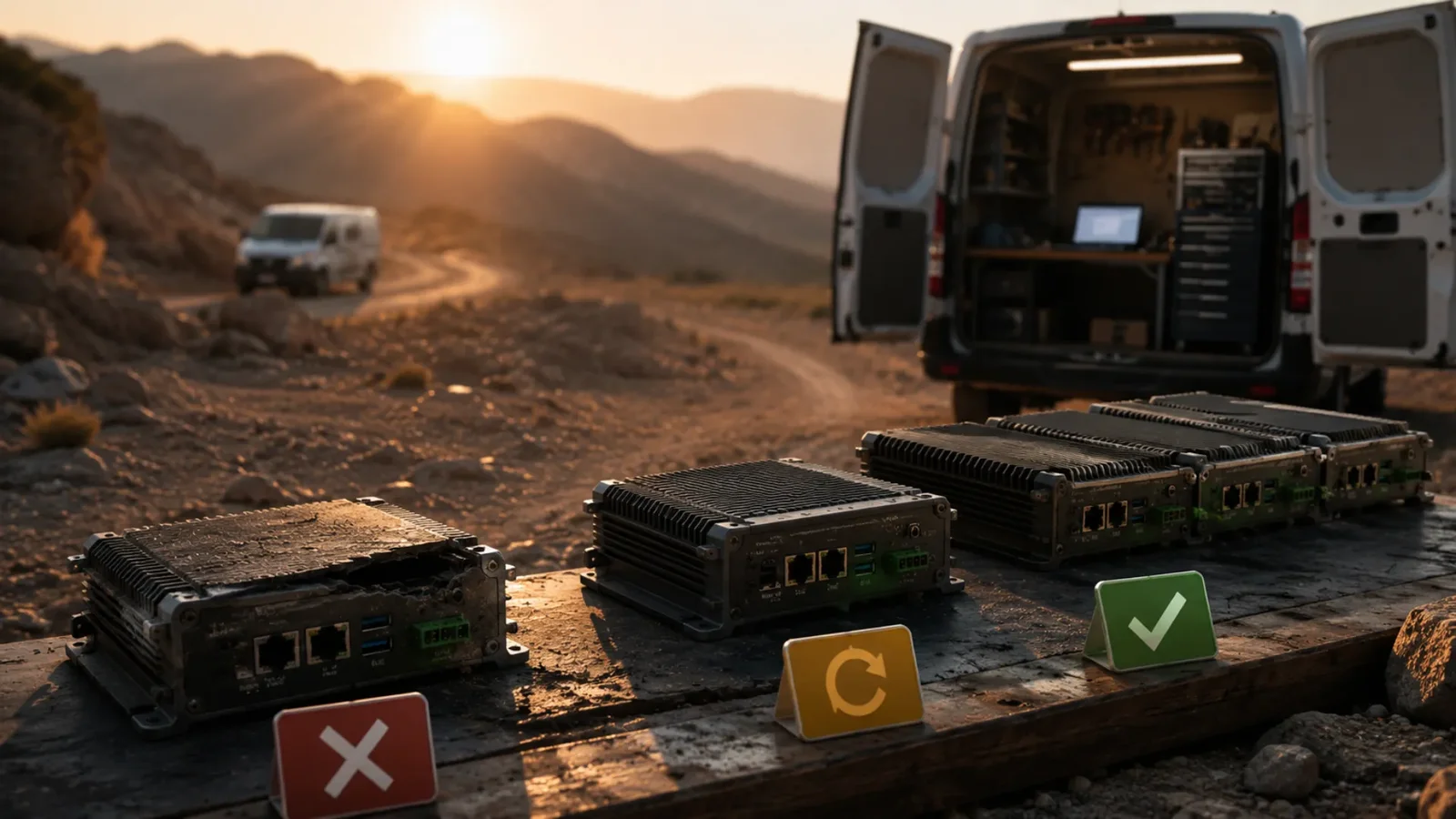
An update needs a technician on site, and a failed flash bricks the unit. Firmware development builds the update path first, with a rollback that survives a power cut. The audit checks what the current bootloader can support.
Boards Arrived, Nothing Boots
A batch is manufactured and sitting in a warehouse. Bring-up needs someone who reads schematics and oscilloscope traces, and the schedule assumed that person existed.
There Is No Way to Ship a Fix
A defect is known and the update path was never built. Reaching the hardware means a van, an engineer, and a cost per unit that exceeds the fix.
A Bad Image Bricked Field Units
An update rolled out, some devices lost power mid-write, and there is no fallback partition to boot from. A firmware development company gets called after the recovery bill lands.
The Vendor Driver Does Not Match the Part
A reference driver was written for a revision of the chip that is no longer shipping, and the errata sheet explains behaviour nobody planned around.
Timing Fails Under Load
The device works on the bench and misses deadlines once the radio and the sensor loop run together. Nobody has measured where the interrupt latency goes.
How We Build Firmware
From schematics and a parts list to a signed image with a proven rollback, measured on the board it ships on. This is how firmware development services run at Hygge.
Board Review
Two to three weeks on the schematics, the parts, and the required behaviour, ending in a memory budget, a boot scheme, and an exact price.
Bring-Up and Console First
Clocks, pins, memory, and a working console before any product logic, so the hardware team gets a verdict on the board while a respin is still cheap.
Boot and Update Before Features
The A/B partition scheme, image signing, and rollback go in early, so every later build ships through the same path the field will use.
Measure the Timing That Binds
Interrupt latency, task jitter, and current draw captured with a logic analyser and a probe under the load the product will see. Microcontroller firmware development where the numbers come off the target.
Rig and Handover
A rig that power-cycles, corrupts updates, and drains batteries on demand, plus a reproducible toolchain and a signing process your team controls.
What Changes When the Boot Chain Holds
Devices in the field get fixed without a van, and a failed update recovers on its own. Signed images and staged rollouts mean a bad build reaches a handful of units. Firmware engineering services start at the hardware and work up: the boot sequence, the drivers, the power budget and the update mechanism that has to keep working when a device is in the field. Embedded software work covers the layers above once that ground is solid.
The Standards Firmware Development Is Held To
These are the targets the work is built to hit, measured on your own numbers.
Where a Bad Update Means a Truck Roll
Sectors where reaching a device physically is the expensive part.
Public Safety & Security
Field units updated over the air, with a rollback path that saves a fleet from one bad image.
Logistics & Warehouse Automation
Floor hardware updated between shifts, where a failed boot stops a line.

Retail & E-Commerce
Store devices across hundreds of locations, updated without sending anyone to a shop.
Fitness & Wellness
Gym equipment updated overnight across a network of sites.

Aviation
Aviation ground equipment updated under a change process a regulator signs off.

Media & Entertainment
Display units in unattended venues where a failed update is discovered by the audience.
Healthcare & Staffing
Clinical devices updated with signed images and a verified record of what runs where.
Real Estate & PropTech
Building hardware updated across a portfolio without a site visit per unit.
Code Running on the Device Itself
Work where the software shipped on hardware in the field.
What You Get From the Board Review
The flash and RAM left after the vendor stack, which parts need drivers written and what errata they carry, a boot and update scheme that fits the memory, the timing requirements and how they get measured, and an exact price. Firmware development services scoped from schematics.
What Firmware Development Services Run On
Chosen against your silicon, your flash budget, and the certification path ahead, so Linux-based and bare metal firmware both stay inside a toolchain your team can rebuild.
The chip family the product is committed to, with the memory and power envelope that sets what the firmware is allowed to do.
 NVIDIA Jetson
 FreeRTOS
 Zephyr
.webp?v=2026-09-29T09%3A19%3A06.297Z) Embedded Linux (Yocto)
Embedded Linux (Yocto) Nordic nRF
 NXP i.MX
Frequently Asked Questions
What hardware leads ask a firmware development company.
 What is firmware?
What is the difference between firmware and software?
What does firmware do?
What is firmware in a computer?
What does firmware development include?
Which microcontrollers do you work with?
How do over-the-air updates work?
How do you test firmware?
Can you take over existing firmware?
How do you handle certification?
What does it cost?
What does custom firmware development cover?
From Schematics to an Image You Can Ship Twice
Tell us what is on the board, what it has to do, and how the units will be reached after they ship. You get a memory budget, a boot scheme, and an exact price, the way every firmware development project at Hygge starts.
Tell Us How Firmware Reaches the Device
Share the hardware, how updates are delivered today, and what a failed update costs you.
Get a First Consultation
We review your hardware, update path, and rollback needs for anything that would change scope, cost, or timeline.
Receive a Detailed Proposal
A scoped plan with the approach, timeline, and cost, built around your actual update process.