
Machine Learning Development
Hygge trains custom ML models on your data and integrates them into your product or operations, scoped against a measurable accuracy or business target before training starts. Machine learning development services that include the benchmark against off-the-shelf options, so a custom model has to earn its cost.
What AI ML Development Services Cover
What each piece of a production ML system does on its own, and how Hygge decides which combination your project needs after reviewing your data.
Model Selection & Benchmarking
Candidate models and approaches tested against your own data, benchmarked against off-the-shelf options so you know what a custom model buys you over a generic one.
Feature Engineering & Data Prep
Turning raw records into the structured input a model can learn from, the step that decides more of the final accuracy than the model choice itself.
Training & Validation
The model is trained on your data and validated against a held-out set it's never seen, so the accuracy number you get reflects how it performs on data it hasn't memorized.
Explainability & Drift Monitoring
Visibility into why the model predicts what it predicts, and a way to catch accuracy drift as your data shifts after launch.
Data & Systems Integration
We connect the model through the APIs your product or operations already expose, so predictions show up where your team already works.
Deployment & Monitoring
The model goes live with monitoring and retraining already in place, so accuracy drift gets caught and corrected before it shows up in a client's numbers.
What Gets Decided Before a Machine Learning Model Goes Into Development
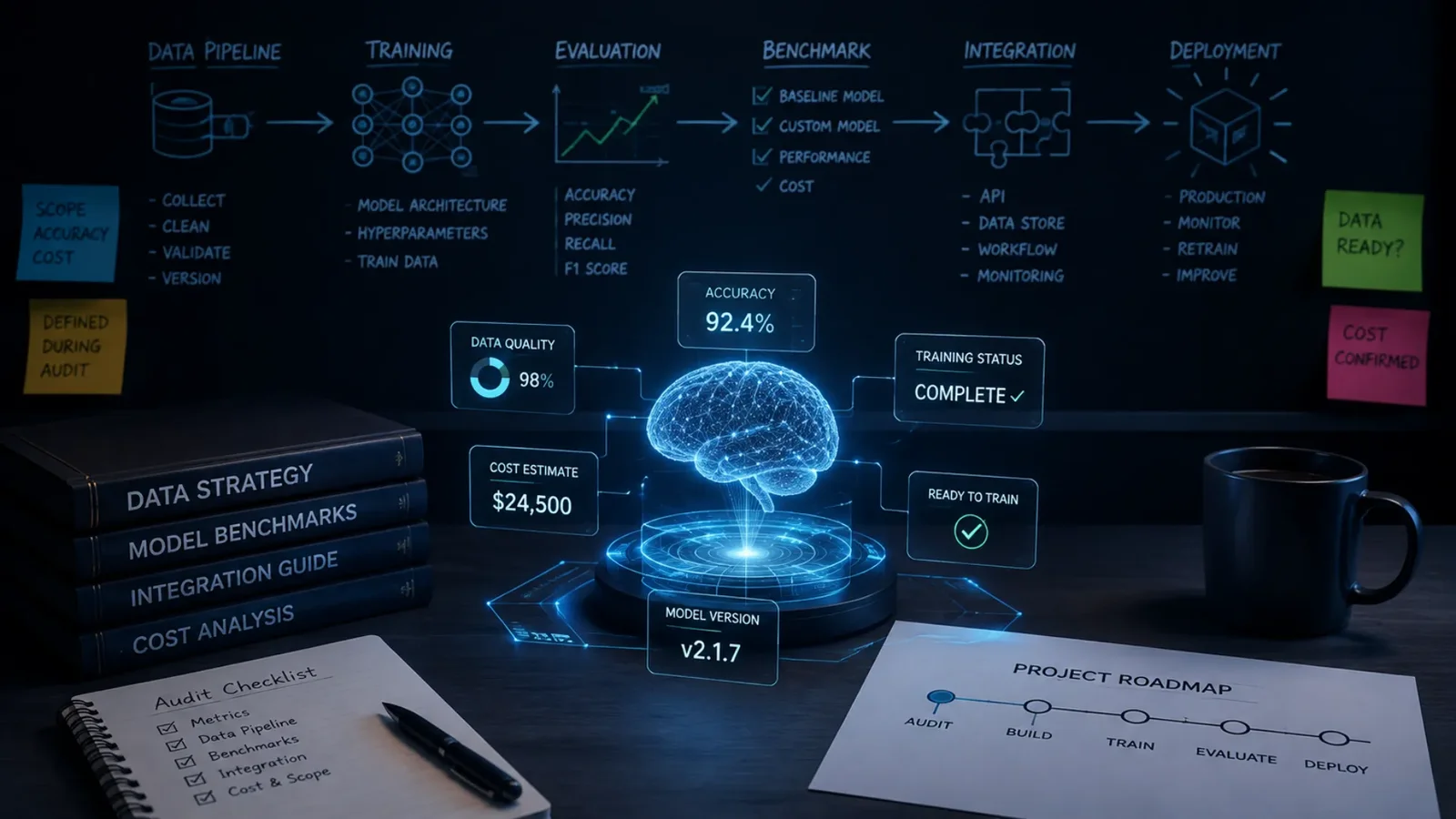
The concrete choices behind the model, settled with you during the audit, before machine learning development services get a scope or a price.
Settled During the Audit:
- Success metric agreed with you, the accuracy or business number the project is judged on
- A data pipeline you can rerun, retraining doesn't mean starting over
- Benchmark against off-the-shelf models, so you know a custom model earns its cost
- Integration through your existing systems, nothing in your product gets rebuilt to fit the model
- Cost and scope agreed, a fixed number for the build, set after the audit confirms your data is ready to train on
What Pushes a Team to Build a Custom ML Model
A forecast that is still a spreadsheet formula, a risk score a person eyeballs case by case, or a recommendation that depends on whoever is on shift. The gaps predictive analytics services get called in to close.
Off-the-shelf models miss what matters in your data, and pilots stop before production. Machine learning development starts from a measured accuracy baseline on your own examples. The audit says whether the data can carry the question being asked.
Off-the-Shelf Models Miss Your Pattern
A generic model trained on general data misses the patterns specific to your product, your customers, or your industry, so accuracy stays lower than the business needs.
Decisions Made on Gut Feel
Forecasts, risk scores, or recommendations still get made by a person's best guess, because nobody's built the model that could make the call with data behind it.
Pilots That Never Reach Production
A notebook shows 92% accuracy on a clean, held-out sample, and the project gets greenlit. Then it meets live data with missing fields, a seasonal pattern the training set never saw, or a slow drift nobody's watching for, and the gap between worked in testing and still works six months later is exactly the part most teams don't scope.
Unclear Return on Investment
The budget for a machine learning project gets approved without a number attached to the accuracy gain or the decisions it should improve, and the model's value stays a guess long after it's live.
How ML Model Development Runs at Hygge
From your data to a model running in production, the path every project at Hygge follows, with real accuracy numbers at the end of each step.
Audit
We review your data, your current decision process, and where a model pays off first. That review is what tells us whether the problem is worth a full build.
Architecture
We lock in the model approach and the features chosen during the audit, and map how it connects into your existing systems.
Build
The model gets trained and validated against your actual data from week one, so every weekly check-in shows the real accuracy numbers the model is producing on your data.
Deploy
The model goes live in your infrastructure, rolled out in stages so accuracy holds up before it drives real decisions.
Support
We stay on after launch to monitor accuracy and retrain on new data on a schedule set during the audit, with an alert triggered the moment accuracy drifts past the agreed threshold.
What Machine Learning Changes in Your Decisions
You see what the model achieves on held-out data, and the build is priced from that result. The model runs in production with monitoring on its accuracy, so drift is caught before a customer reports it. ML model development at Hygge starts with the decision the model is meant to support and the accuracy bar that makes it worth using. That bar is agreed and proven on your data before the full build is committed. As an AI ML development company Hygge covers the whole path: the data pipeline, the model, the evaluation harness, the deployment and the monitoring that catches drift after launch. AI ML development services and ML development services usually arrive as one project, because the model is the smallest part of the work.

What Machine Learning Development Is Measured On
What Hygge commits to on this service, and how each commitment is measured.
Where We've Already Built This
Industries where Hygge's models are already running in production, built by a machine learning development services team that keeps monitoring and retraining after launch.

Retail & E-Commerce
Demand, pricing and churn models trained on your own sales history, measured against the decisions they are meant to change.

Sales & Marketing Technology
Lead scoring and propensity models fitted to your pipeline, with the inputs visible to the rep looking at the record.
Fitness & Wellness
Personalisation and progression models shaped by what your users log, with limits on anything recommended to a person.
Logistics & Warehouse Automation
Forecasting for volume, routing and staffing, retrained as the season and the network change.
Hygge's Machine Learning Models Already in Production
A sample of custom ML models already carrying real production decisions, the stage most ML pilots never reach.
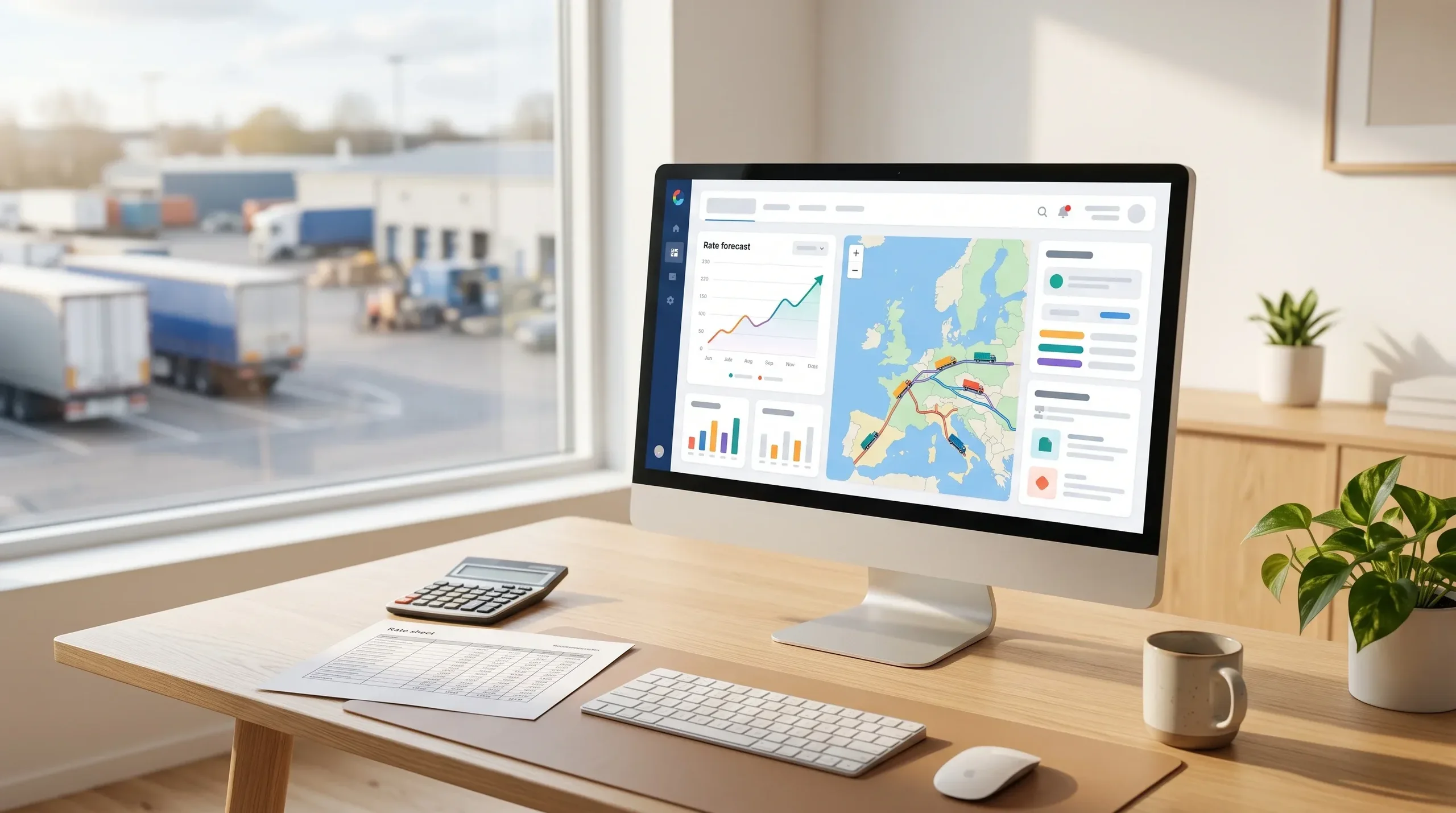
Freight Rate Forecasting for a Forwarder
Freight rate forecasting for a forwarder in Lithuania. It flags truck shortages and rate jumps by lane before the trip is quoted.
- By laneSpot Rate and Shortage Forecast
- 1 storeFor ERP, Exchange and Public Data
- TestedOn the Forwarder's Own Trips
- 1 tapFor the Driver's Route
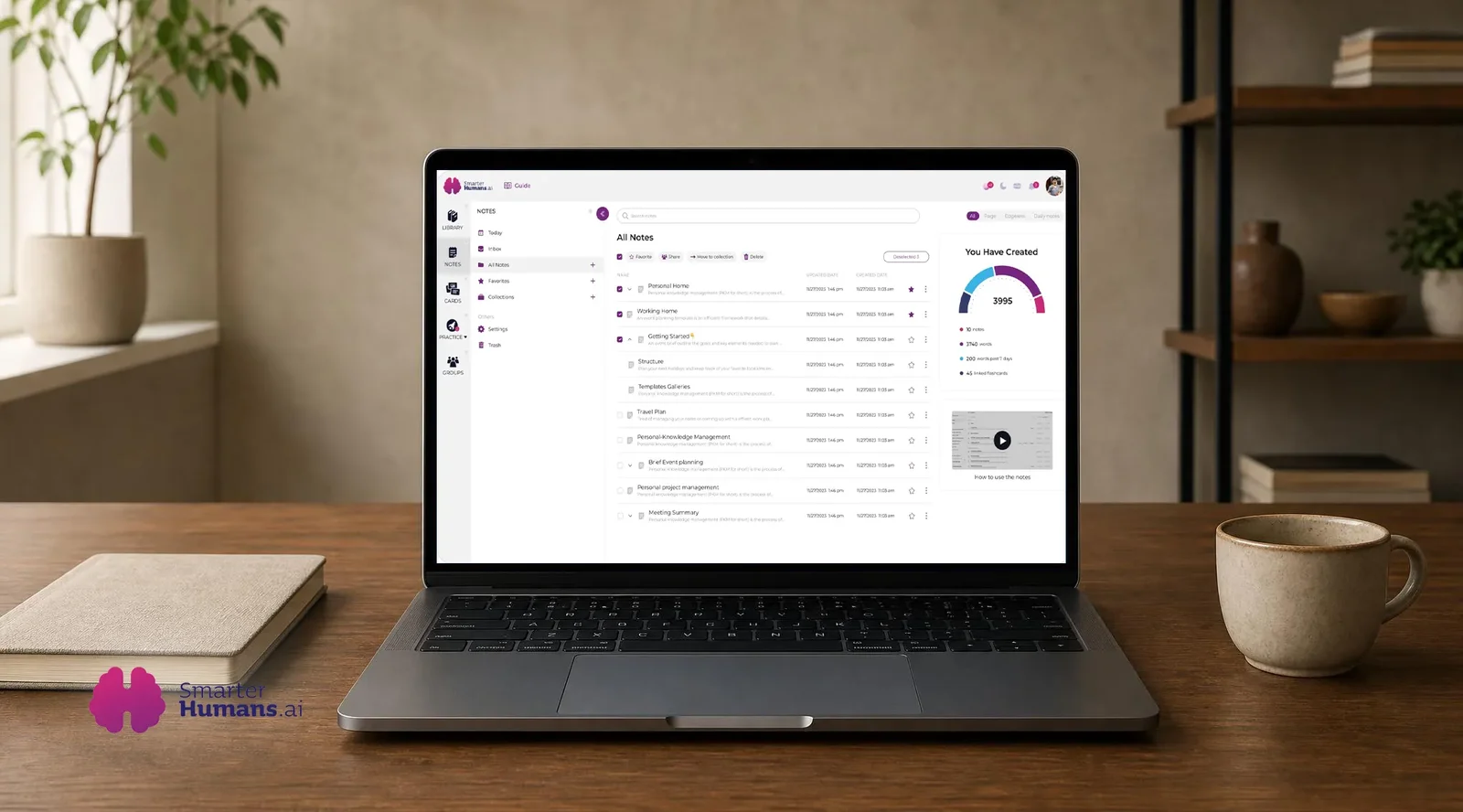
Smarter Humans
A spaced repetition app built by the same team since 2019. About a million users moved to the rebuilt system with zero downtime.
- 93 %Cut off a 20-second document load
- 1 uploadReplaces the card writing people quit over
- 7 yearsOn one product with the same team
What You Get From the ML Audit
We review your data and your current decision process, flag where predictive analytics services pay off first, and hand you a clear next step: what to build, how long it takes, and what it costs.
The Stack Behind a Machine Learning Build
The languages, models, and infrastructure behind every build Hygge runs.
The model layer the feature runs on, weighed on accuracy for your task, the latency a user will sit through, and what a call costs at production volume.
 Python
 Hugging Face Transformers
 Scikit-learn
 TensorFlow
 PyTorch
 ONNX (Open Neural Network Exchange)

Frequently Asked Questions
What teams ask an AI ML development company about scope, accuracy, and cost before a project starts.
 What is a machine learning model?
What is machine learning used for?
What is machine learning and how does it work?
How do you build a machine learning model?
When to use machine learning?
Do I need a custom model or is an off-the-shelf API enough?
How do you know the model works before it goes live?
Can this work alongside my data or engineering team?
What happens after the model goes live?
How much does machine learning development cost?
What if I do not have enough labeled data to train a model?
How much training data do I need for a machine learning model?
How to choose a machine learning development company?
From Your Data to a Scoped Plan
Tell us the decision that's still being made without the data to back it. We'll help you scope one of our AI model development services around a measurable outcome.
Tell Us What Decision Needs a Model
Share the data, the decision, and the accuracy bar it needs to hit, whatever's costing your team time or money right now.
Get a First Consultation
We check your data readiness for anything that would change scope, cost, or timeline before we quote a number.
Receive a Detailed Proposal
A scoped plan with the approach, timeline, and cost, built around your actual data and use case.