
Product Discovery
Hygge runs product discovery services that turn a raw idea into a technical blueprint: an architecture decision with its trade-offs written out, a scoped first release, a milestone roadmap, and an exact price for the build. Every project moves through business discovery, technical discovery, validation of the assumptions that carry the most risk, and a document set you own.
What a Discovery Project Covers
Here is what each stage of the product discovery process covers, and how we decide which pieces your idea needs after reviewing your market, your constraints, and the systems already in place.
Business Discovery
The buyer, the revenue model, and the outcome the product has to hit, written down as measurable targets the build gets held against.
Technical Discovery
A review of the systems, data, and integrations the product depends on, including what your current stack can carry and where it needs replacing.
Scope Definition
The feature list split into a first release and everything after it, ordered by what the product has to prove before more money goes in.
Architecture Selection
The stack, data model, and hosting approach chosen against your expected load, budget, and compliance requirements, with the trade-offs behind each choice documented.
Feasibility Validation
The assumptions that would sink the project, tested through technical spikes and prototypes while a change of direction still costs days.
Roadmap & Fixed Estimate
A milestone plan with dates, team composition, and an exact price for the first release, delivered as documents that belong to you.
What Discovery Settles
The concrete decisions behind the build, settled with you during the project discovery phase, before Hygge commits to scope or price.
Settled During Discovery:
- First release scope: which features prove the product and which move to release two
- Architecture and stack: the technical direction, with the trade-offs behind each choice written out
- Integrations and data: the systems the product has to talk to, and what each one costs in build time
- Team and delivery order: who builds what, in which sequence, against milestones with dates
- Budget: an exact price for the first release, set once scope and architecture are agreed

What Sends a Founder Into Discovery
An idea with no price attached, a feature list nobody can rank, and estimates that swing by a factor of five, the questions a product discovery workshop answers before a budget goes to a board.
A scope that keeps moving, estimates that vary by a factor of five, and a team that cannot agree what ships first. Product discovery ends that with a written scope and an exact price behind it. Two weeks, from first call to a document your board can read.
Nobody Can Put a Price on the Idea
Three agencies quote three numbers weeks apart, the range spans a factor of five, and the board deck still carries a placeholder where the engineering cost belongs.
The Feature List Has No Order
Every item on the list feels required, so the first release keeps growing, the launch date moves twice, and the product reaches users a year after the market moved on.
An Architecture Picked in Week One Sets the Ceiling
A stack chosen for speed at the start carries the product to a few thousand users, and the rewrite arrives at the worst possible moment, right when the traffic that proves the business shows up.
Development Starts on an Untested Assumption
Months of engineering go into a product built on a guess about demand, and the first honest user conversation happens after the money is spent.
How the Product Discovery Process Runs at Hygge
From a raw idea to a costed roadmap, the path Hygge's product discovery services follow, with documents you keep at the end of each step.
Business Framing
We work through the buyer, the revenue model, and the outcome the product has to hit, and turn them into targets the build can be measured against.
Technical Review
We map the systems, data, and integrations involved, and write down the constraints the architecture has to respect.
Validation
The riskiest assumptions get tested through technical spikes and working prototypes, so the plan rests on what discovery proved.
Blueprint
Architecture, scope, and a milestone roadmap come together in one document set, with an exact price attached to the first release.
Build Decision
You take the blueprint to your board, to Hygge, or to any engineering team, since every document and every line of prototype code from discovery belongs to you.
What Changes Once the Scope Is Settled
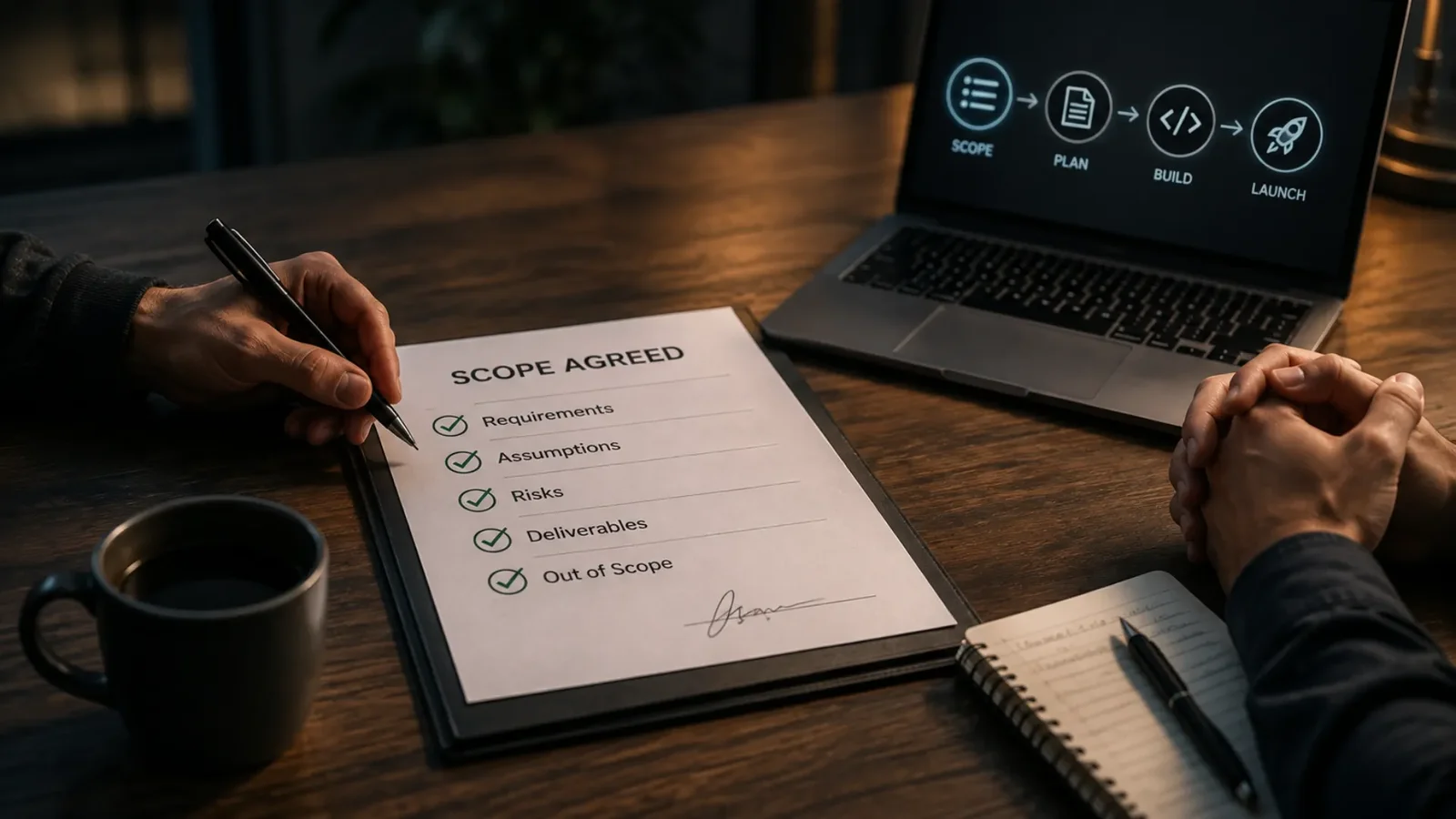
You get a scope somebody will hold to, with the assumptions and the risks written next to the number. The build that follows starts from an agreed list, so the first argument about what was included never happens. The software discovery phase exists to make the estimate honest. A week of it usually moves a number more than a month of negotiation, because the things that move a budget are integrations nobody mentioned and rules nobody wrote down.
What Product Discovery Is Measured On
The standards this work is held to, set against your current baseline and checked after delivery.
Where Discovery Saves the Budget
Sectors where the wrong assumption in month one gets expensive by month six.
Healthcare & Staffing
Regulatory scope, data handling and integration surface mapped before a health product commits to an architecture.
Logistics & Warehouse Automation
Throughput targets and hardware constraints measured on the real floor before the software is costed.
LegalTech
Confidentiality, retention and privilege requirements settled before the data model is drawn.

Aviation
Certification and regulator reporting requirements written into scope before a line item is priced.
Real Estate & PropTech
Portal feeds, valuation sources and document rules confirmed before the platform is committed to.

Sales & Marketing Technology
CRM boundaries and data ownership mapped so a revenue build reads the CRM as the source of truth for customer records.

EdTech
Institution systems, roster formats and accessibility requirements scoped before a learning build starts.
Retail & E-Commerce
Peak season load, payment rules and fulfillment integrations sized before the platform is chosen.
Builds That Started With a Scoping Document
Projects where the first deliverable was an audit and a costed plan, and the build followed it.

Boxerloads
Product discovery and design for a freight load board for small US carriers. The client is an owner-operator with his first software idea.
- 109User Stories in a Ready Backlog
- 8 modulesSpecified End to End
- On scheduleDesigns and Wireframes Delivered
- CostedBefore Any Build Budget
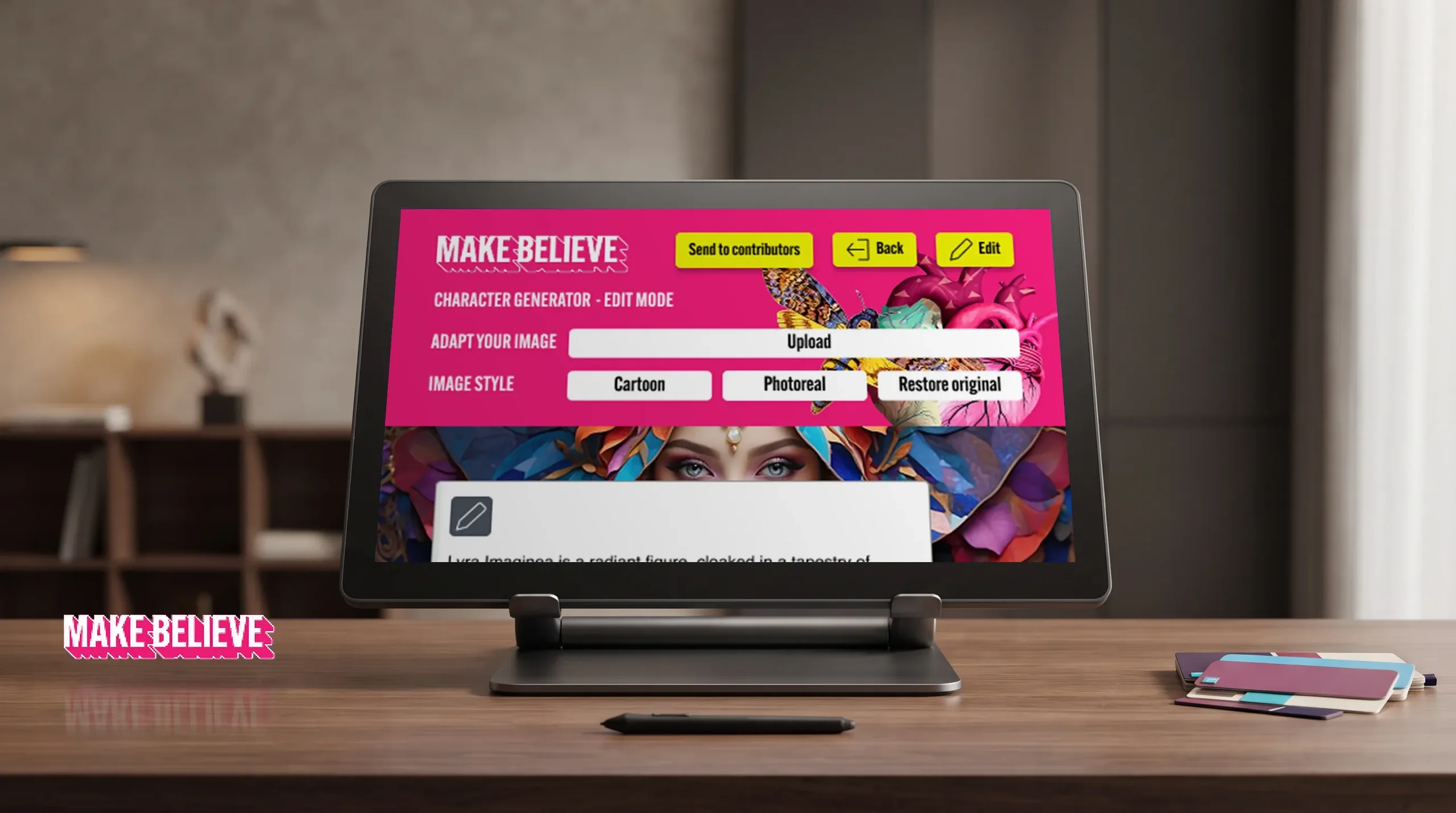
MB Character Tool
An embeddable AI character generator living inside an agency marketing site, built in eight weekly milestones.
- 1 promptFrom landing on the site to a result
- 1 iframePuts the tool inside the existing site
- 8 weeksFrom an empty repository to live on the site
What You Walk Away With After Discovery
Discovery phase software development at Hygge reviews your idea, your market, and the systems you already run, puts a number on what the first release costs, and hands you the blueprint to build from: architecture, scope, and roadmap.
The Toolset Behind a Discovery Blueprint
The research, modeling, and prototyping tools behind Hygge's product discovery services, and the platforms an architecture decision gets evaluated against during the project discovery phase.
Where stakeholder input, existing constraints, and competing priorities get captured in one place the whole team can see. Workshop output stays open after the sessions end, so a decision made in week one is still traceable in month six.
 Figma
Figma

Frequently Asked Questions
What founders and product leads ask about the product discovery process about it.
 What is product discovery?
What is the product discovery process?
How to do product discovery?
Why is product discovery important?
What is discovery in product management?
How much does product discovery cost?
How long does the product discovery process take?
I have an idea and no technical team. Where do I start?
Do I have to build with you after discovery?
Will I get an exact price for the build, or an hourly estimate?
How do I know my product is worth building before I spend on development?
I already started building and it is going sideways. Can discovery still help?
From an Idea to a Costed Plan
Tell us what you want to build and who it serves. Hygge's product discovery services turn that into scope, architecture, and an exact price.
Tell Us What You Are Trying to Prove
Share the idea, the budget range you are working with, and the assumption that worries you most.
Get a First Consultation
We review your idea, constraints, and target platforms for anything that would change scope, cost, or timeline.
Receive a Detailed Proposal
A scoped plan with the approach, timeline, and cost, built around what discovery finds.