
How to Choose a Software Development Partner for a Startup
Compare delivery models, run real due diligence, and choose for the stage after this one.
 Alina Sukhova·Publication date·14 min read
A startup picks an external team for one of two reasons. The product needs skills the founders lack, or it needs speed the founders cannot reach alone. Both reasons put the same thing at stake: the runway. That is why software development services for startups are judged on evidence first and on rate cards last.
The answer to how to choose a software development partner comes down to evidence. You compare what a company has shipped at your stage and how it makes decisions when the scope moves. Then you check what it hands over if you stop working together. Price comes last, because the cheapest quote and the cheapest project are different numbers.
Choosing a Partner: The Short Answer
Shortlist three to five software development partners with live products at your stage. Interview the people who would work on your account, compare proposals on their assumptions, and run a paid discovery or a small pilot before a long contract.
Why Choosing the Wrong Development Partner Is a Startup Risk
A weak vendor choice shows up as lost months, then as lost money. The code arrives late, the first users see something unfinished, and the next fundraise happens without traction.
In March 2026 CB Insights analyzed 431 venture-backed companies that had shut down. Running out of capital was cited in 70% of cases, and poor product-market fit in 43%. The median gap between the last raise and the shutdown was 22 months (CB Insights, March 2026). Those 22 months are the window a development team either protects or burns.
The damage compounds in three places. Calendar time disappears while the team learns your domain twice. Budget goes into work that gets rewritten. Investor confidence drops when demo dates move without a clear reason.

Hire for an Outcome
Hygge scopes a project around the business result before a proposal goes out.
Alina SukhovaCEO & Co-Founder
The most expensive mistake is hiring for hours and hoping a product appears. Ask what business number moves. If the answer stays vague after the second call, the proposal will be vague too.
Do You Need a Software Development Partner?
An external team earns its cost when the product needs more skills than the founding team holds, and sooner than hiring can supply them.
The strongest cases look like this. You have a validated problem and no engineering leadership in-house. You have engineers who are busy on the core system while a second product waits. You need a discipline for a fixed period, such as data engineering, mobile or security review.
Other conditions argue for hiring in-house. The product is your only asset and the domain knowledge must stay with the company. Or the scope is small enough that one senior engineer covers it for a year.
Many founders take a middle path. They start with a developer partner for the first release, then move maintenance in-house once the product earns revenue. That plan works when the contract says so.
Decide Whether an External Team Fits Your Stage
Bring your product stage, runway and internal roles to a short call. You leave with a written view on scope, team and sequence.
Define the Partnership Before Comparing Companies
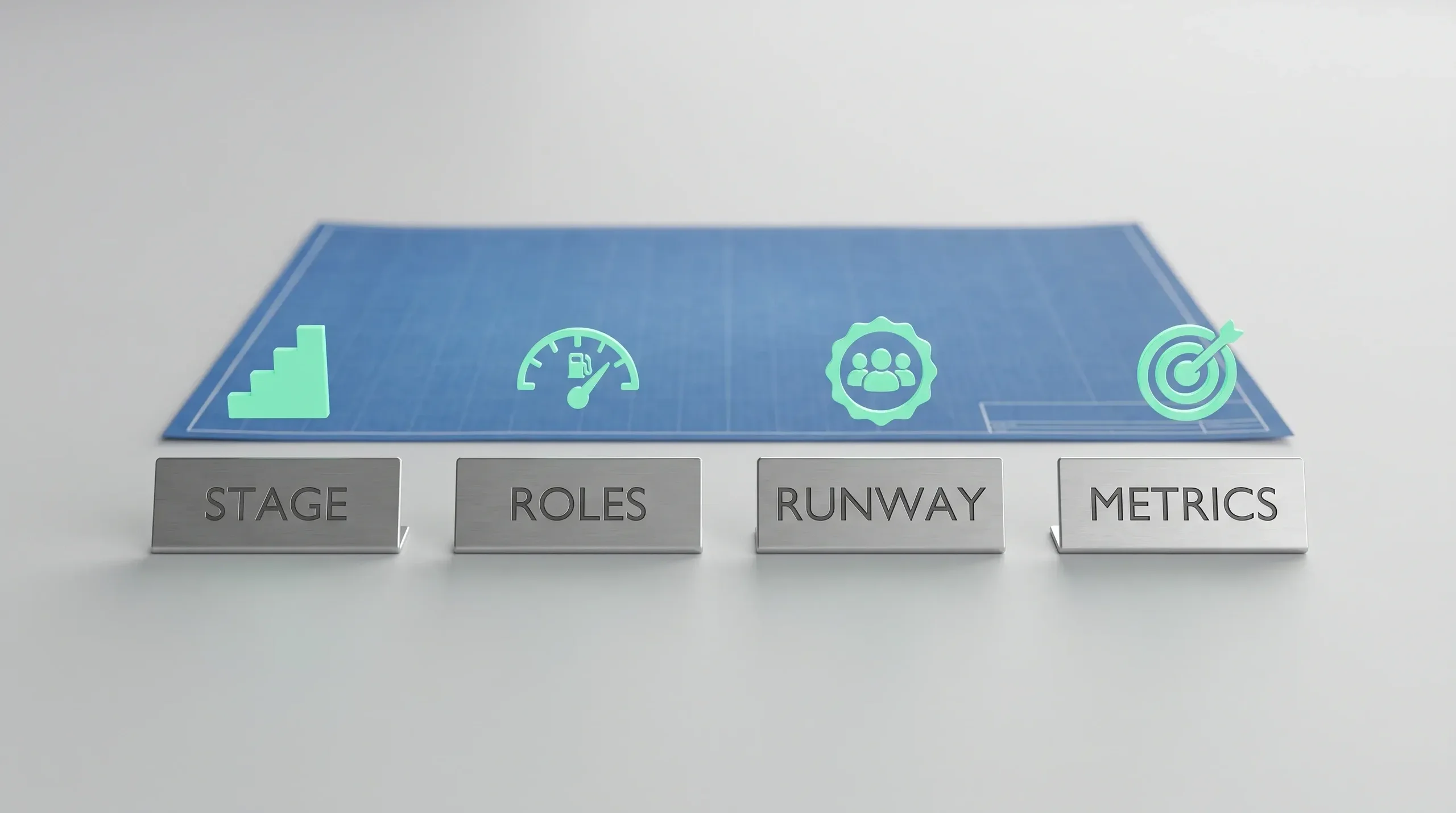
Comparison is meaningless while the target is undefined. Write four things down and send them to every company you talk to.
Product Stage and Outcome
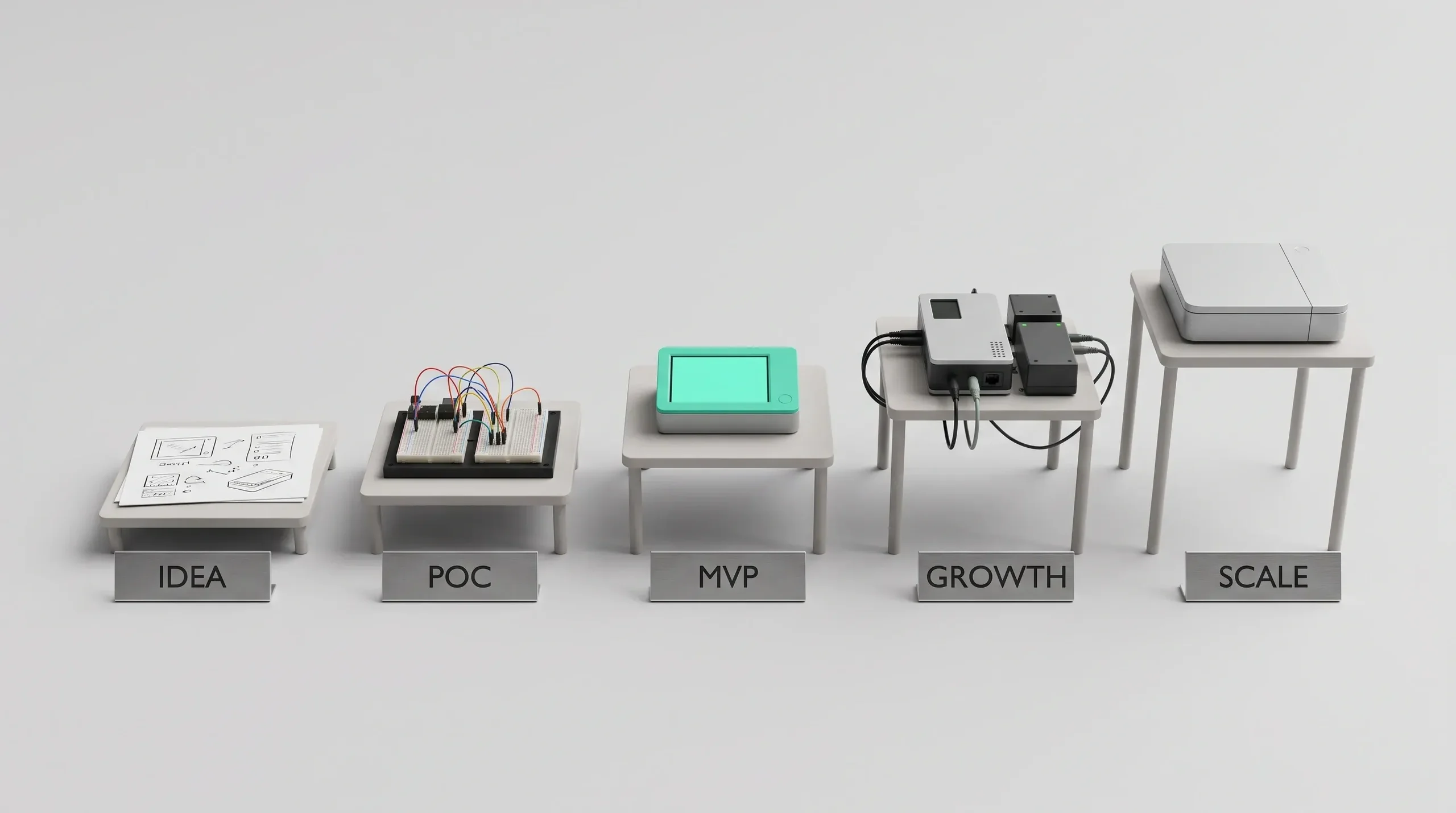
Name the stage: idea, proof of concept, MVP, early growth or scale-up. Then name the outcome in a sentence a non-technical person can repeat. "Onboard a clinic in under one day" beats "build a healthcare platform".
Scope, Timeline, Budget and Runway
Write the scope as a list of user-facing capabilities. Put the date that matters next to it, such as a demo day, a pilot customer or a board meeting. Then write the runway in months. A software development partnership that ignores the runway will propose the right system at the wrong time.
Internal Roles
Decide who owns the product decisions, who approves the design, and who answers technical questions. An external team moves at the speed of your slowest decision.
Success Metrics
Pick one primary metric and two supporting ones. Activation rate, time saved per operator, or cost per transaction all work. Delivery speed is a supporting metric, never the primary one.
Software Vendor, Development Team, or Product Partner?
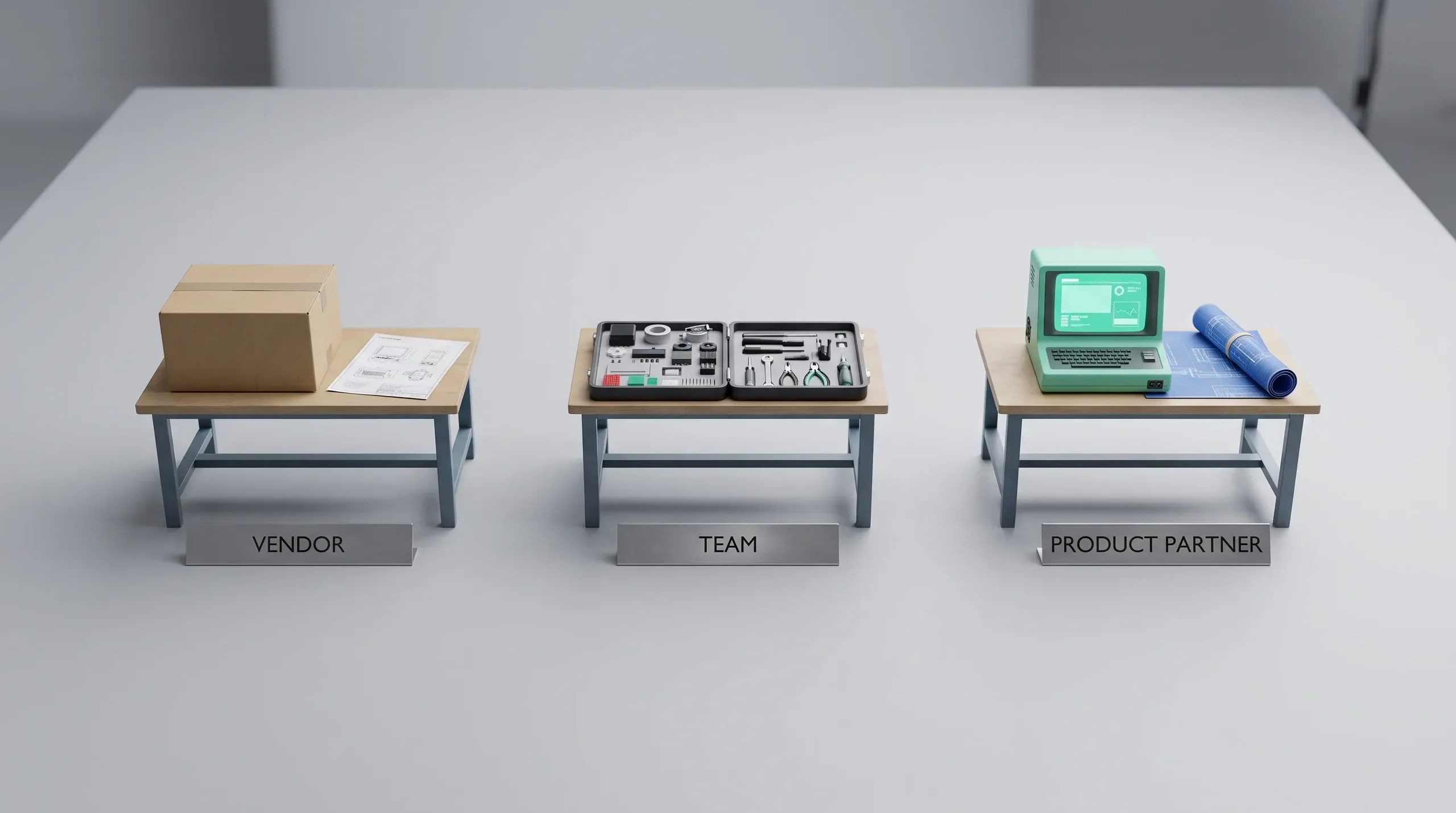
Proposals look alike, so ask which of these three models each one describes, then compare prices.
Software vendor
Best for: A defined scope you already specified. Your involvement: Low, you review milestones. Advantages: Predictable cost, fast start. Main risk: Nobody questions a bad requirement.
Dedicated development team
Best for: A roadmap that keeps changing. Your involvement: High, you run the backlog. Advantages: Flexibility, direct control. Main risk: You supply the product leadership.
Software product development partner
Best for: An outcome you can name but cannot specify. Your involvement: Medium, you decide on evidence. Advantages: Discovery, architecture and delivery in one team. Main risk: Costs more per month than staffing.
Staff augmentation is the smaller version of a dedicated team, with a few engineers joining your backlog. The choice depends on what you already have in-house. With a product manager and a clear specification, a vendor or a dedicated team can be enough. Without them, most seed-stage founders get better value from a product partner, also called an end-to-end software development partner.
How to Choose the Right Software Development Partner
When you work out how to choose a custom software development partner, these checks separate a supplier from a partner. Run all of them before the shortlist, because a company can be strong on six and still be wrong for your stage.
Relevant Experience at Your Stage
Shipping enterprise platforms and shipping a first release are different skills, and SaaS product development has different demands again. Ask for products the company took from zero to live users, and for the month each went live.
Product Discovery Capability
A team that starts coding without an audit is a staffing company. Ask what happens in the first two weeks, and what document ends that period.
Technical Capability
Ask how they choose between building and integrating, and for an example where they recommended a smaller system. A custom software development partner who has never talked a client out of scope has never protected a budget.
Portfolio Evidence
Case studies with numbers beat logos. Look for the problem, the decision, and a measured result. Ask which of the named engineers still work at the company.
Team Composition
Find out who is senior, who is on your account full-time, and who is shared across three projects. Ask for the split between people in the proposal and people in the first sprint.
Process and Transparency
You want working software at short intervals, code in your repository, and a written record of decisions. Ask where the repository lives during the project and who owns the cloud accounts.
Communication and Time Zones
Four overlapping hours is the working minimum. Ask who writes the weekly update and whether you speak with engineers or with an account manager.
Pricing Transparency
An exact price with a fixed scope is a real commitment. A range with named assumptions is honest. A single number with no assumptions hides the risk in change requests.
Security, IP and Ownership
Confirm in writing that the project's code and data are assigned to you. Ask which parts stay licensed: the vendor's own tools, open-source libraries and any third-party AI model. Ask for the certification, the access policy, and the offboarding procedure. Hygge holds ISO 27001, ISO 9001:2015 and Q-Cert Safe certifications, and the code sits in the client repository at every milestone.
Scalability and Support
Ask what happens after launch. Who fixes production issues, how fast the team can grow, and what the handover looks like if you move the work in-house. A partner that plans to support the product after launch answers all three without hesitation.
Match the Partner to Your Startup Stage
The right company at seed stage is often the wrong company at Series B. Match the team to the decision you are about to make.
At the idea and proof-of-concept stages the risk is building the wrong thing, so discovery and honest feasibility answers matter most. At the MVP stage the risk is speed, and a small team with weekly releases fits best. After launch the risk moves to reliability and to keeping knowledge inside your company.
Find the row below that matches your product today, and check the warning sign in that row against every proposal you receive.
What Each Startup Stage Needs From a Partner
Match the row to where your product is today.
Idea
Main question: Is the problem worth solving? What the partner must bring: Discovery, user interviews, a scoped plan. Warning sign: A quote with no questions asked.
Proof of concept
Main question: Is the hard part possible? What the partner must bring: Senior engineering, honest feasibility answers. Warning sign: Promising a full platform.
MVP
Main question: Does this create measurable value? What the partner must bring: Small team, weekly releases, one metric. Warning sign: A six-month plan with one delivery.
Early growth
Main question: Can it hold real usage? What the partner must bring: Architecture, monitoring, security review. Warning sign: Adding juniors to move faster.
Scale-up
Main question: Can the organization keep up? What the partner must bring: Hiring support, documentation, handover. Warning sign: Keeping knowledge inside the vendor.
Founders at the idea and proof-of-concept stages benefit most from a partner that runs discovery. If that first release carries an AI feature, our guide on how to build an AI MVP covers the stages. Teams at early growth need architecture and operational discipline. The transition between those two needs is where a software engineering partner proves its worth, because the plan changes while the product stays live.
A Practical Due-Diligence Process
These five steps take a long list down to one signature, and each removes a specific risk.
Build an evidence-based shortlist
Search for companies with shipped products in your domain and at your stage. Read the case studies, open the live products, and read the review platforms for detail and dates. Three to five names is enough.
Run product and technical interviews
Ask to meet the architect and the product manager who would work on your account. Give them a real problem from your backlog and listen to the questions they ask before answering.
Compare proposals on assumptions
Line up the proposals by scope. Mark every assumption each company made about your data, your users and your integrations. The gaps explain the price difference.
Buy discovery or a pilot
A paid two to four week discovery, or one small feature delivered to production, tells you more than four weeks of sales calls. You keep the output either way.
Score on one sheet
Weight the ten criteria against your stage, score each company, and write one sentence on what would make you regret the choice.
Put Your Shortlist Through a Real Technical Conversation
Bring a problem from your backlog and see how the team scopes it, what it asks first, and where it pushes back.
Check the Story Against the Release Notes
We run the same checks on a vendor that we run on a market.
 Petryk Bogdan
Marketing Manager
We check vendors the way we check a market: open the product, find the people who built it, and see whether the story on the site survives contact with the release notes.
Questions to Ask Before Signing a Contract
Contracts hide the parts nobody discussed. Send these questions while both sides can still change the terms.
Who owns the code, the data and the trained models? Where does the repository live during the project? What happens to the cloud accounts and the domain if we part ways? Which named people are on the account, and what notice do we get if one leaves? How are change requests priced, and what counts as a change? What is the payment schedule, and what is tied to delivery? How do you handle a milestone you will miss? What does support cost after launch, and what response time comes with it? What documentation do we receive at handover? Which part of the work goes to subcontractors?
Send the list in writing and keep the answers. Two companies with identical proposals answer these ten questions in different ways.
A Price Without Assumptions Is a Guess
Hygge publishes the assumptions beside the price, so the scope can be argued.
 Artem Petrov
CFO & Co-Founder
A price without assumptions is a guess with a confident face. We publish the assumptions next to the number, because that is the part a client can argue with.
Red Flags That Should Stop the Selection Process
Some answers end a conversation. Each of these has a cost you will pay later.
An estimate with no questions asked
A number produced without discovery prices the sales call, and the real scope arrives as change requests.
No named engineers
If the proposal lists roles with no people behind them, the team is assembled after you sign.
The code lives with the vendor
A repository you cannot access becomes a lever against you at renewal time.
Every answer is yes
A team that never pushes back on scope has no opinion to protect your budget with.
Portfolio without detail
Logos with no problem, decision or result usually mean a small contribution to somebody else's product.
Support treated as a future topic
Production issues start on launch day. A company that postpones the question postpones the fix.
How AI Changes the Partner Evaluation Process
Questions about AI in software development now sit in the same conversation as process and code ownership. Ask how the partner uses AI, what happens when a model answers wrong, and who owns the output. The tools changed how code is produced and who answers for it, so the evaluation changed with them.
AI-Assisted Delivery
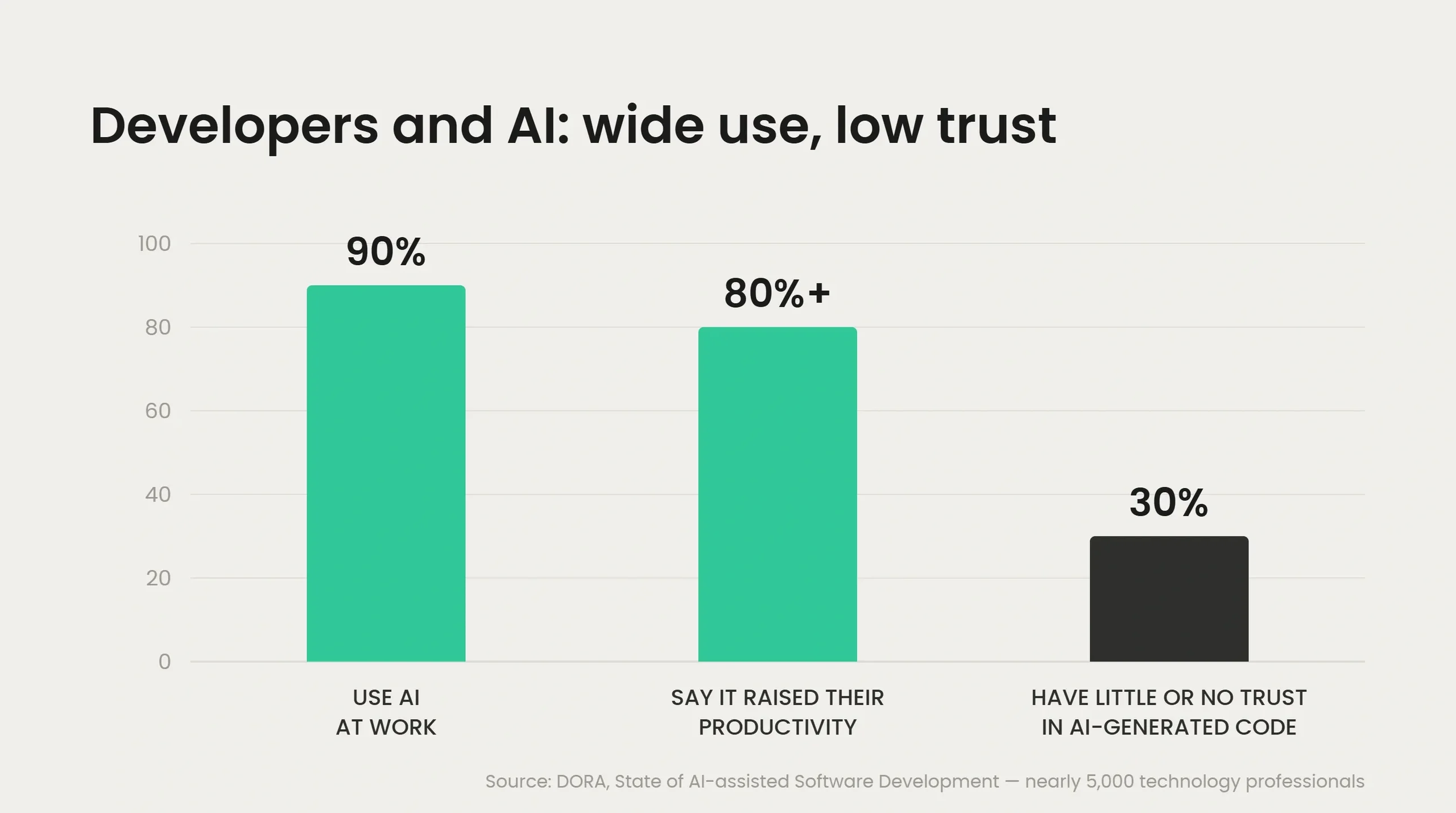
Google's 2025 DORA report on AI-assisted development surveyed nearly 5,000 technology professionals. It found 90% of them using AI at work, while 30% report little or no trust in the code it produces (DORA 2025). Wide use and low confidence sit side by side, which puts the burden on review.
The output shows in the codebase. A 2026 GitClear study covers 623 million code changes made between 2023 and 2026. It found duplicated code blocks up 81% against 2023 levels. Moved code, which GitClear uses to track refactoring, fell to 3.8% of changed lines from 21% in 2022 (GitClear, 2026). Faster typing with less reuse is a maintenance bill your next team pays.
Ask which tools the team uses and how it reviews AI-written code. Then ask how it measures duplication and test coverage over time.
Evaluating an AI Development Partner
A company that builds AI features needs evidence beyond a demo. Ask for a product where their model runs in production, the quality bar it holds, and what happens when it answers wrong. Our work as an AI development partner starts from that failure path, because it decides the architecture.
Security and Ownership of AI-Generated Work
In March 2026 the US Supreme Court declined to review whether AI alone can author a copyrighted work. The human authorship rule stands. Work generated entirely by AI cannot be registered, and only the parts a person wrote or changed are protected (Thaler v. Perlmutter, March 2026). For a startup, that makes the contract wording specific: who reviewed and modified the generated code, and what record exists.
Confirm which AI services process your data and whether your code or customer data trains a third-party model. Ask how the team approves new tools.
What a Healthy Software Development Partnership Looks Like
A working relationship has visible signals in the first month. Three of them predict the rest of the project.
Onboarding
The team reads your product, your data and your support tickets before writing code. By the end of week two you have a scope, a risk list and a first environment.
Shared KPIs
The partner reports on your business metric first, with ticket counts as a secondary view. When the metric stalls, the conversation turns to the product, and the backlog changes.
Documentation and Knowledge Transfer
Architecture decisions, environment setup and runbooks live in your workspace. New engineers on either side become useful in days. This is where software development partner benefits become measurable: the knowledge stays with you when the contract ends.

Onboarding Is Where a Project Is Won
The first two weeks decide how the rest of the project runs.
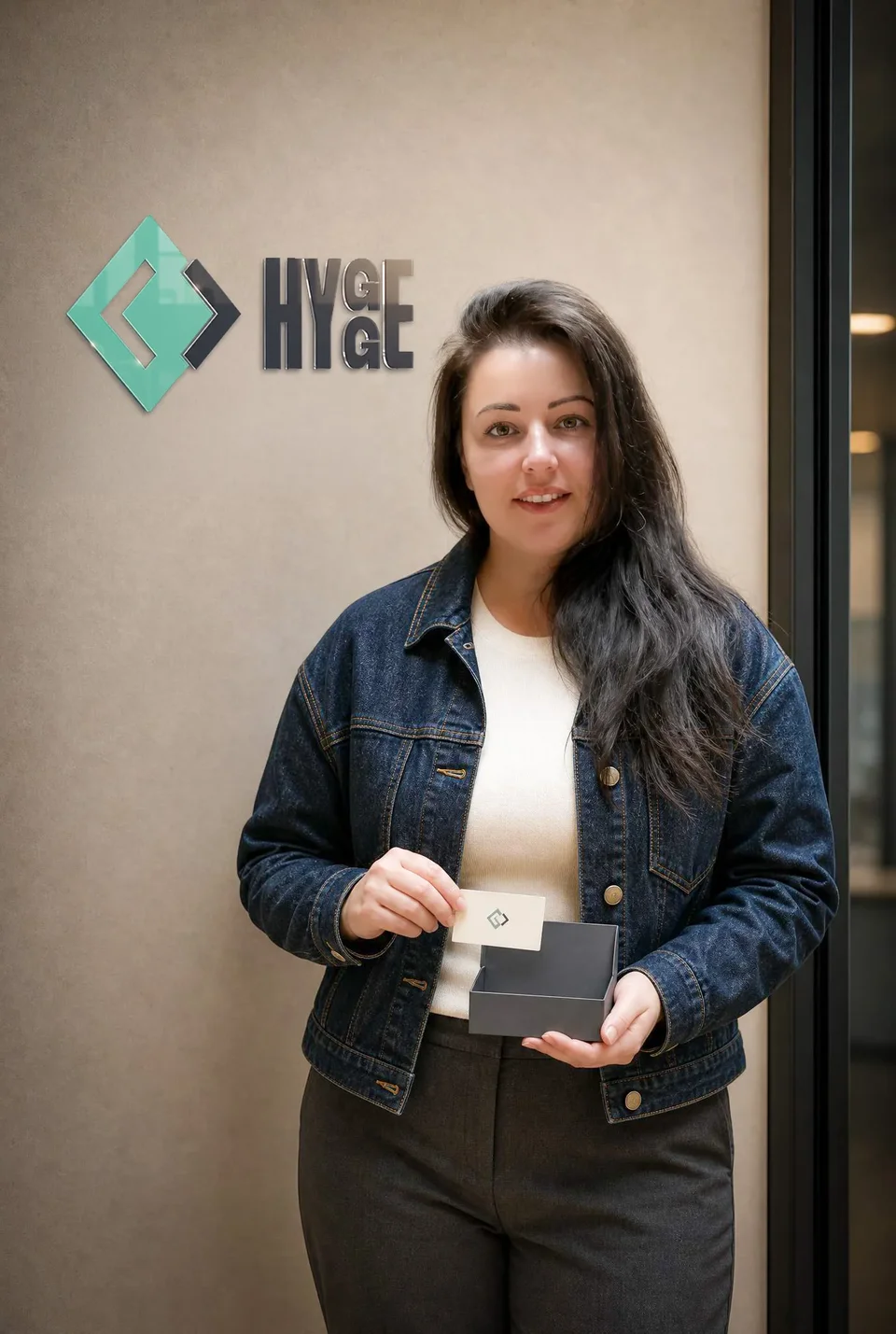 Zinaida Shelomkova
Head of Delivery
Onboarding is where a project is won. If we cannot explain your product back to you by the end of week two, the estimate after that is decoration.
Why Startups Work with Hygge Software
Hygge has run production software and AI projects since 2019, across more than 200 finished projects. The company holds ISO 27001, ISO 9001:2015 and Q-Cert Safe certifications. Every project starts with an audit or discovery, and the decision to rebuild or extend is made on evidence.
BoardsOnline, a platform reported as finished by the previous team
Problem: The founders inherited a product marked complete, with no reliable view of what worked.
Solution: An audit sorted every feature into working, partly working and broken. The team rebuilt the broken parts, added Stripe subscriptions and an integrated moderation service.
Result: About six months from audit to production, followed by more than a year of support after the contract period.
More startup software development projects are published with the problem, the decision and the measured result.
What a Client Says About Early-Stage Work
A client view on working with Hygge at an early product stage.
 Lawrence Chen
Product Manager
Their flexibility, service costs, and their ability to dive straight in with such an early-stage product were impressive.
See How Startup Products Were Built
Each case study shows the problem, the decision the team made, and the measured result after launch.
Choose for the Next Stage
The company that ships your MVP will shape the system that carries your first hundred customers, so pick for that horizon.
The checks in this guide take a few weeks. A second attempt costs months of runway, and that is the comparison worth making.
Pick the team whose evidence holds for your current stage and the next one, and you can find a reliable software development partner without paying for that second attempt.
Delivery Record
Numbers published on hygge.software and in the case studies.
Choosing a Software Development Partner FAQ
Direct answers to the questions founders ask at contract stage.
 How to choose a software development partner?
How much technical detail should a startup prepare before contacting a development partner?
Is a paid discovery phase better than a free project estimate?
How can a non-technical founder evaluate a software development partner?
How do you compare proposals when vendors estimate different scopes?
Who should own the source code, repositories, and cloud accounts?
When should a startup choose a full product team instead of individual developers?
Find Your Software Development Partner
Send your product stage, scope and runway. You get a written view on the team, the sequence and an exact price for the first release.

Send Your Stage and Scope
Product stage, the outcome you need, the runway and who decides on your side.
Get a Written View
Hygge reviews the scope and the risks, and brings that review to the first detailed call.
Receive a Scoped Plan
Team, sequence, timeline and an exact price for the first release.