
Logistics Data Exchange Platform With Dock Scheduling for a Dutch Founder
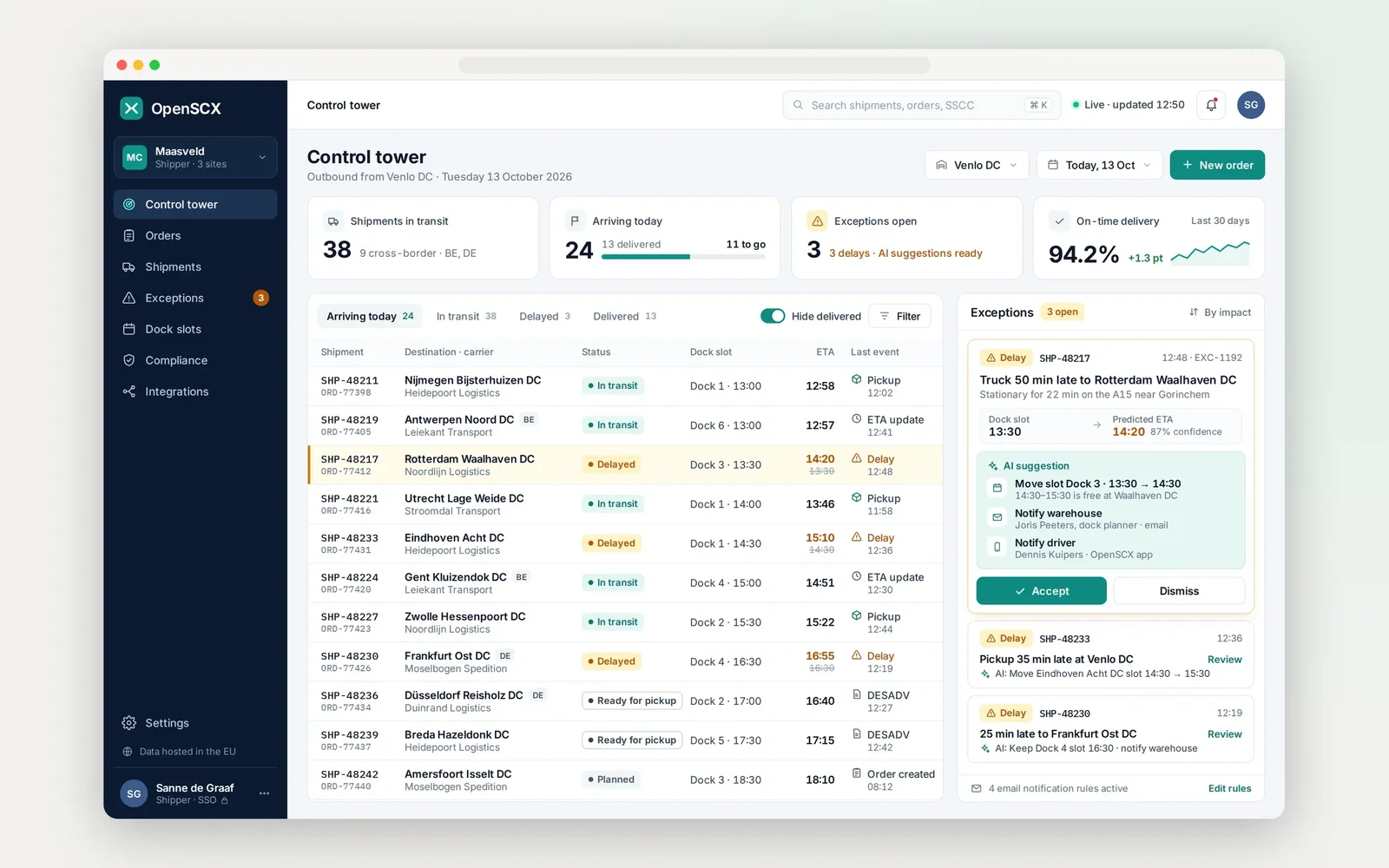
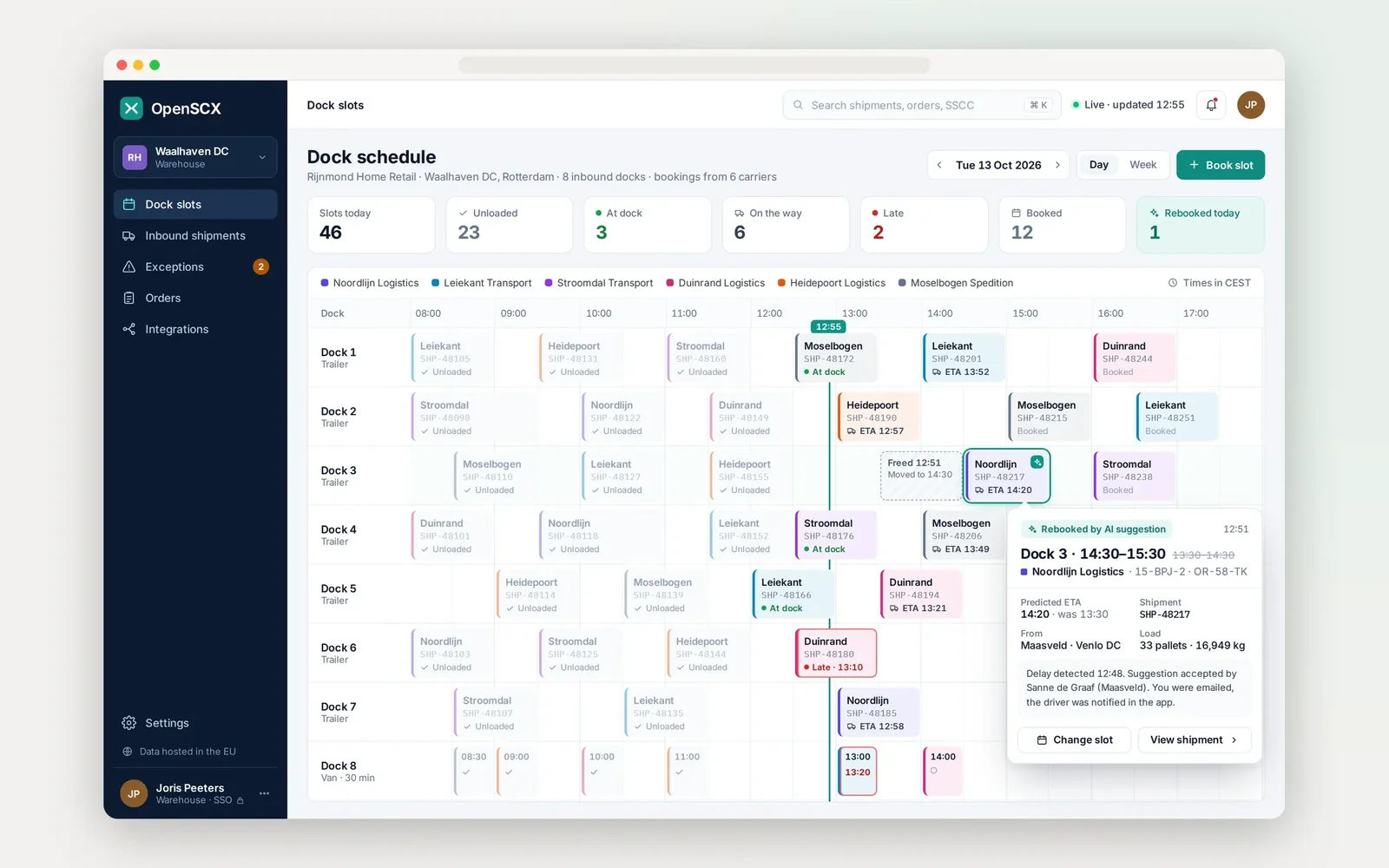
Dispatch advice arrives as a PDF and carriers confirm by phone, so the warehouse learns about a late truck from an idle ramp and a dispatcher spends an hour on the phone moving slots. Hygge built dock scheduling software inside a shipment visibility platform: SAP and other ERPs, the WMS, the TMS and carriers share one shipment record, and an AI module proposes a new dock slot when a truck falls behind. It started from a Dutch founder's brief: no more paper and email, and every shipment in one place. The dispatcher confirms the new slot in one action, and the carrier, the driver and the warehouse see it at once.
How Many Calls Did Late Trucks Cost You This Week?
Bring one week of late trucks and slot changes to a 30-minute call with a Hygge architect. You see which of them the platform would have caught, and what a first release would take.
Where Your Shipment Data Breaks Today
ERP, warehouse and carriers each keep their own version of a shipment, and people fill the gaps between them.
Everything Arrives as Email and PDF
Dispatch advice, delivery notes and proofs of delivery land in inboxes. Someone retypes them into the ERP and the WMS.
The Ramp Learns First That a Truck Is Late
The warehouse hears about a delay once the dock door stands idle. The crew waits for a trailer that is still on the road.
An Hour on the Phone per Late Truck
Each changed arrival means calls to the carrier, the warehouse and the customer to move the dock appointment by hand.
People Holding the Systems Together
ERP, WMS and the carrier's TMS each own part of the shipment, and the links between them live in a few dispatchers' heads.
Compliance Data Pieced Together Later
When an authority or a customer asks, someone pieces together eFTI data and emissions per leg.
The Challenge
Shippers, warehouses and carriers swap orders and delivery notes every hour. Each one runs a different system. The data travels as attachments and phone calls, so the parties never see the same shipment at the same moment. The cost shows up at the dock. A late truck reaches the warehouse as an empty ramp. A dispatcher spends the next hour on the phone moving slots. The same story repeats with every new carrier.
The founder's brief was short: paper documents and email threads out, every shipment in one place.
Our Solution
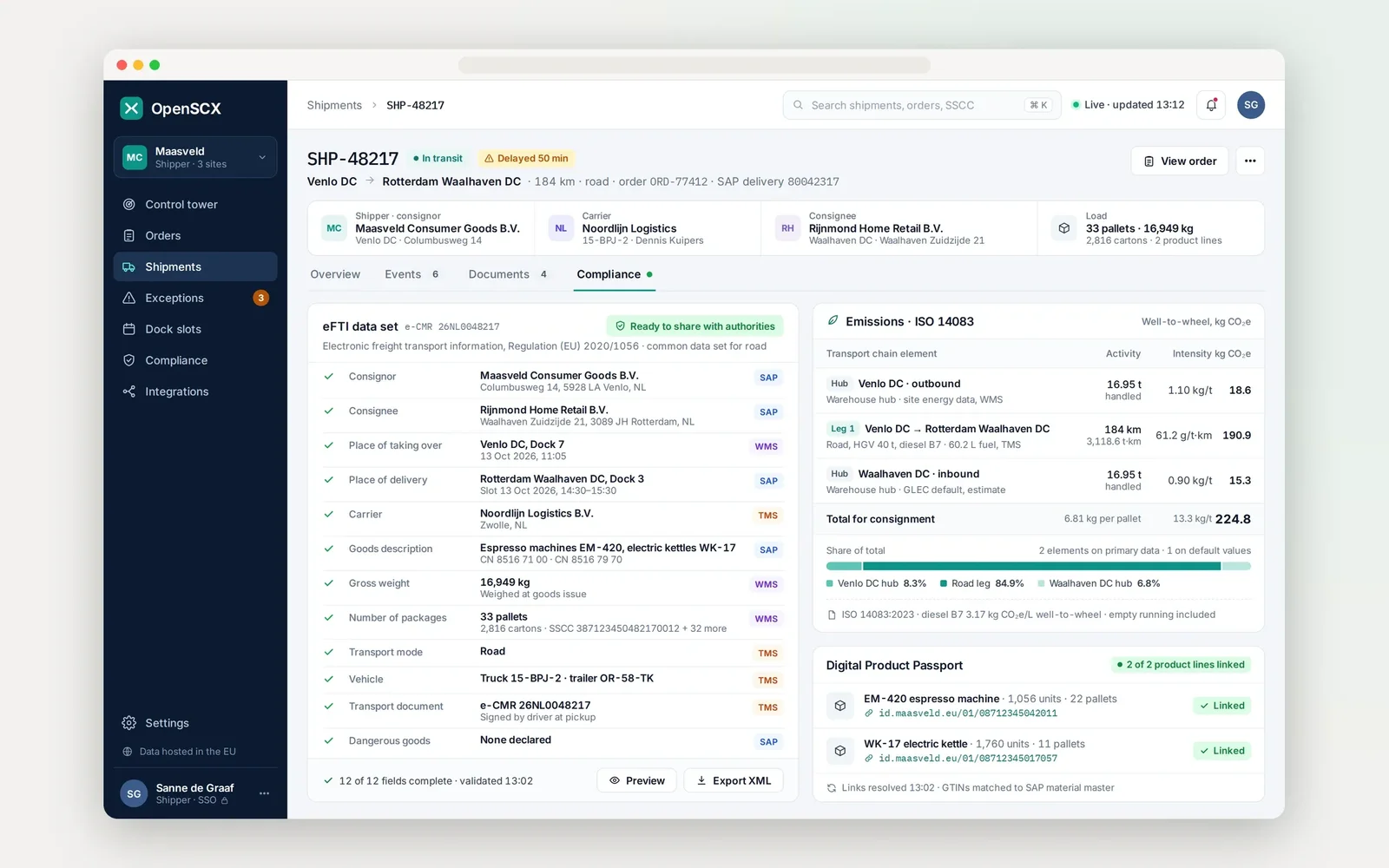
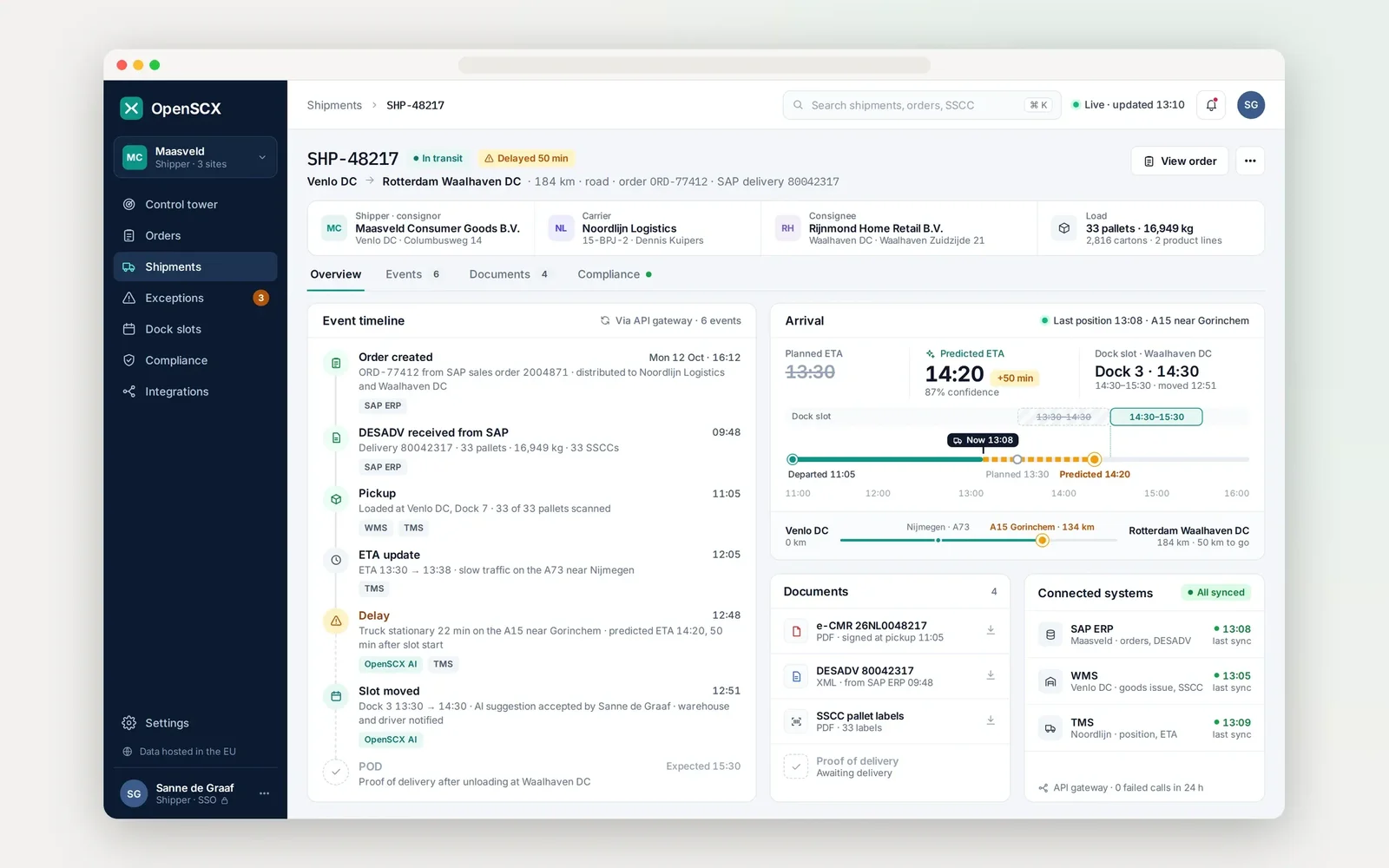
Hygge built a logistics data exchange platform. An API gateway handles the TMS integration and carrier integration, and links SAP and other ERPs and the WMS. Orders, dispatch advice (DESADV), pickups, ETA updates and proofs of delivery land on one shipment timeline. Shipper, warehouse, transporter and admin each work in their own view of it. When the ETA feed shows a truck falling behind, an AI module predicts the new arrival time and finds a free dock slot. It sends the proposal to the dispatcher and the warehouse, who confirm it in one action. The same record yields the eFTI data set, ISO 14083 emissions per leg and product passport links. It all runs on the client's servers in the EU.
One shipment record every system writes to, with late trucks handled before they arrive.
How the Logistics Data Exchange Platform Solves It
Each module answers one of the breaks above, and all of them write to the same shipment record.
One Record From SAP to the Driver
An API gateway takes orders, dispatch advice and status messages from the ERP, and the WMS TMS integration runs through the same gateway, so shipments stop being retyped.
DESADV Dispatch Advice Before the Truck Arrives
Dispatch advice from the ERP reaches the warehouse the moment it is sent, with pallets, SSCCs and the planned slot.
Delays Caught on the Road
ETA updates and delay events arrive in real time, and the AI module flags a missed slot while the truck is still driving.
Dock Appointment Scheduling That Rebooks Late Trucks
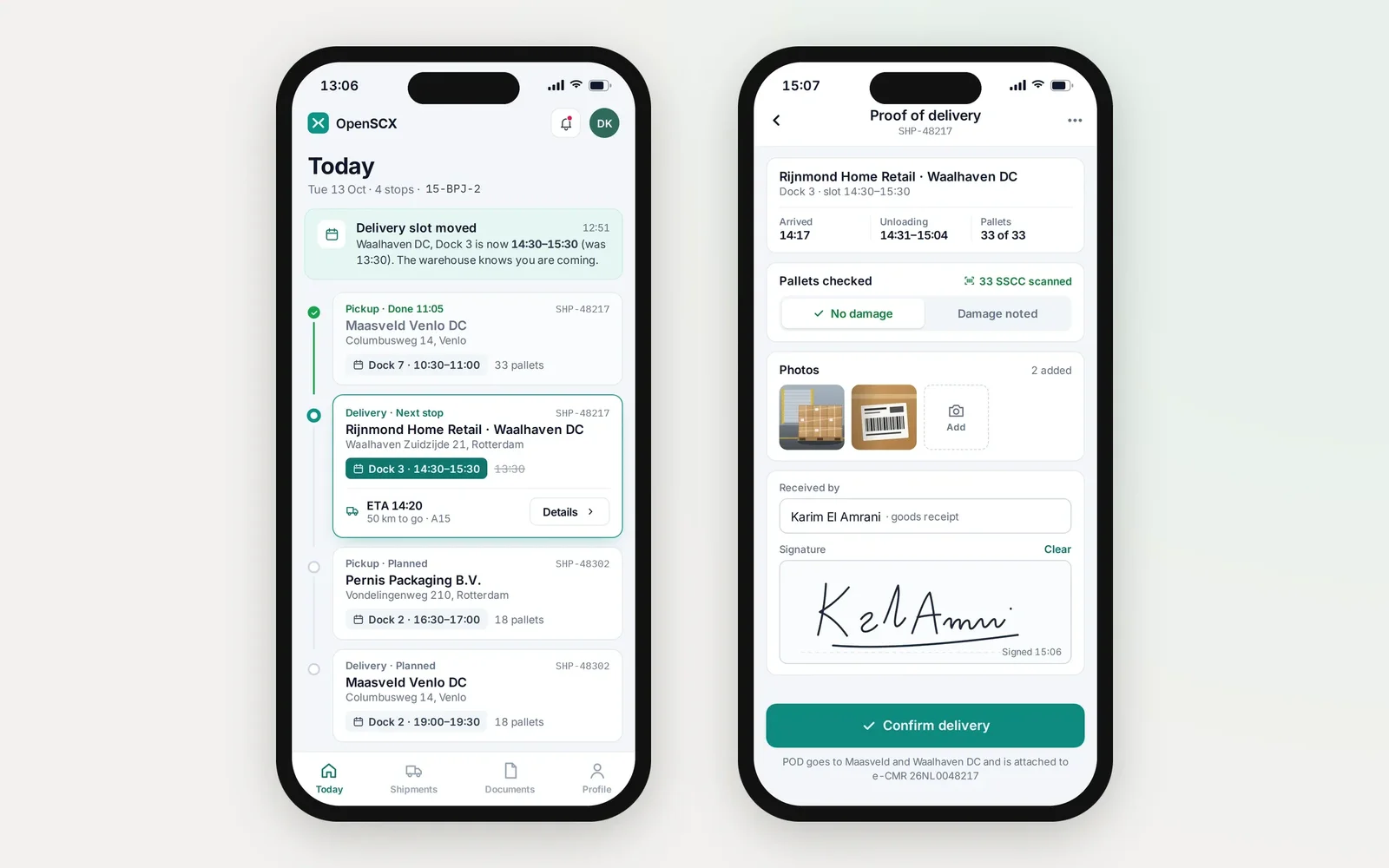
The dock scheduling software proposes the next free ramp slot. Once the dispatcher confirms it, carrier, driver and warehouse see the change at once.
Shipment Visibility for Shipper, Warehouse and Carrier
Shippers track orders, and the warehouse runs its dock schedule. Carriers confirm pickups and proofs of delivery, and admins set the rules.
eFTI and Emissions From the Same Data
Data for authorities, emissions per leg and product passport links come from the record the team already keeps.
How Do TMS Integration and Carrier Integration Work on One Shipment Record?
Each party keeps its own system, and the platform connects all of them to one shipment record. SAP and other ERPs connect through an ERP connector that takes the messages they already send, such as dispatch advice. The WMS and the TMS connect through the API gateway. Carriers whose systems already send status messages use the same API, and smaller carriers work in a transporter view on the phone.
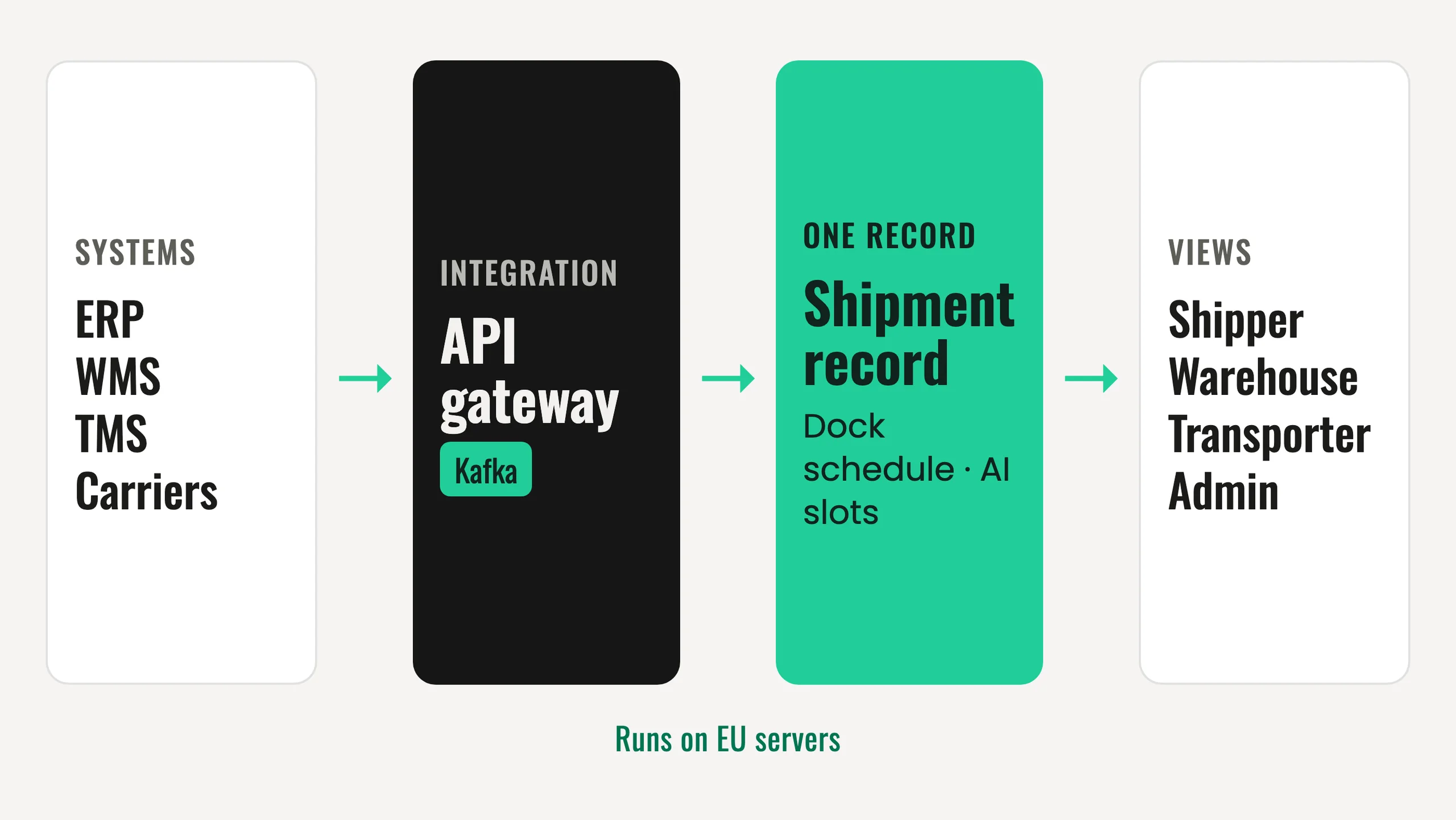
Events move between the systems through Kafka, and all shipment data stays on the client's servers in the EU. So the platform also works as a logistics integration platform: EDI integration in logistics, such as a DESADV message, lands on the shipment record the moment the ERP sends it.
Which Systems Hold Your Shipments Today?
Bring the list of your TMS, WMS and carriers to a 30-minute call with a Hygge architect. You see how each one would connect to one shipment record.
What Does the Dock Scheduling System Do Automatically?
The late-truck flow the platform runs without a phone call.
Delay Detected
An ETA update shows the truck will miss its dock slot.
New Slot Proposed
The loading dock scheduling software works out the new arrival time and finds a free ramp slot that fits it.
Team Alerted
The dispatcher and the warehouse get the proposal by email and in the app.
Everyone Updated
Once the slot is confirmed, the new time reaches the carrier, the driver and every connected system.
What the Platform Gives Dispatch and the Dock
What the platform gives dispatch and the dock, each tied to one of the breaks above.
When a Delay Is Caught
To Confirm a New Dock Slot
Servers for Shipment and eFTI Data
For Shipper, Warehouse and Carrier
The Services Behind the Platform
Five services built the first release, from the integration layer to the views each party works in.
AI Integration
The module predicts a late truck's arrival and proposes a new dock slot.
Backend, API & Database
The API gateway, the ERP connector and Kafka events behind one shipment record, on NestJS and PostgreSQL.
SaaS Development
One platform with separate views for shipper, warehouse, transporter and admin, behind single sign-on and role-based access.
Enterprise Software Development
The eFTI data set, ISO 14083 emissions and product passport links from the same record, on EU servers.
UI/UX & Product Design
The dispatcher's slot proposal screen and the transporter view on the phone.
Technologies
The stack behind the platform, grouped by where each part runs.
 NestJS
 TypeScript
 Python
 PostgreSQL
 Kafka
How the First Release Was Built
Foundation and Sign-In
Integration Layer
Tracking and Dock Slots
Exceptions and Alerts
Compliance and Launch
Industries We Serve
Industries where shipment data crosses company lines all day, and each delay costs a dock hour.

Logistics & Warehouse Automation
One shipment record for the shipper, the warehouse and the carrier.

Solutions Behind the Logistics Data Exchange Platform
The Hygge solutions this build draws on.
API & Payment Integration
The API gateway links SAP and other ERPs, the WMS, the TMS and carriers.
Inventory & Fleet Management Software
Truck delays are caught while the truck is still on the road.
Business Process Automation
A new slot proposal and team alerts go out without phone calls, and the dispatcher confirms in one action.
More Products Hygge Has Shipped
Other systems Hygge built around the way a team already works.
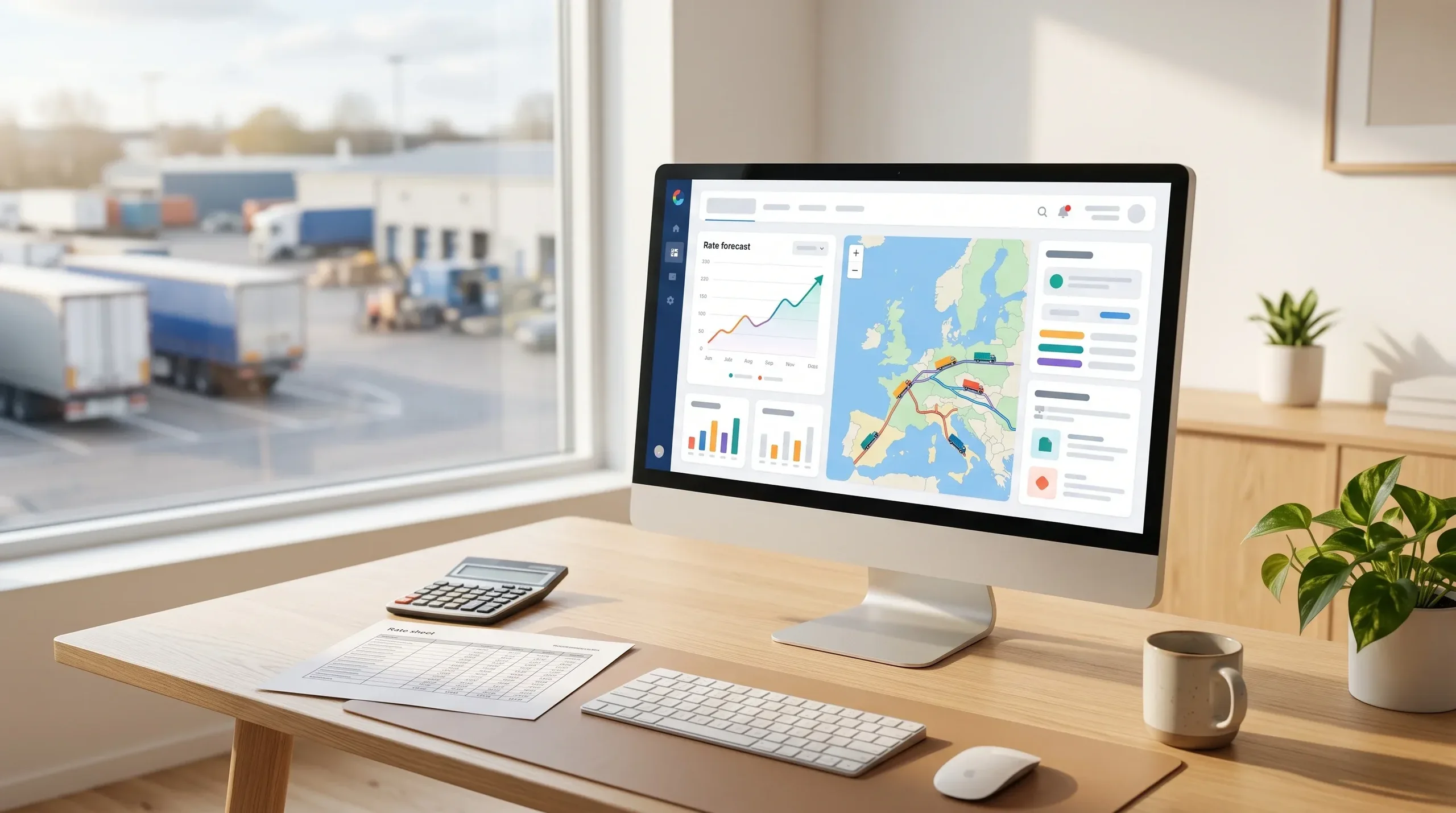
Freight Rate Forecasting for a Forwarder
Freight rate forecasting for a forwarder in Lithuania. It flags truck shortages and rate jumps by lane before the trip is quoted.
- By laneSpot Rate and Shortage Forecast
- 1 storeFor ERP, Exchange and Public Data
- TestedOn the Forwarder's Own Trips
- 1 tapFor the Driver's Route

Humanitarian Cargo Tracking Platform
Humanitarian cargo tracking for a UK carrier. Every load is on one map, and each handover lands in a ledger funders can check.
- QRCargo Acceptance on the Recipient's Phone
- LivePosition for Every Load
- 3 appsIn One Platform
- 1 ledgerFor Every Movement
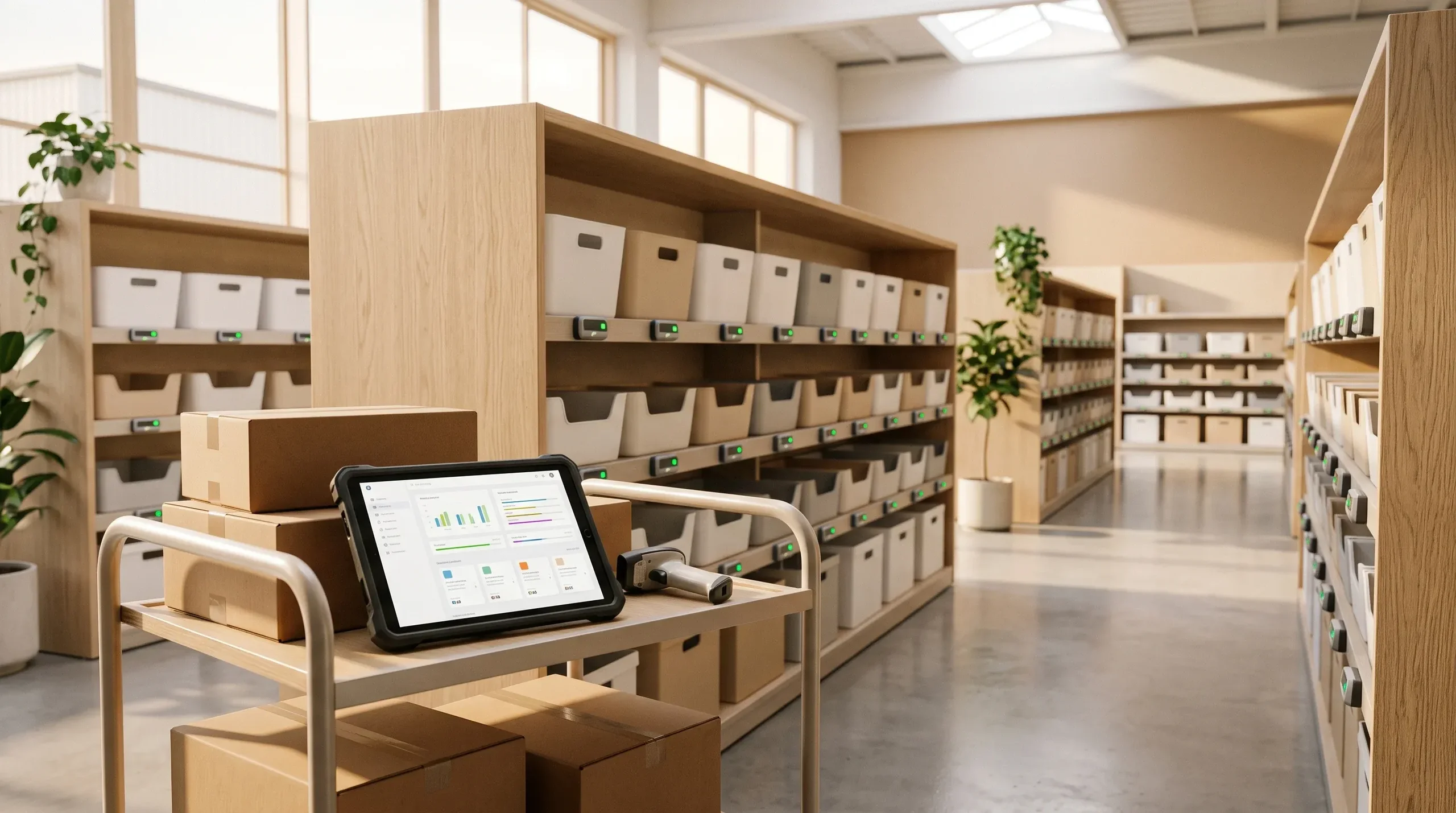
Pick-to-Light System Integration
Pick to light system integration for an equipment integrator. One layer ties lights, sorters and loaders to the WMS at every site.
- 3Equipment Types on One WMS
- Every pickConfirmed Back to the WMS
- LiveEquipment Faults on Screen
- 1 layerFor Lights, Loaders and Conveyors
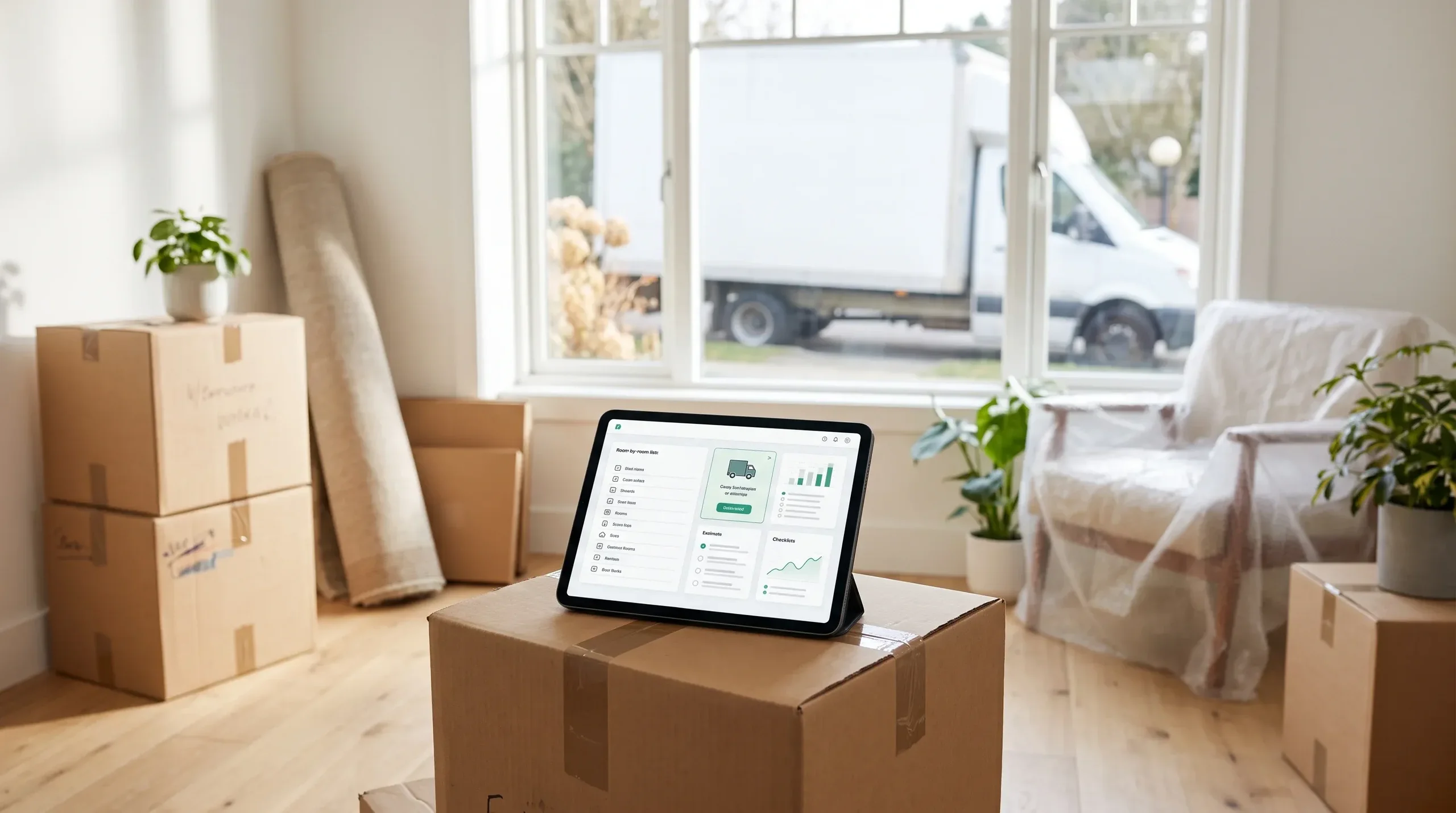
Budget Van Lines
Moving company software for a US interstate mover: each move is sized from the customer's answers, matched to a truck, assigned to a carrier and tracked.
- 2Backend Engineers Full Time
- In the platformVolume and Truck for Every Move
- Per orderCarrier Assignment
- Booking to deliveryOrder Tracking
What Do Buyers Ask About Dock Scheduling and Logistics Data Exchange?
 What is dock scheduling?
What is a logistics data exchange platform?
How does the dock scheduling software handle a late truck?
What is an advance shipping notice (DESADV)?
Can the platform connect to SAP and our TMS?
Will our carriers have to log in to yet another portal?
Let's Build Something That Matters
We're your one-stop Digital Engineering Partner. Tell us the process, product, or data problem you're trying to solve, and Hygge scopes AI and software work around the business result you need.
Tell Us What You're Building
Share the product, process, or data problem behind the request, along with the systems, data, or timeline the build has to work around.
Get an Audit-Backed Consultation
Hygge reviews the systems and data behind the request, so the first call opens with real specifics on the table.
Receive a Scoped Proposal
A plan with the approach, team, timeline, and cost, built around the business result the project needs to hit.